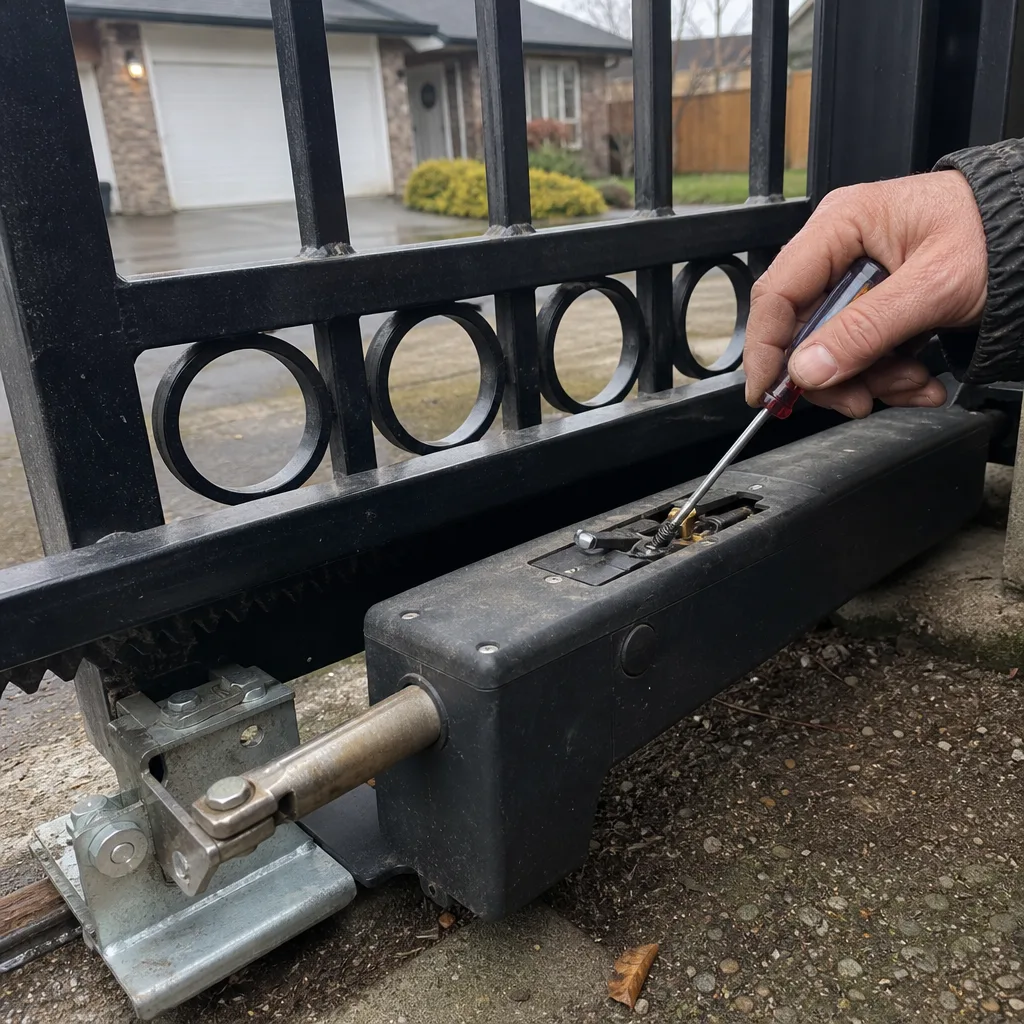
Last updated November 25, 2026
 Wrought iron
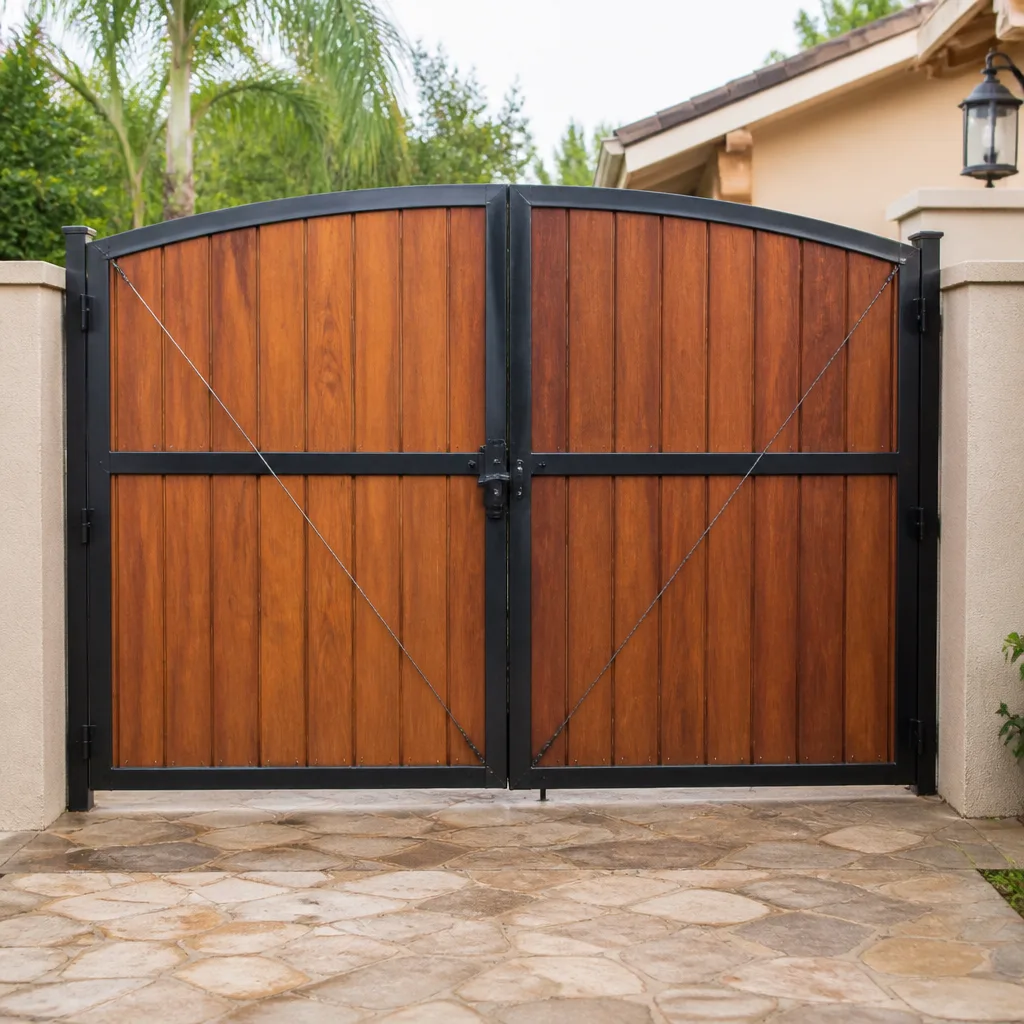 Wood & steel frame
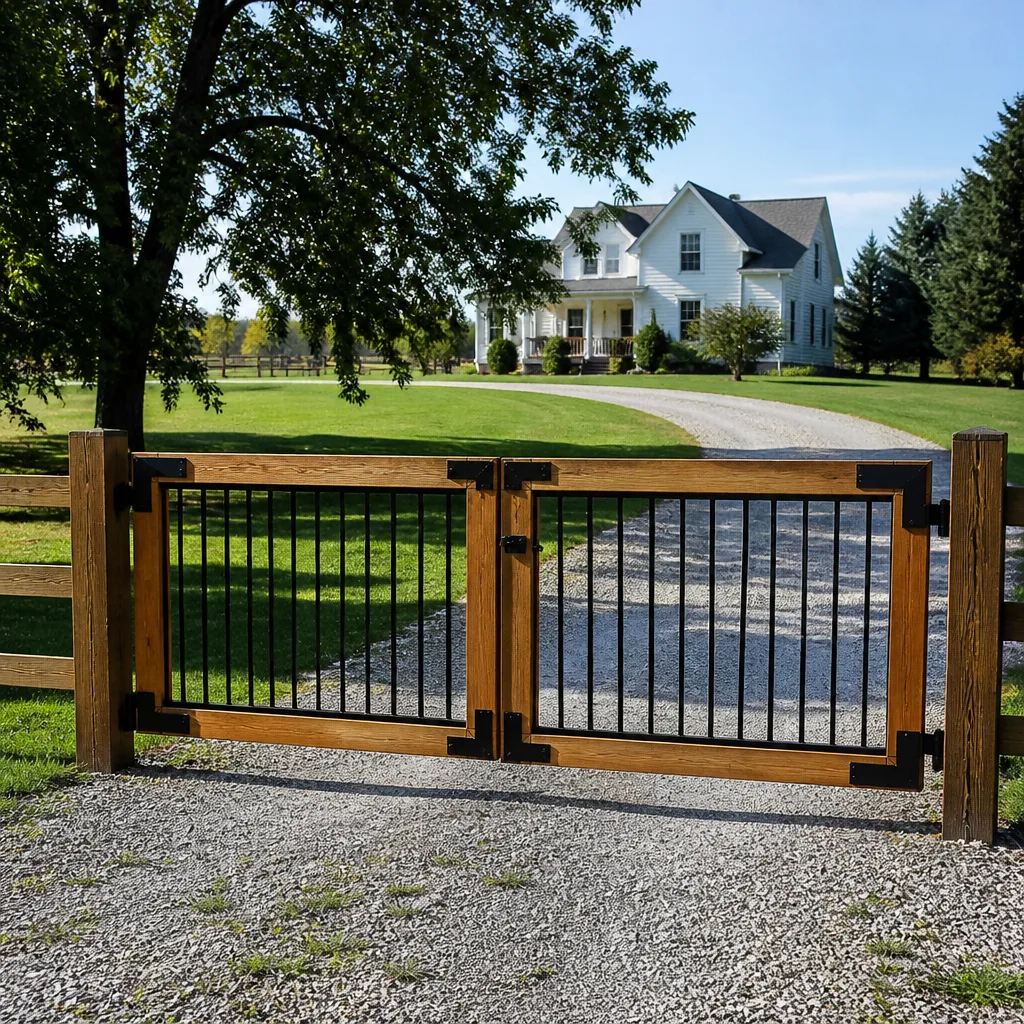 Farm & ranch
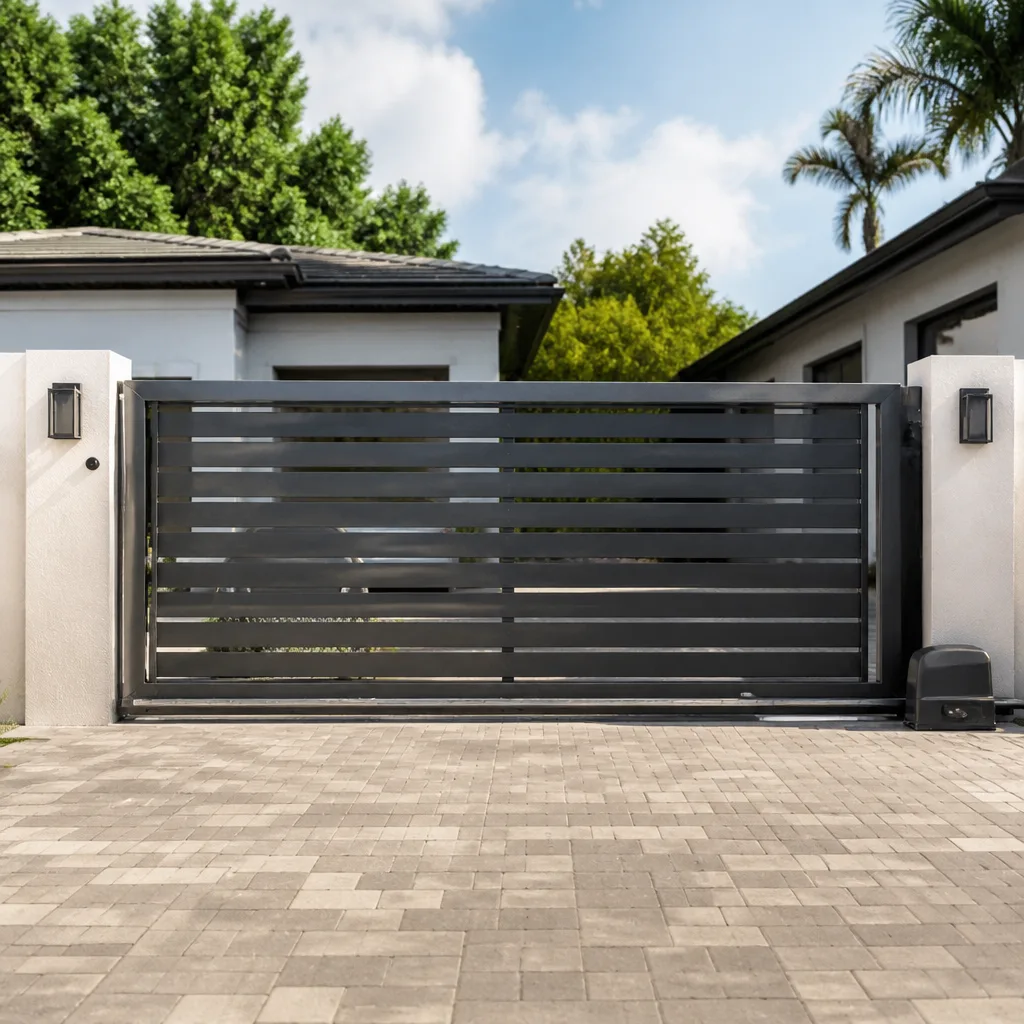 Sliding driveway gates
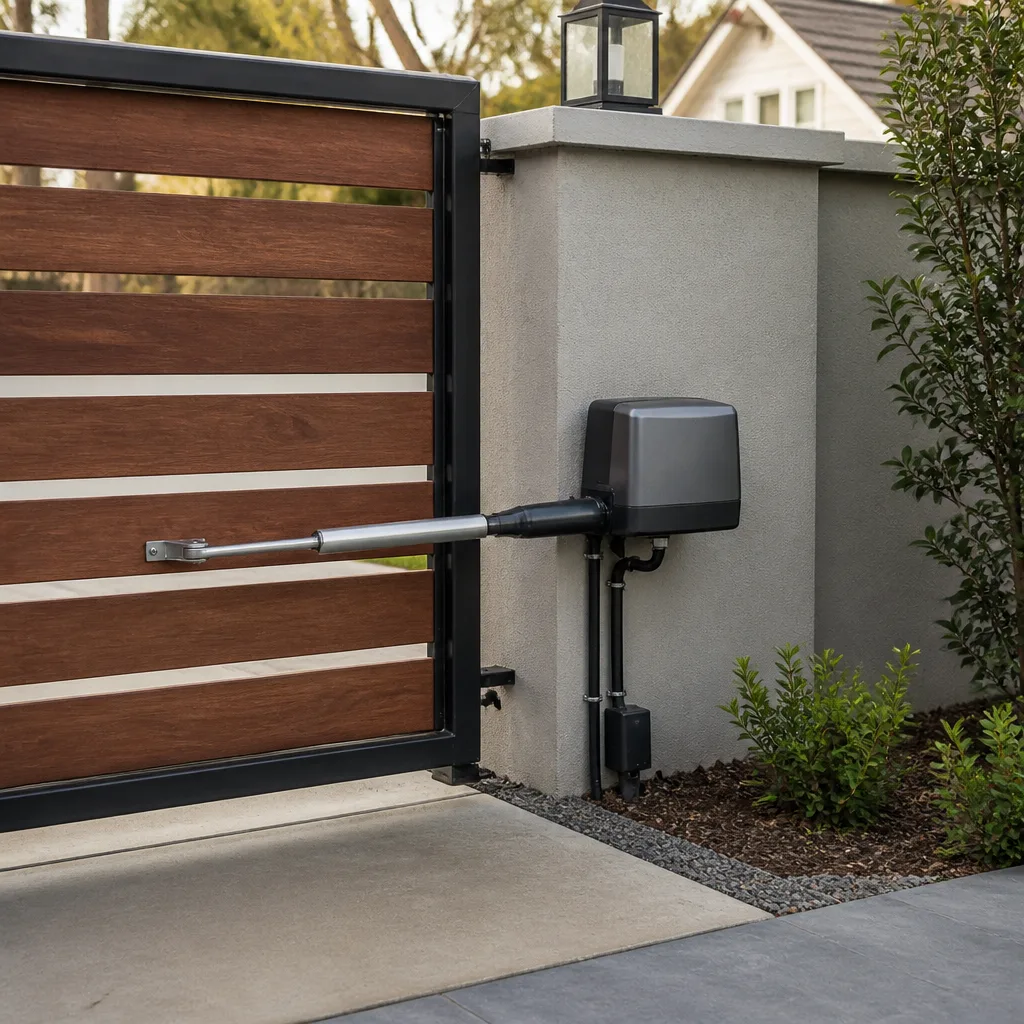 LiftMaster operators
Free on-site gate assessment - hinges, posts, and your LiftMaster or Nice gate operator checked before anything is quoted
The assessment is free and the quote is the invoice.
Get your free estimateGate Repair Emergency Preparedness Guide for Hillsdale Homes
Most gate emergencies aren’t really about broken hardware. They’re about a gate doing exactly what it was configured to do, at the worst possible moment. If your operator is set to fail secure, a wet-season power outage in Hillsdale locks the gate shut and your driveway becomes a parking lot. Set to fail safe, the same outage leaves it hanging open all night. Neither state is “broken,” and that’s the trap. This guide walks you through the two failure states, how to tell which one your gate defaults to, how to release it by hand, and what to have ready before you call anyone. Read it once on a dry afternoon.
Quick Answer
An electric gate in Hillsdale that loses power will either open (fail safe) or stay locked (fail secure), depending on how the operator and its release hardware are configured. Before storm season, find your operator’s manual release – usually a keyed lever, a hex key, or a pull handle, depending on the brand – and test it with the power off. If you can’t locate it or your gate is stuck mid-travel, stop cycling the motor and call a gate specialist at (833) 508-9956.
Styles & brands we work with
- Wrought iron
- Wood & steel frame
- Farm & ranch
- Sliding driveway gates
- LiftMaster operators
Table of Contents
- Fail Safe vs. Fail Secure: Which One Is Your Gate?
- How to Identify Your Gate’s Failure Mode
- Manual Release Procedures by Operator Type
- When Your Gate Is Stuck Mid-Travel
- Battery Backup for Hillsdale Storm Season
- What to Tell Us in a Gate Emergency
- Pre-Season Prep Checklist
- Common Mistakes to Avoid
Fail Safe vs. Fail Secure: Which One Is Your Gate?
Fail safe and fail secure describe what happens when power drops or a signal is lost. They are not quality ratings. A gate in Hillsdale with a fail-safe setup is designed to swing or slide open when the operator loses power, which keeps fire lanes and shared driveways passable. A fail-secure setup does the opposite: the gate holds closed and locked, which is the right answer when the gate is your property line.
The confusion usually comes from the word “safe.” Homeowners hear “fail safe” and assume it’s the better choice. For a residential driveway gate that separates your vehicles from the street, fail secure is often exactly what you want. A gate that swings open on its own during an outage is an open invitation, especially overnight. Fail safe belongs on commercial lots, apartment complexes, and any gate where people need to get out.
Here’s the practical version of the distinction:
- Fail secure – gate holds shut on power loss. Good for privacy and security. Bad if you need to leave in a hurry or if emergency access matters.
- Fail safe – gate releases open on power loss. Good for shared access and egress. Bad for security on a private driveway overnight.
- Configurable – many operators can do either, depending on wiring and how the release mechanism is set. This is where a technician earns their keep.
In Hillsdale, wet-season storms and the outages that come with them make this a once-a-year question at minimum. If you don’t know which mode your gate defaults to, that’s the first thing to find out. A gate specialist can test it in a few minutes by cutting power to the operator at the breaker and watching what the gate does.
How to Identify Your Gate’s Failure Mode
You can figure out your gate’s failure mode without opening the motor housing. The test takes about five minutes, ideally with a second person at the gate and nobody standing in its path.
- Find the breaker. Locate the dedicated circuit that feeds the gate operator. Label it if it isn’t labeled already.
- Clear the gate. Make sure vehicles, people, and pets are out of the swing or slide path. A gate that releases unexpectedly moves under its own weight or counterbalance.
- Cut power at the breaker. Don’t use the remote or keypad. Kill the circuit.
- Watch the gate. Three outcomes are possible: it stays where it is, it drifts open, or it stays locked. Note which one happens and how long it takes.
- Try the keypad or remote. If the gate responds with the service down, you have battery backup running. That’s a separate system and worth knowing about.
- Restore power. Flip the breaker back and let the operator re-initialize. Cycling limits usually reset themselves, but check that the gate opens fully and closes fully.
Write down the result and stick it in your junk drawer or tape it inside the operator housing. When a Hillsdale storm knocks the power out at night, you don’t want to be re-running this test by flashlight. If your operator is a Linear, a Viking, or a BFT, the release and initialization behavior varies by model, and the manual documents it. If the manual is gone, we can look up the model and walk you through it.
One caution: don’t skip the “clear the gate” step. A heavy slide gate coming off a brake release can pick up speed on a slope, and a swing gate can crush a foot against a stop post. Clear the path first, every time.
Manual Release Procedures by Operator Type
Every automatic gate we’ve worked on has a manual release. The problem is that installers rarely point it out clearly, and the manuals bury the procedure in an appendix about a hundred pages in. When you can’t open the gate and need to move a vehicle through, the release is your answer.
The release mechanism depends on the operator type and brand. Here’s what to look for by category:
Swing gate operators (arm and articulated)
- Keyed release lever: a small key-locked handle on the operator housing. Turn with the release key, pull, and the arm disengages from the motor.
- Hex key or Allen release: a hex-shaped socket on the housing. Insert the key and turn counter-clockwise to release the arm.
- Manual arm pin: on some lighter operators (like certain Ghost Controls models), a pin is pulled to free the arm.
Slide gate operators
- Chain release: a manual release chain on the operator housing, pulled to disengage the gear. Pull, then manually slide the gate by hand.
- Clutch or lever release: a lever on the gearbox. Lift, then move the gate manually.
Barrier and high-cycle operators
- Higher-cycle commercial equipment (common DoorKing territory) often uses a release crank or a keyed brake release on the gearbox itself.
Whichever mechanism you have, the release key often lives on a hook inside the operator housing or zip-tied inside the control box. The trick is to find it now. Locate the key, try the release with the power off, and put the key back somewhere you’ll remember. If you have no key, we can supply and fit one to your operator.
The release key is the single most important thing most Hillsdale homeowners have never seen. If you can’t find it, that’s worth a service call before storm season.
When Your Gate Is Stuck Mid-Travel
A gate that stops halfway is the most dangerous failure state on this list, and the one where most homeowners cause damage by acting fast. A gate stuck mid-travel usually has a real obstruction in its path, a limit switch problem, or a motor that’s tripped on thermal overload. Cycling the operator repeatedly in the hope that it “just works this time” burns out motors and strips gears.
Here’s what to do, in order:
- Stop pressing the remote. If the gate moved and stopped, the operator already made a decision. Pressing again asks the motor to fight whatever it hit.
- Look at the gate path. Check for debris, a dropped curb, a warped panel, a track obstruction, or a wheel off the rail. Anything physically in the way is your first fix.
- Check the safety devices. Loop detectors, safety edges, and photo eyes can hold a gate open mid-travel if they’re triggered or faulty. A leaf across a safety edge is a surprisingly common cause.
- Cut power at the breaker. Then release manually using the procedure above and move the gate by hand to a safe position.
- Don’t force it. If the gate won’t move by hand with the operator released, the problem is mechanical (rollers, track, hinge, or gate frame) and needs eyes on it.
- With a slide gate specifically, check the track first. Accumulated debris under the rollers, a bent rail, or a gate that has dropped on its guide are the usual culprits. A slide gate that comes off its track is a heavy-panel risk, so don’t try to lift it back on alone.
If after clearing the obstruction the gate doesn’t return to normal after a power cycle, that’s a limit switch or control board issue. That’s where we usually get the call. The gate can be moved manually and left parked out of the driveway until a technician arrives.
Battery Backup for Hillsdale Storm Season
Battery backup is the single best upgrade for a gate in Hillsdale, because the real threat isn’t a one-time power cut. It’s the multi-hour outages that follow a wet-season storm. A gate on battery holds open or locked per its configured mode for as long as the battery lasts, which changes the whole calculus.
What to expect from battery backup:
- Runtime depends on operator and battery size. Small residential batteries typically give you a handful of cycles, not a full day of operation. Larger commercial-grade backups run longer but weigh more and cost more.
- Cycles, not hours, is the right unit. A battery doesn’t care about time. It cares about how many open-close cycles it has left. Entry and exit each use one full cycle.
- Batteries won’t carry a heavy commercial gate forever. High-cycle slide gates draw more current per cycle, and the battery drains faster under load. If your gate gets a lot of use, the runtime drops.
- Battery backup is not the same as a surge protector. A surge on the line can fry a control board even with a battery installed. Ask about surge protection at the same time.
- Batteries age. A backup that ran all night two winters ago may only give you a couple of cycles this winter. Test it annually by cutting power and seeing how many times the gate cycles.
For a fail-secure gate, battery backup is what lets you get out during an outage. For a fail-safe gate, it saves you the hassle of finding the release every time. Either way, it’s a one-time install that pays for itself in the first power cut.
What to Tell Us in a Gate Emergency
When you call a gate specialist at (833) 508-9956 during an emergency, the more you can tell us before we arrive, the faster we can get your gate back in service. We service the whole gate, from the motor to the keypad, and we work on the brand you already have rather than selling you a new one. Prep the following before you call:
- Brand and model of the operator, if visible on the housing or in the paperwork. LiftMaster, Linear, Viking, BFT, FAAC, Ghost Controls, DoorKing, Elite, and Mighty Mule are all brands we handle.
- Swing or slide. Obvious, but it changes which parts are likely involved.
- Failure state. Stuck open, stuck closed, stuck mid-travel, or cycling on its own?
- What changed. Power outage, a recent storm, a new install, a click you didn’t hear before?
- Access information. Gate type, release mechanism (if you tried it), and whether the gate can be manually moved by hand.
- Whether access control is involved. Keypad, intercom, and loop detectors are all part of the system and the fault may live there, not in the motor.
Have that list ready and we can usually tell you what to expect before we’re on site. For non-emergencies, we offer a free estimate. Call us, and we’ll schedule a visit, quote the job before any work starts, and use the estimate as the final price.
Pre-Season Prep Checklist
Much of this guide is about what to do in an emergency. Equally useful is preventing one. A short annual check before wet-season storms in Hillsdale saves most of the calls we take after them.
- Locate and test the release. Find the key, test the release with the power off, and put the key back somewhere you’ll remember.
- Test battery backup. Cut power and run cycles until the battery gives out. Note how many. If it’s down from last year, replace the battery.
- Check the safety devices. Photo eyes, safety edges, and loop detectors are the most common cause of unexplained gate behavior.
- Walk the track and hinges. Debris, rust, and worn rollers cause mid-travel failures. Clear and lubricate as the manufacturer specifies.
- Inspect limit switches. A gate that opens and closes but drifts past its normal stops has a limit switch drifting. Fix before it strips a gear.
- Verify the failure mode is the one you want. This is the easiest thing to check and the most expensive to get wrong.
Any of these can be tackled in an afternoon. If anything looks off, call a gate specialist. Catching a worn roller or a weak battery before the storm is far cheaper than a mid-outage emergency.
Common Mistakes to Avoid
- Not knowing the failure mode. Most homeowners in Hillsdale have never tested whether their gate fails open or closed. Find out before an outage forces the answer on you.
- Hiding the release key. Putting the release key in a safe place that you can’t remember is worse than leaving it in the operator. Find it, use it once, and put it back where you found it.
- Forcing a stuck gate. Repeatedly pressing the remote on a stuck gate is the most reliable way to burn out a motor. Stop cycling and address the obstruction.
- Ignoring safety devices. A gate that behaves oddly is often reacting to a triggered loop or safety edge, not failing internally. Check those first.
- Assaulting a slide gate that’s off its track. A heavy slide gate that comes off its track can crush a foot. Leave it and call.
- Assuming a new gate is needed. Most gates that stop working need a repair, a board, or a motor, not a whole new system. We work on the brand you have.
- Skipping battery tests. A backup battery that hasn’t been tested in two years may deliver one cycle and quit. Test before the storm, not during.
When to Call a Professional
Some gate problems are everyday maintenance. Others are dangerous or beyond what a homeowner should tackle, especially anything that involves live power to the operator, a heavy gate off its track, or a control board fault. Here’s where we recommend calling a specialist:
- The gate is stuck mid-travel and you can’t clear the obstruction or release it by hand.
- The operator is dead even with battery backup, or it keeps tripping the breaker.
- Safety edges or loop detectors are triggering repeatedly with nothing in the path.
- A slide gate has come off its track or a swing gate is sagging on its hinges.
- The gate cycles on its own, opens half-way, or reverses without command.
- You can hear the motor run but the gate doesn’t move.
- You want to change the failure mode, install battery backup, or add access control.
If any of these describe your gate, call us at (833) 508-9956. Gate Repair Hillsdale offers free estimates, and our technicians have up to 13 years of experience working on residential and commercial gate systems. The local pro you speak with is licensed and insured as required in your state, and we work on the brand you have, whether that’s a LiftMaster, a FAAC, or a Mighty Mule. We’ll come out, diagnose the failure, quote the job before we start, and keep the estimate as the final price. For a repair that’s urgent, call now. For a planned upgrade, schedule a free measure and a written quote.
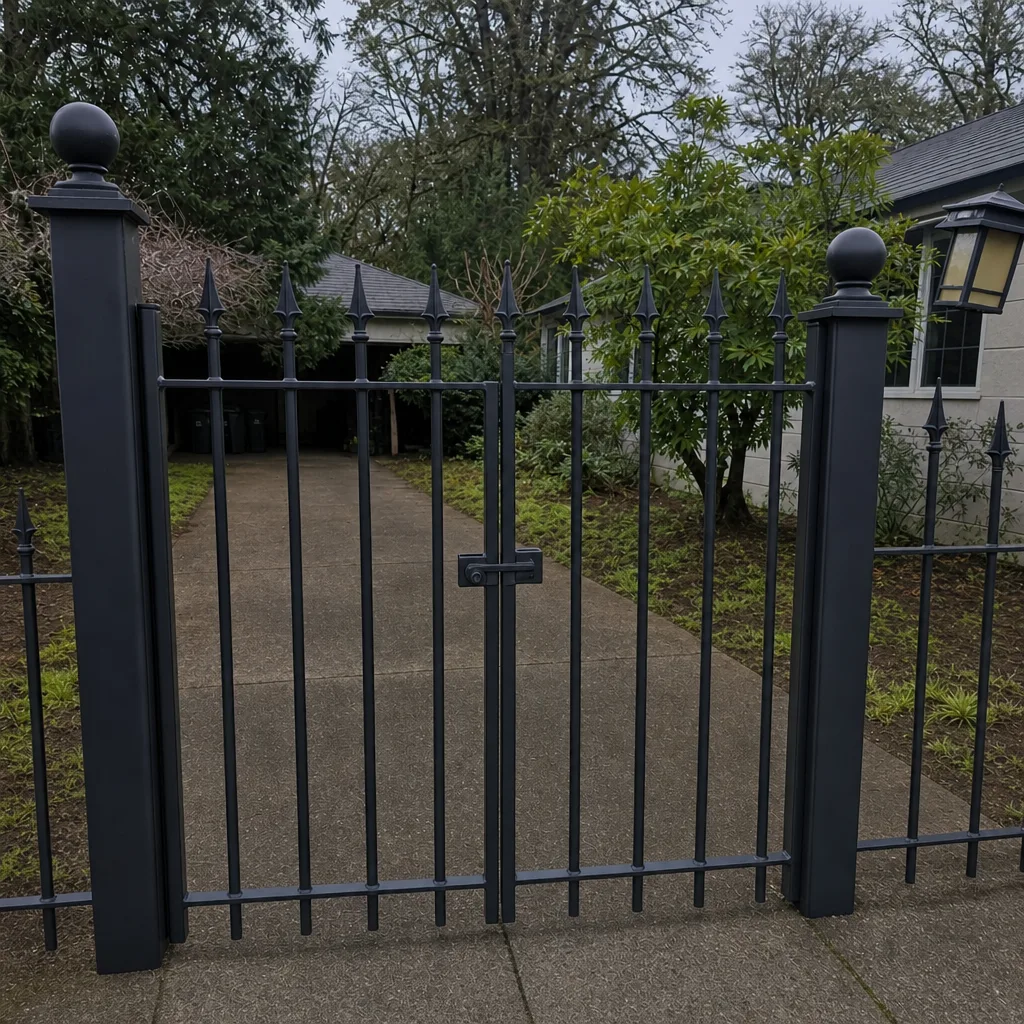
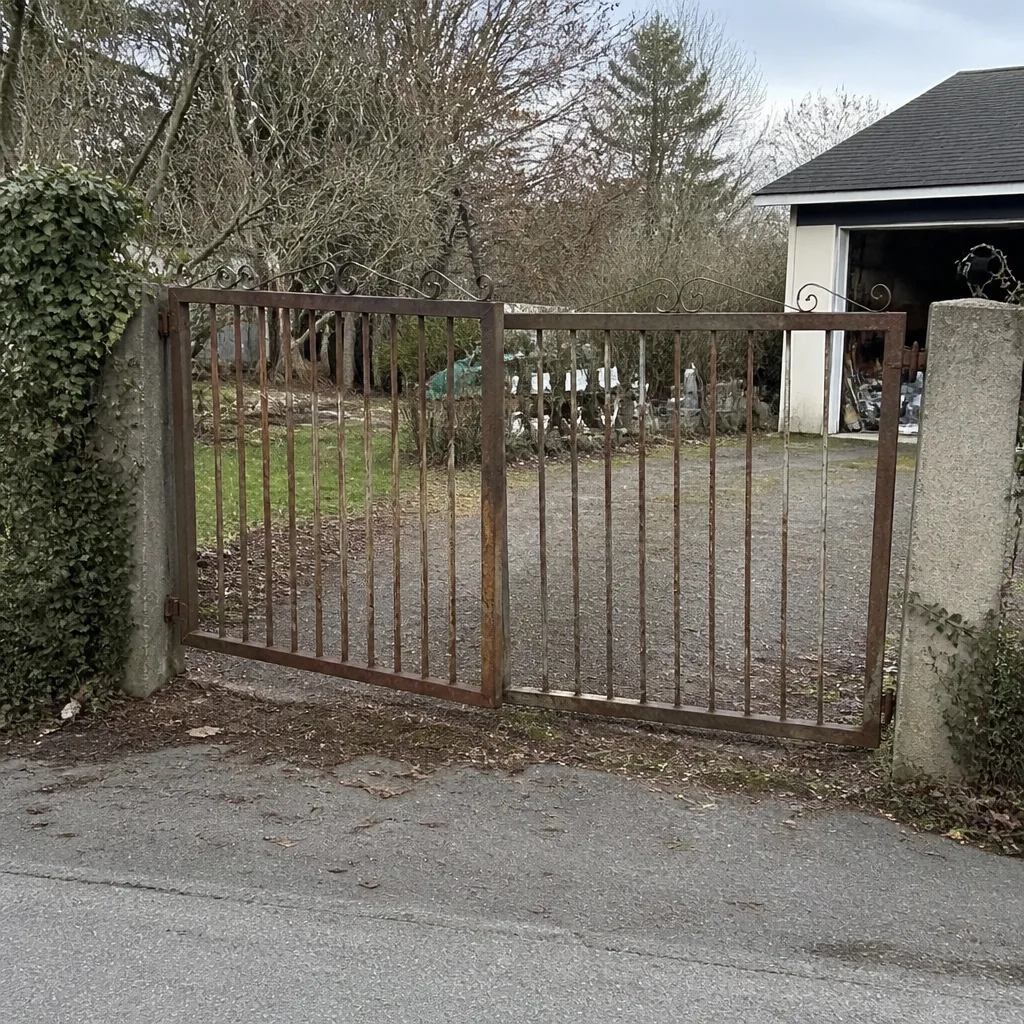
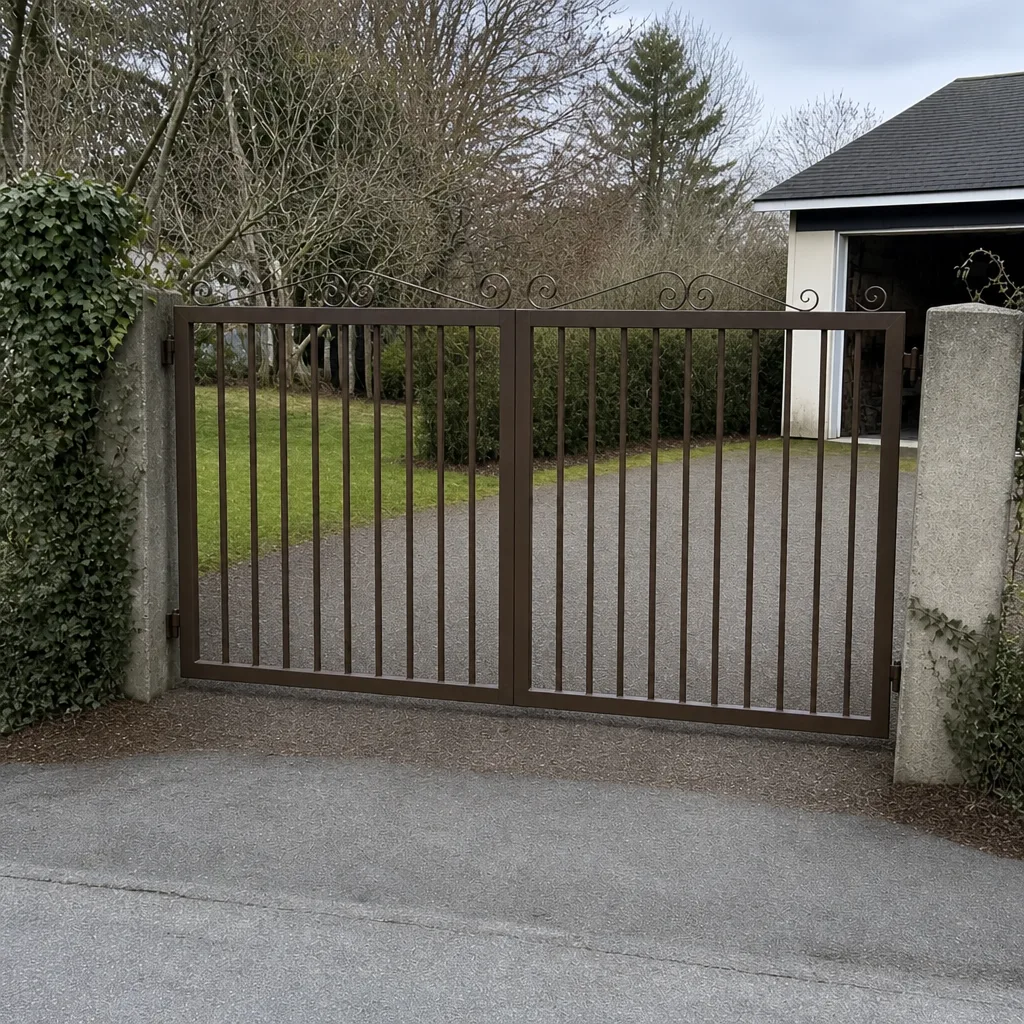
See the difference
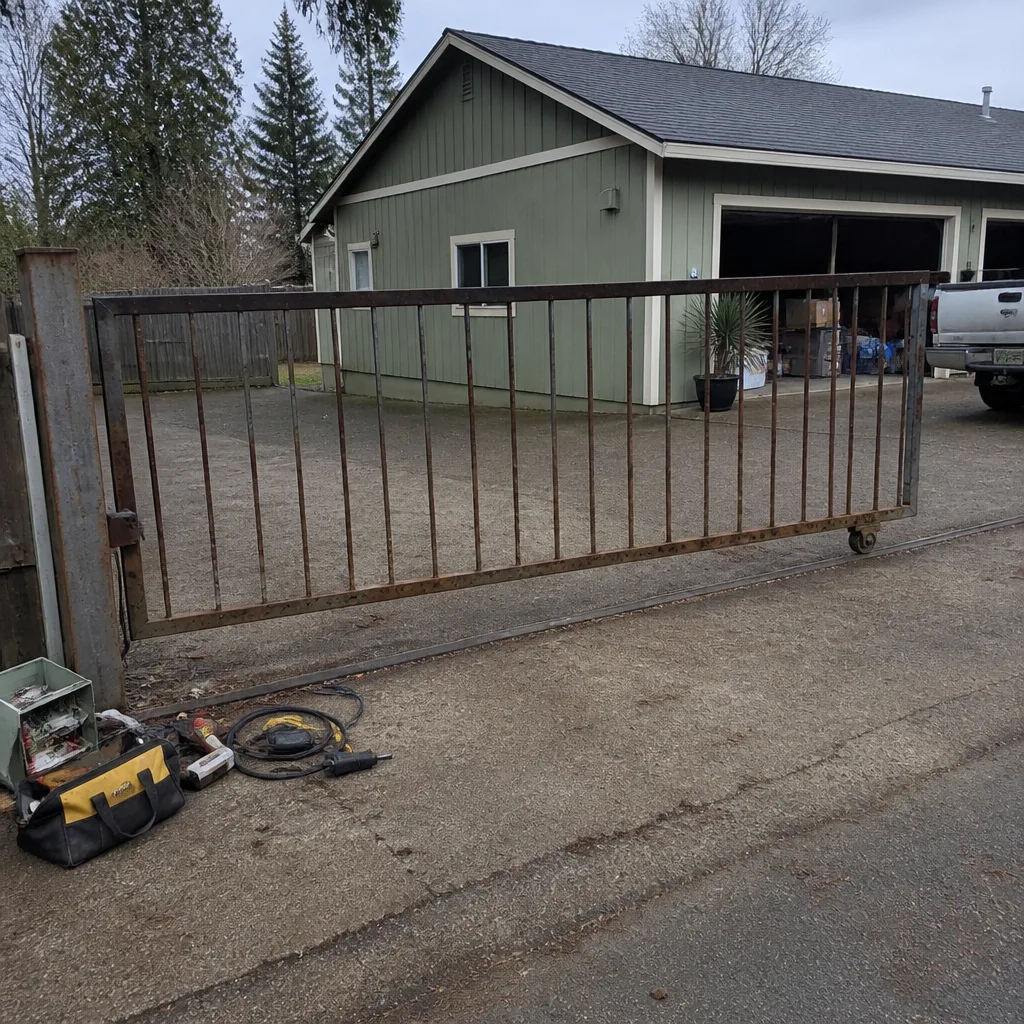 Before
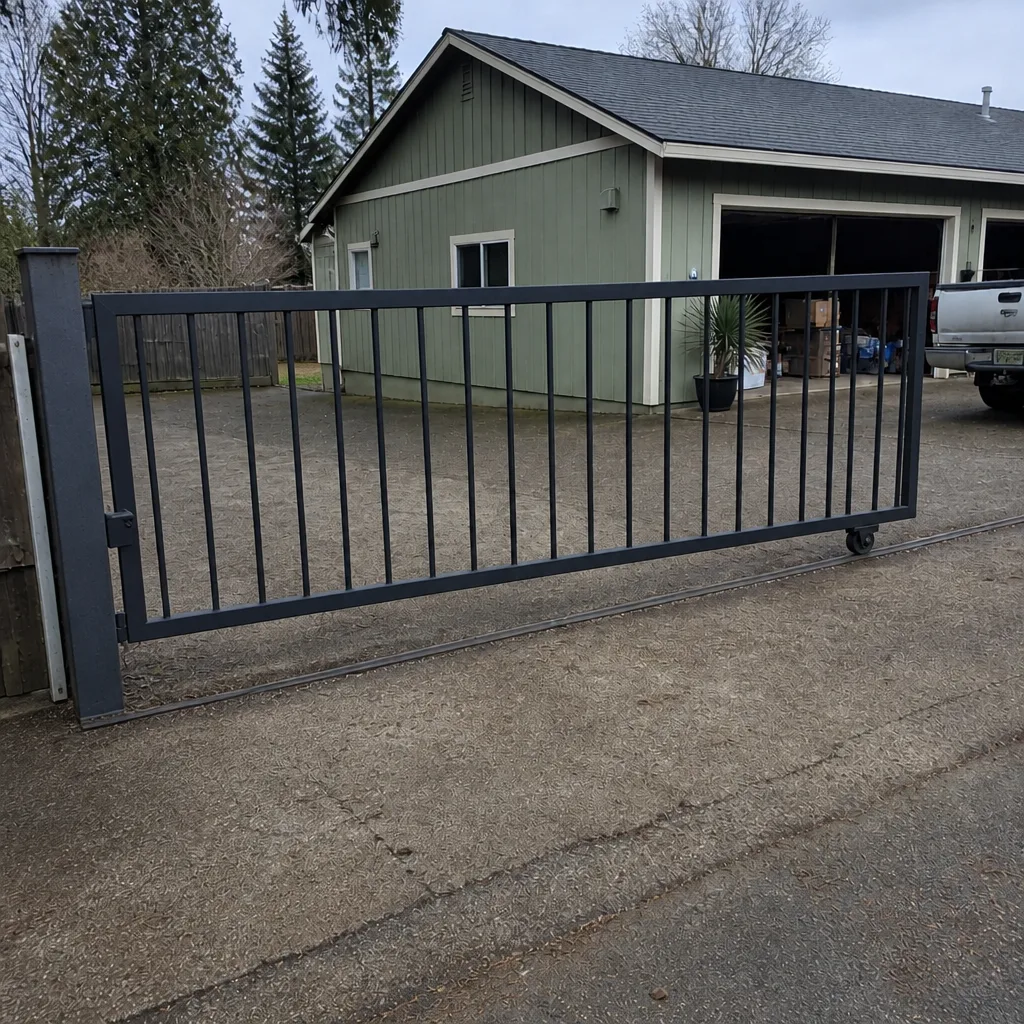 After
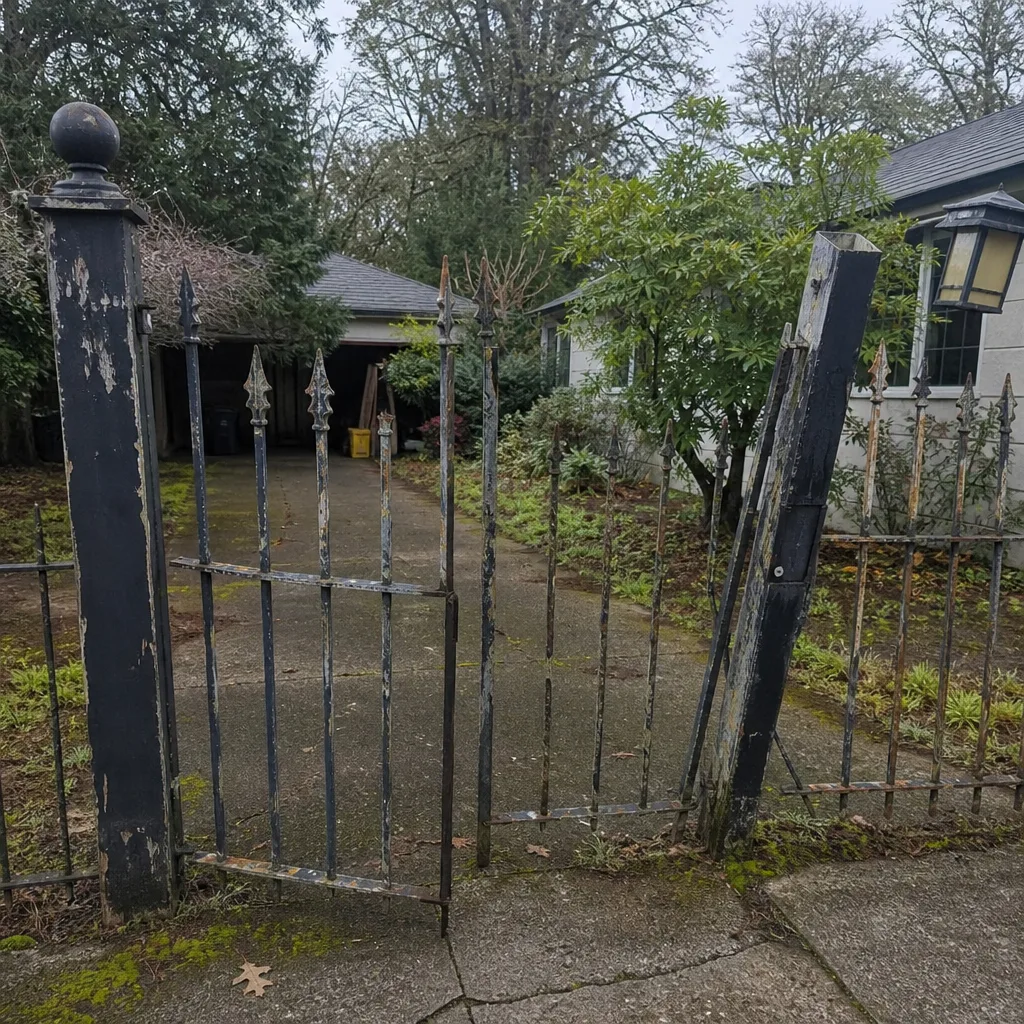 Before
 After
 Before
 After
Frequently Asked Questions
Cut power at the breaker and watch the gate. If it opens or releases and you can move it by hand, it’s fail safe. If it holds closed and locked, it’s fail secure. Test with the gate path clear and nobody standing near it. If you want the mode changed, call Gate Repair Hillsdale at (833) 508-9956 for a diagnosis and quote – estimates are free.
It depends on the operator type. Swing gates usually have a keyed lever, a hex-key release, or a pin on the arm; slide gates usually have a release chain or a clutch lever on the gearbox. The release key is often on a hook inside the operator housing or zip-tied in the control box. If you can’t find it, we can supply one and walk you through the release for your brand, from Linear and Viking to BFT and Ghost Controls.
Usually yes, but how depends on your setup. If you have battery backup installed, the gate keeps operating for as many cycles as the battery can deliver. Without battery backup, you’ll need to use the manual release. Our advice: test your release and battery before storm season, not during an outage. Call us for a battery backup install if you don’t have one.
No. Pressing the remote when a gate is stuck mid-travel makes the motor fight the obstruction, which is how motors and gears get destroyed. Stop, clear the gate path, check safety devices, then release manually and cut the power. If it doesn’t return to normal after a power cycle, call Gate Repair Hillsdale at (833) 508-9956 – we’ll get a technician out to diagnose the fault.
Runtime is measured in cycles, not hours, and depends on the operator, battery size, and load. A small residential battery gives you a handful of cycles; larger backups last longer but cost more. High-cycle commercial gates drain faster. The only way to know is to test the battery by cutting power and noting how many cycles you get. If it’s down from last year, replace it, or call us to install a new one.
Have your operator brand and model, whether the gate is a swing or slide, the failure state (stuck open, stuck closed, or stuck mid-travel), and what changed before the problem started. Also note whether you tried the manual release and whether the gate moves by hand. With that, we can tell you what to expect before we’re on site. Call (833) 508-9956 and we’ll schedule a visit.
The Bottom Line
Gate emergencies in Hillsdale come down to two questions: what does your gate do when the power dies, and do you know how to release it by hand? Answer both now, in daylight, before the next storm season answers them for you. Test the failure mode with the breaker, find and test the release key, check your battery, and keep the operator’s brand and model written down somewhere easy to find. If the gate is stuck mid-travel or you can’t release it, stop pressing the remote and call a specialist. That’s the whole plan. The rest is maintenance.
More Gate Guides
Gate repair, gate installation, gate motors and openers, and access control are all parts of the same system, and getting the diagnosis right the first time saves the most money. For the wider view, see our gate repair resource hub. For service-specific pages, our gate repair section covers the full repair range, from stuck gates to control boards; our gate installation section covers new installs, from footings to the final program; and our gate motor & opener section covers motor replacement, operator selection, and release hardware.
Contact Gate Repair Hillsdale
If your electric gate is stuck closed, stuck open, stuck mid-travel, or you’re not sure which, call Gate Repair Hillsdale at (833) 508-9956 for a free estimate. Our technicians have up to 13 years of experience and work on the brand you already have, from LiftMaster and Linear to FAAC and BFT. For an emergency, call now and we’ll get back in service. For a planned battery backup install, failure-mode change, or new access control, schedule a free measure and a written quote, and we’ll confirm the price before any work starts.
Written by the team at Gate Repair Hillsdale.