Last updated November 25, 2026
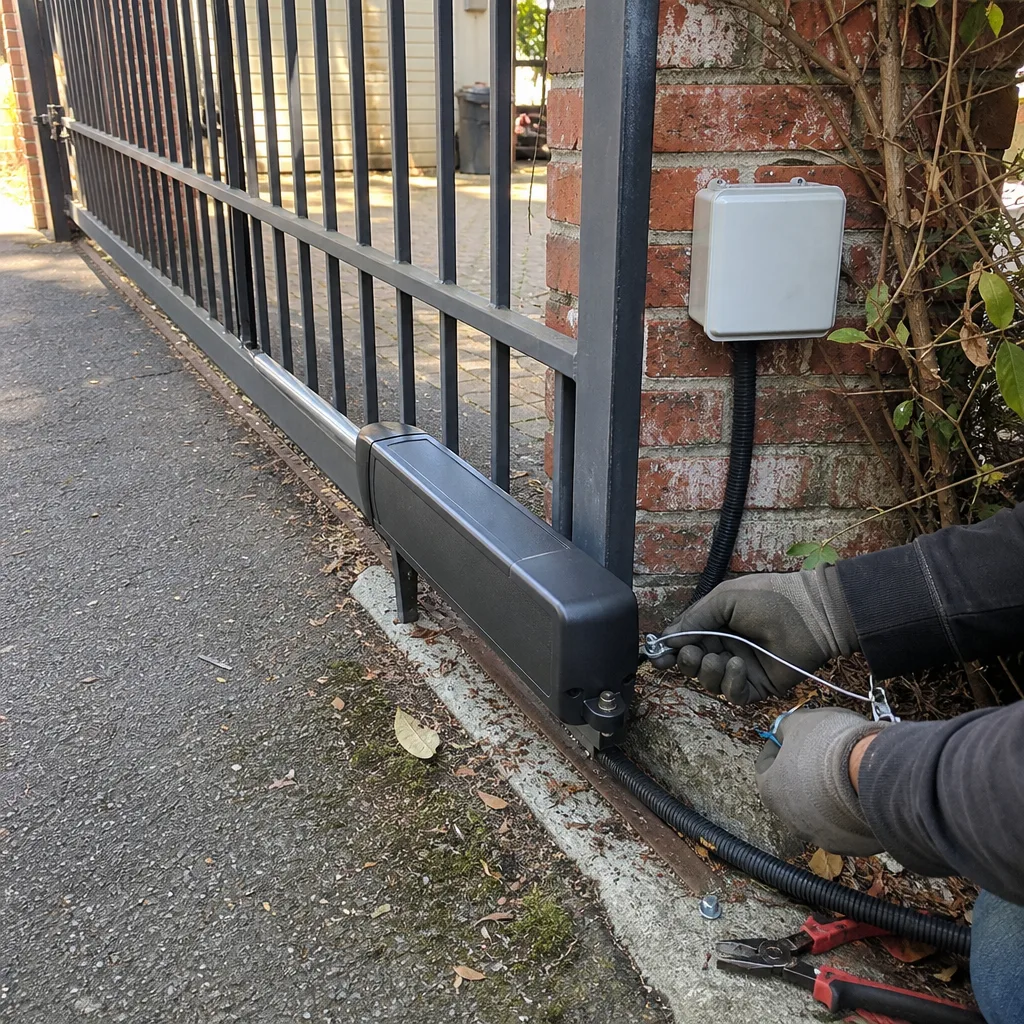
 Wrought iron
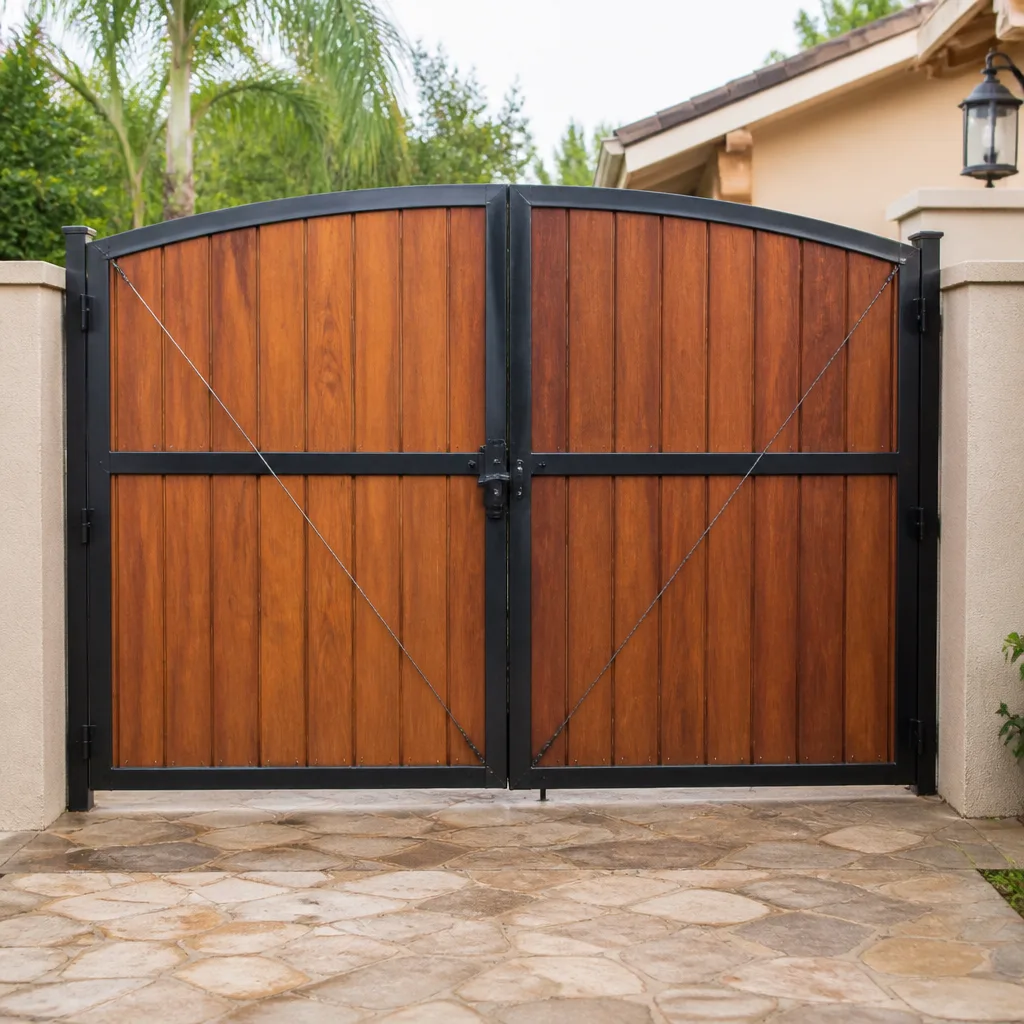 Wood & steel frame
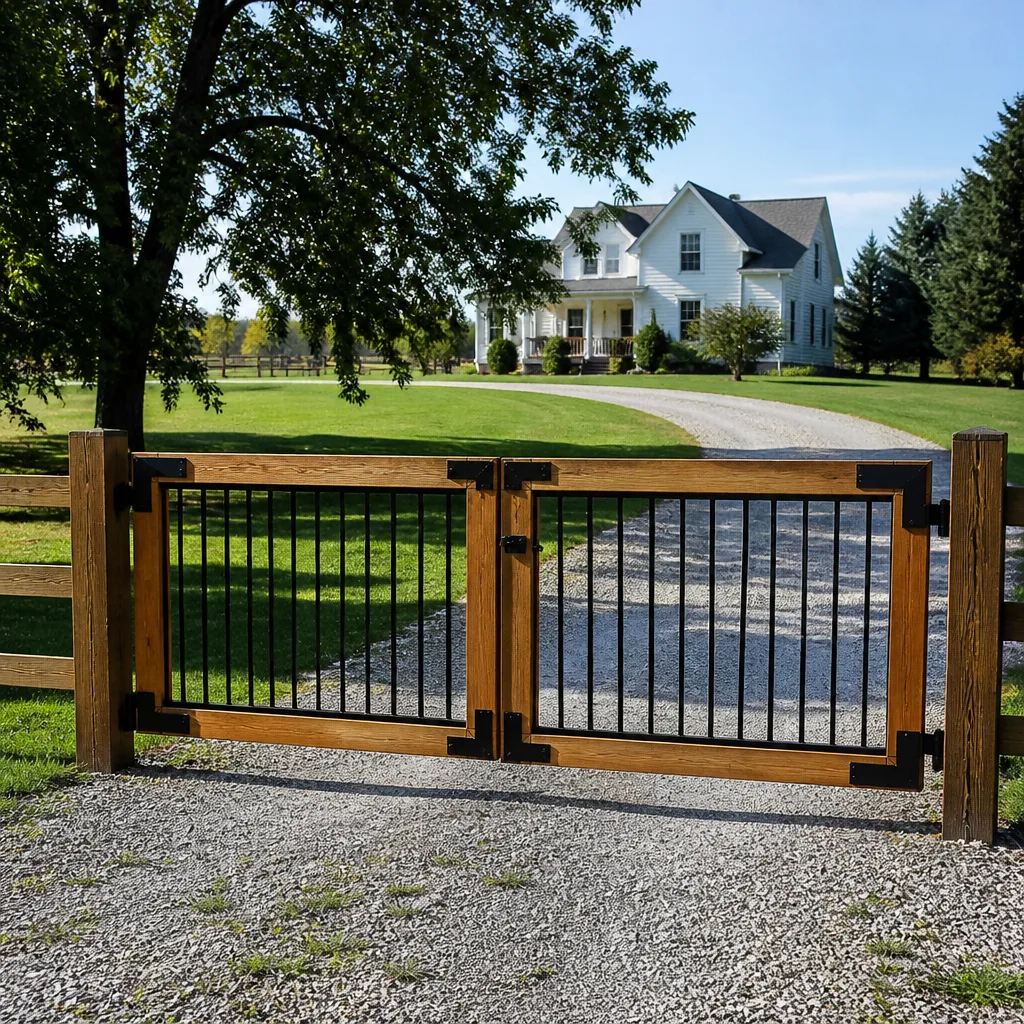 Farm & ranch
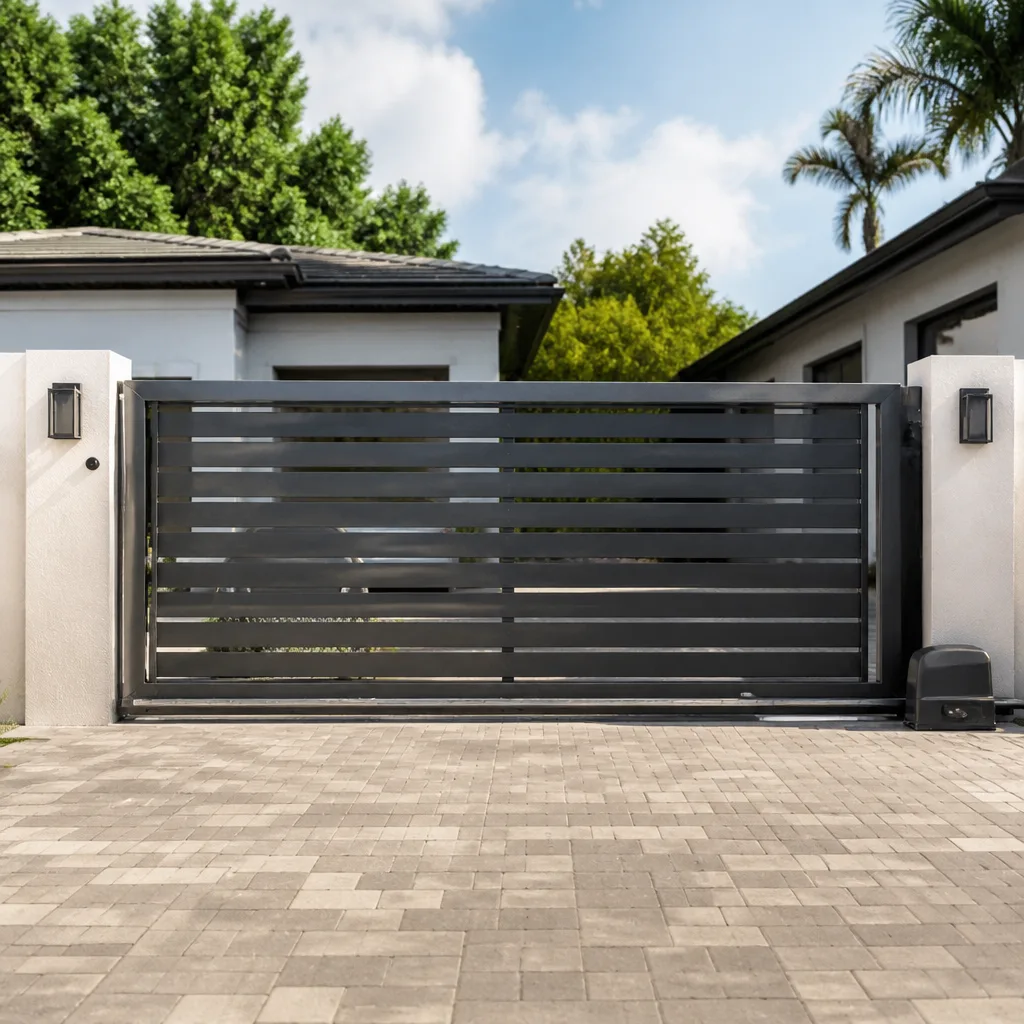 Sliding driveway gates
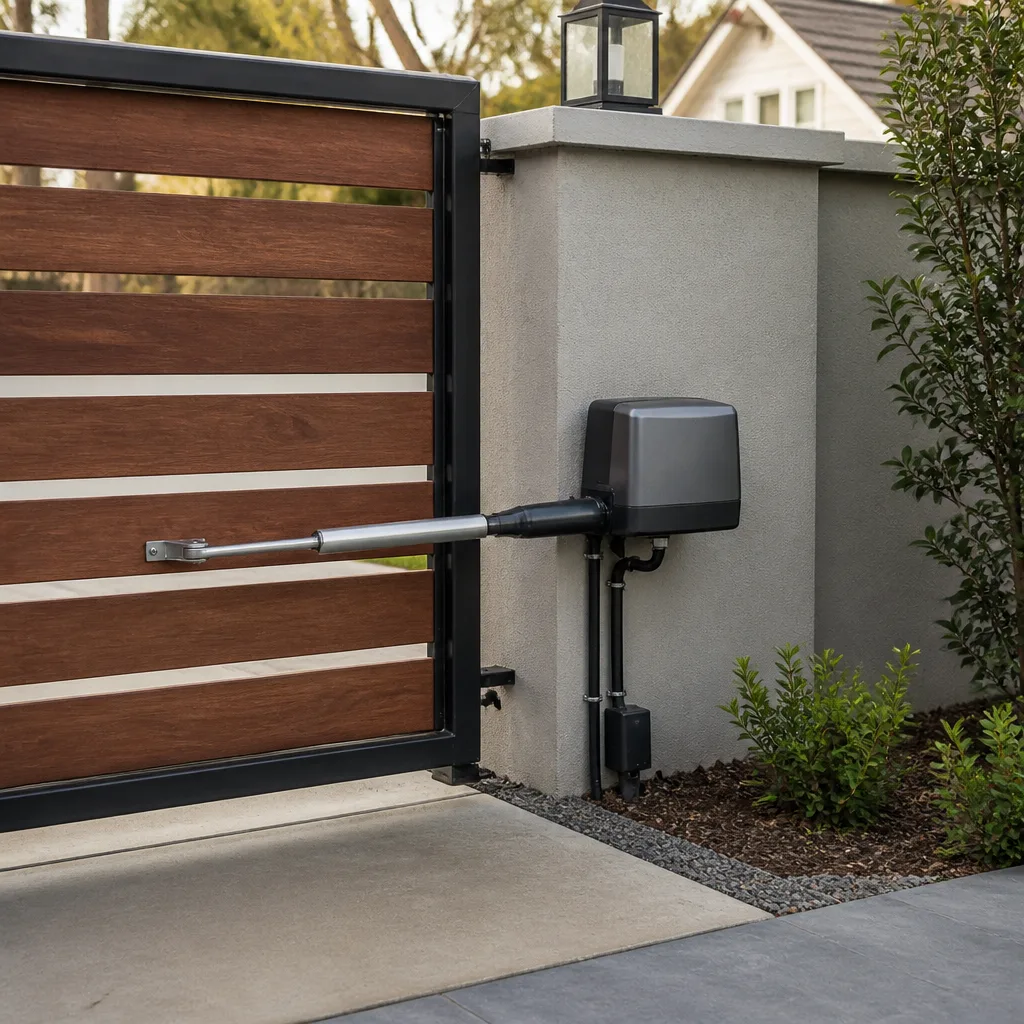 LiftMaster operators
Free on-site gate assessment - hinges, posts, and your LiftMaster or Nice gate operator checked before anything is quoted
The assessment is free and the quote is the invoice.
Get your free estimateGate Repair Warning Signs: A Hillsdale Homeowner’s Reference Guide
A gate that reverses for no apparent reason isn’t malfunctioning randomly. It usually means the obstruction sensor is misaligned or has degraded, and that’s a safety problem, not a quirk you learn to live with. The same is true of most gate symptoms: a slow gate looks like a personality trait, a grinding noise sounds like a worn part, and by the time either one turns into a total failure, the underlying issue has been building for weeks. This guide gives each warning sign a specific diagnostic reading, sorted into the categories that actually matter, so a Hillsdale homeowner can tell the difference between a part that needs adjusting and a system that needs to come off duty.
Quick Answer
The most important gate repair warning signs in Hillsdale are a gate that reverses without an obstruction, one that moves noticeably slower than it used to, grinding or clicking at the operator, incomplete open or close cycles, and any error code that repeats after a reset. Visual signs (sagging hinges, worn tracks, loose posts, frayed wiring) point to structural or mechanical wear. Operational signs (short cycles, random stops, sensor faults) usually point to the operator, the sensors, or the control board. A gate that will not reverse on obstruction, or one whose operator is hot to the touch and making a burning smell, should be shut off and left alone until a technician sees it.
Styles & brands we work with
- Wrought iron
- Wood & steel frame
- Farm & ranch
- Sliding driveway gates
- LiftMaster operators
Table of Contents
- Visual Warning Signs vs. Operational Warning Signs
- What Your Operator’s Error Codes Are Telling You
- Structure Problem or Operator Problem? Reading Overlapping Symptoms
- Sliding Gate Signs vs. Swing Gate Signs
- Sensor and Safety-Reverse Signs You Should Never Ignore
- The Two Signs That Mean Stop Using the Gate Now
- How Northwest Oregon Weather Shapes Gate Wear in Hillsdale
- What Keeps a Gate Healthy Between Service Visits
Visual Warning Signs vs. Operational Warning Signs
The first useful split in gate diagnostics is between what you can see standing next to the gate and what the gate does when you run it. These two categories point to different failure families, and mixing them up sends homeowners down the wrong path.
Visual warning signs show up in the hardware and the mounting. Walk the length of your gate and look for:
- Hinges that have dropped or show rust staining at the pin
- Gate panels that no longer sit level with the latch or the post cap
- Tracks on a sliding gate with dents, debris buildup, or a visible wear groove
- Loose posts, cracked footings, or soil that has settled around a post base
- Frayed, chewed, or sun-bleached low-voltage wire anywhere it’s exposed
- Rust on rollers, guide wheels, chains, or the operator arm
- Operator housing that has pulled away from its mount or is sitting at an angle
Visual signs almost always point to mechanical wear, moisture damage, or a mounting problem that has been slowly progressing. They rarely appear overnight.
Operational warning signs show up only when the gate runs. They include short or incomplete cycles, random reversals, a gate that stops mid-travel, a remote that only works up close, a keypad that beeps but doesn’t trigger, or an operator that hesitates before it starts. These point toward the motor, the control board, the sensors, or the wiring between them.
In our experience across Hillsdale, the two most misread signs are a slow gate (visual cause: binding hardware; operational cause: a weakening motor or a failing capacitor) and a gate that stops halfway (visual cause: something physically blocking the track; operational cause: a limit switch or travel setting that has drifted). Both look identical from the driver’s seat. Only running the gate and watching what it does separates them.
What Your Operator’s Error Codes Are Telling You
Most modern operators store a fault code, and reading it correctly is the fastest way to skip guesswork. The code pattern itself is diagnostic: what matters is whether a fault appears once, appears consistently at the same point in travel, or appears randomly regardless of position. We service LiftMaster, FAAC, BFT, Linear, Viking, Ghost Controls, DoorKing, Elite, and Mighty Mule systems, and while the blink patterns and display codes differ, the underlying fault families repeat across all of them.
Here’s how to read the pattern rather than the specific code:
- A code on every cycle at the same position. This is almost always a travel limit, a magnet on the gate, or a physical obstruction at that point on the track. Predictable location means predictable cause.
- A code that only shows up in cold or wet weather. That’s a sensor, a wire, or a control board connection reacting to moisture or temperature. It disappears when things dry out and returns with the next rain, which is why it gets ignored for months.
- A code that appears at random with no pattern. Check the battery in the remote or keypad first, then the low-voltage wiring, then the control board. Random faults are electrical, not mechanical.
- A code that persists after a power cycle. A full reset (cut power at the breaker for a minute, restore) clears temporary faults. If the same code returns immediately after reset, that’s a hard fault and the gate should stay off until it’s diagnosed.
- A code that keeps changing. Multiple different codes cycling through is often a sign of a failing control board or a power supply that’s no longer delivering clean voltage. This is common on older LiftMaster and Linear operators.
One important limit: on a BFT or FAAC unit with an LCD programmer, the display may show a code that corresponds to a specific menu setting rather than a failure. In our experience, homeowners who try to interpret a BFT code without the manual end up changing a travel setting instead of fixing the actual fault. That’s a good reason to have the model and the code in hand before calling, and to leave the programming alone until a technician reads it.
Structure Problem or Operator Problem? Reading Overlapping Symptoms
Three symptoms look identical whether the fault is in the gate’s frame or in the operator itself: slow movement, incomplete cycles, and unexpected stops. Separating them is the single most useful skill a homeowner can develop, because it tells you whether the gate needs hardware work or an operator service call.
Here’s the working method we use:
- Disconnect the operator (or put it in manual release) and move the gate by hand. A swing gate should travel freely through its full arc with light pressure. A sliding gate should roll smoothly along the track from stop to stop. If it binds, drags, or wobbles when you’re pushing it, the problem is structural, not electrical.
- Watch the gate travel with the operator re-engaged. If it moves smoothly at speed but then stops short of full travel, the operator’s limits or sensors are the issue. If it moves slowly the entire way, suspect the motor, the capacitor on an AC unit, or the battery on a DC unit.
- Check the operator housing for heat and noise. A motor that’s working correctly runs warm, not hot. A grinding or clicking noise from inside the housing means gearbox wear or a stripped drive component, and continued running turns a gearbox repair into a motor replacement.
- Check the low-voltage loop and safety sensors. Photocells that are misaligned or dirty can’t tell the difference between a real obstruction and rain, leaves, or a spider web, and they’ll stop the gate at the same point every time.
When the gate passes the hand-move test and the operator is clean, the remaining suspects are the logic board and the programming. A limit setting that has drifted over a season is one of the most common causes of a stop-short on a Hillsdale swing gate, and it’s fixed with a reprogramming, not a part.
The physical work of correcting structural problems, replacing worn hardware, and resetting operator limits is what gate repair covers in practice. It’s a repair call, not a replacement call, in the vast majority of cases we see.
Sliding Gate Signs vs. Swing Gate Signs
The geometry of your gate dictates what each warning sign actually means. A dragging gate is the clearest example: on a swing gate, dragging means a hinge, a post, or a frame problem. On a sliding gate, dragging means the track, the rollers, or the foundation. Same symptom, completely different repair.
Swing gate warning signs:
- Hinges that creak or sag, causing the gate to ride lower on one side
- Gate panel scraping the ground at the latch end
- Operator arm that strains at one end of travel and moves easily at the other
- A gate that closes but doesn’t latch without a push
- Post leaned out of plumb, especially after saturated ground
Sliding gate warning signs:
- Rollers that have flattened or stopped rotating, producing a bumping ride
- Track that has shifted or developed a lip at a joint
- Guide wheels that have worn and let the gate rock side to side in its channel
- Chain or rack drive with slack, uneven wear, or a stretched section
- Gate that binds at the same point on every cycle regardless of operator speed
The one sliding-gate sign that gets misread as an operator failure most often is a gate that climbs out of its guide on the closed end. When a slide gate lifts out of its bottom guide, it’s a track or foundation problem, not a motor problem, and no amount of operator service fixes it. On swing gates, the equivalent is a gate that won’t close flush to the post: usually a hinge, a frame that has twisted, or a post that has settled.
In Hillsdale, the ground movement from wet winters and dry summers puts real stress on post footings. A sliding gate on a shallow footing will start to misbehave on the wet side of the year and settle back into tolerance over the dry months, which is why some slide gate faults seem to heal themselves. They don’t. They’re just seasonal, and the foundation is the real issue.
Sensor and Safety-Reverse Signs You Should Never Ignore
The safety-reverse system is the one part of an automated gate you should never treat as an annoyance. Every gate operator sold and installed in the US is required to have an entrapment protection system, and a gate that no longer reverses on contact or on obstruction is a gate that can injure someone.
These are the sensor warning signs that mean the gate’s safety features are compromised:
- The gate reverses mid-travel with nothing in its path (photocells misaligned, dirty, or moisture in the lens)
- The gate fails to reverse when you break the sensor beam with your hand
- The gate closes on an obstruction and does not stop or reopen
- Sensor LEDs on the photocells don’t light, or flicker even in clear conditions
- Gate reverses every time a car passes on the street (sunlight on the lens, or a reflective surface)
- The safety edges (the rubber strips along the closing edge) don’t produce a reversal when pressed
The opening hook of this guide bears repeating: a gate that reverses for no apparent reason is the single most common safety-sensor complaint we hear in Hillsdale, and it is almost always a misaligned photocell or a wet connection, not a random glitch. The beam on a pair of photocells has to be aligned within a narrow tolerance, and a post that moves a fraction of an inch over a season will knock it out. Testing it is simple and safe: break the beam with your hand while the gate is closing and confirm it reverses. If it doesn’t, the gate comes off automatic operation until the sensor is fixed.
Lift and swing systems from Viking and Linear use slightly different sensor configurations, but the test is the same. If you can’t get the gate to reverse on command, don’t rely on it to protect a child, a pet, or a vehicle.
The Two Signs That Mean Stop Using the Gate Now
Most gate problems can wait a few days for a technician. Two cannot. If either of the following shows up, power the operator down at the breaker, put the gate in manual release, and leave it closed (or open, whichever is safer for the household) until a technician has looked at it.
- The gate no longer reverses on obstruction, or will not stop when the safety edge is pressed. The entrapment protection system has failed. A gate that closes without stopping on contact is a crushing hazard for people, animals, and property. Do not “test it carefully” or run it slowly with someone watching. Shut it down.
- The operator housing is hot to the touch, making a burning smell, or has visible scorch marks, melted wiring, or a tripped breaker that resets and trips again. That’s an electrical fault in the operator or its power supply. Continuing to run it risks fire or further damage to the control board, and the low-voltage side can carry enough current to start a fire inside the housing. Leave the breaker off.
A third sign belongs on this list for swing gates specifically: a gate that has come off one hinge or dropped far enough that the panel is resting on the ground. It won’t fall on anyone standing clear, but if someone pushes it while it’s unbalanced, the panel can swing or drop hard. Block it open, keep people away, and call.
If you’re in Hillsdale and the gate is in one of these states, shut it off and call us at (833) 508-9956. We schedule a technician to look at the gate and give you a written estimate before any work begins.
How Northwest Oregon Weather Shapes Gate Wear in Hillsdale
Hillsdale sits in the Willamette Valley climate band, which means wet winters, dry summers, and a lot of leaf litter. That weather pattern produces a specific set of gate wear signs that show up on a schedule, year after year.
- Winter: soaked ground around post footings softens, and posts lean. Wiring in exposed conduit takes on moisture. Geared operators that sat dry all summer start to fault randomly.
- Spring: pollen and seed pods collect in the tracks of sliding gates and on the lenses of photocells. A slide gate that suddenly needs more motor effort in April is usually dragging on debris, not failing mechanically.
- Summer: sun-side hinges and hardware dry out, and wood panels shrink and shift slightly. A swing gate that latches easily in winter can bind in summer, or vice versa.
- Fall: leaves pack into slide gate tracks and around rollers, and organic material holds moisture against the hardware. This is the season when rust on chains, rollers, and operator arms gets noticeably worse.
The dry-to-wet swing between seasons also moves soil, and that’s the reason we see more post and footing issues on Hillsdale gates than on gates in a stable climate. It’s also why operator limit settings drift: a gate that sits slightly differently in July than it did in January will eventually stop short of full travel, and the limit needs a small adjustment.
If your gate is due for a motor or opener service or a replacement unit, the wet-season timing matters. New equipment and adjustments done before the fall rains tend to hold up better than a mid-winter install. When we handle gate motor & opener work, we plan around that calendar and set the unit up so the first rainy season isn’t the first stress test.
What Keeps a Gate Healthy Between Service Visits
Most of what shortens a gate’s life is avoidable with a short monthly routine. This isn’t a substitute for professional service, but it catches the early signs while they’re still small.
- Walk the gate monthly. Stand at the gate, run it through two full cycles open and closed, and watch for changes in speed, sound, and travel.
- Clear the track or the swing arc. Debris in a slide gate track and leaves piled behind a swing gate are the two most common causes of binding.
- Wipe the photocell lenses. A clean lens is the difference between a reliable sensor and a random reversal.
- Test the safety reverse. Once a month, break the beam with your hand while the gate is closing and confirm it reverses. If it doesn’t, stop using the gate.
- Listen for new noises. Grinding, clicking, or groaning from the operator housing is a gearbox or drive-train warning, and addressing it early avoids a much larger repair.
- Look at the post bases. Any soil settlement, cracking, or leaning around a post means a foundation problem that will eventually show up as a gate that won’t close or won’t stay on its track.
If your gate is also a security or entry point, the access side belongs on the same list. A keypad that only works intermittently, a gate intercom that drops calls, or a loop detector that misses a car most of the time are all signs the access electronics need service alongside the mechanical work. That’s the gate access control side of the job, and it’s a regular part of the calls we take in Hillsdale. If the gate itself needs replacement or a full setup from scratch, we handle that through gate installation rather than piecemeal repair.
When the gate needs a residential or commercial service visit, Gate Repair Hillsdale covers repair, installation, operator service, access control, and electrical gate work under one specialty.
Common Mistakes to Avoid
- Treating a slow gate as normal aging. A gate that has gradually slowed over months is failing, not maturing. The speed change is a warning, and the earlier it’s read, the smaller the fix.
- Resetting the operator every time the fault appears. A power cycle clears temporary faults. It does not clear a hard fault, and repeated resets can damage a control board further. If a code returns after one reset, call.
- Adjusting limit switches without knowing the model. A limit adjustment that you think is correcting a stop-short can actually cause the gate to travel past its stops and bind. The programming on BFT and FAAC units in particular is not intuitive.
- Ignoring a gate that reverses on its own. That’s the safety sensor, not a random glitch. It’s the sign most likely to end in injury if it’s left alone.
- Trying to fix a leaning post with a brace or a shim. A Hillsdale post that has moved out of plumb after a wet winter needs proper footing attention, not a temporary fix that hides the real problem.
- Mixing brand parts into a different operator. A board or motor designed for a LiftMaster or a Linear won’t behave the same in another system. Matching parts to the existing brand is the difference between a repair and a repeat failure.
- Putting off access control issues. A keypad that works most of the time will eventually fail completely, and a commercial gate that stops accepting legitimate vehicles is a property problem, not an inconvenience.
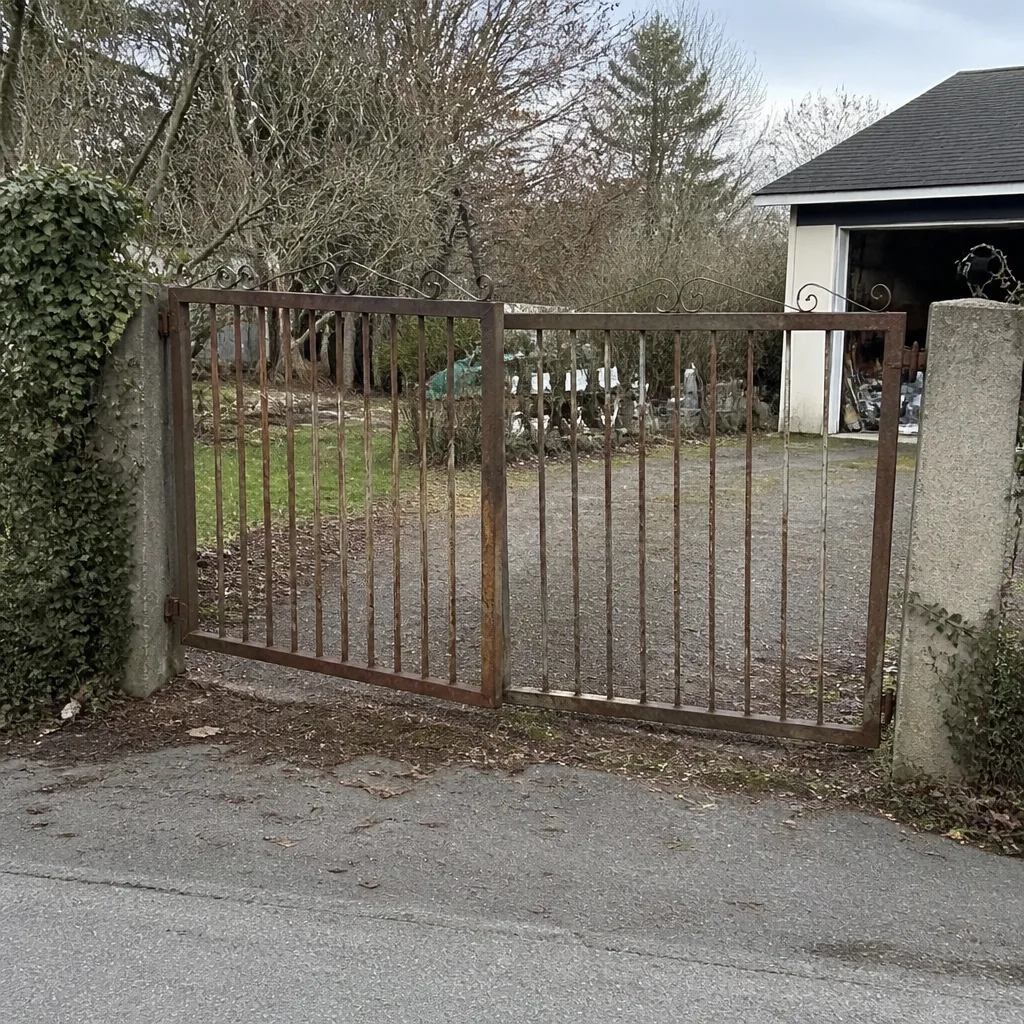
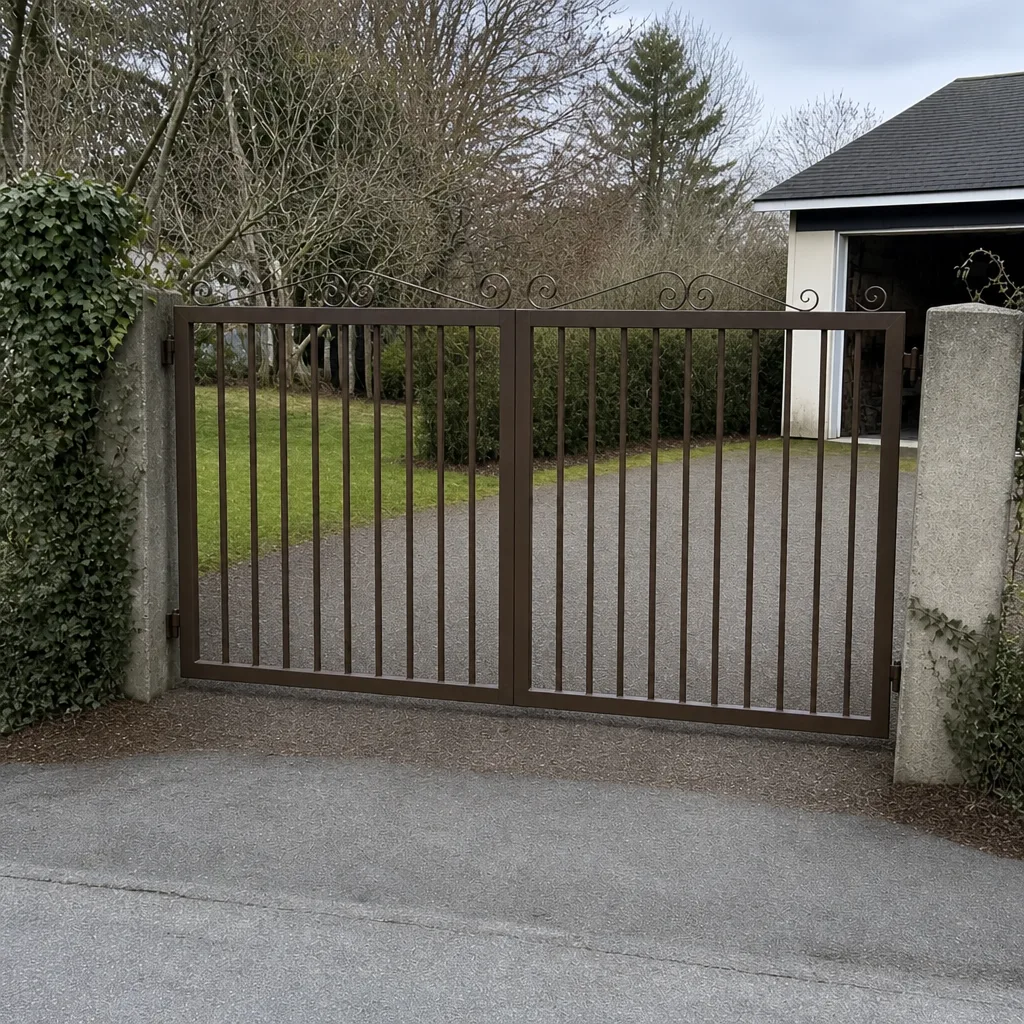
See the difference
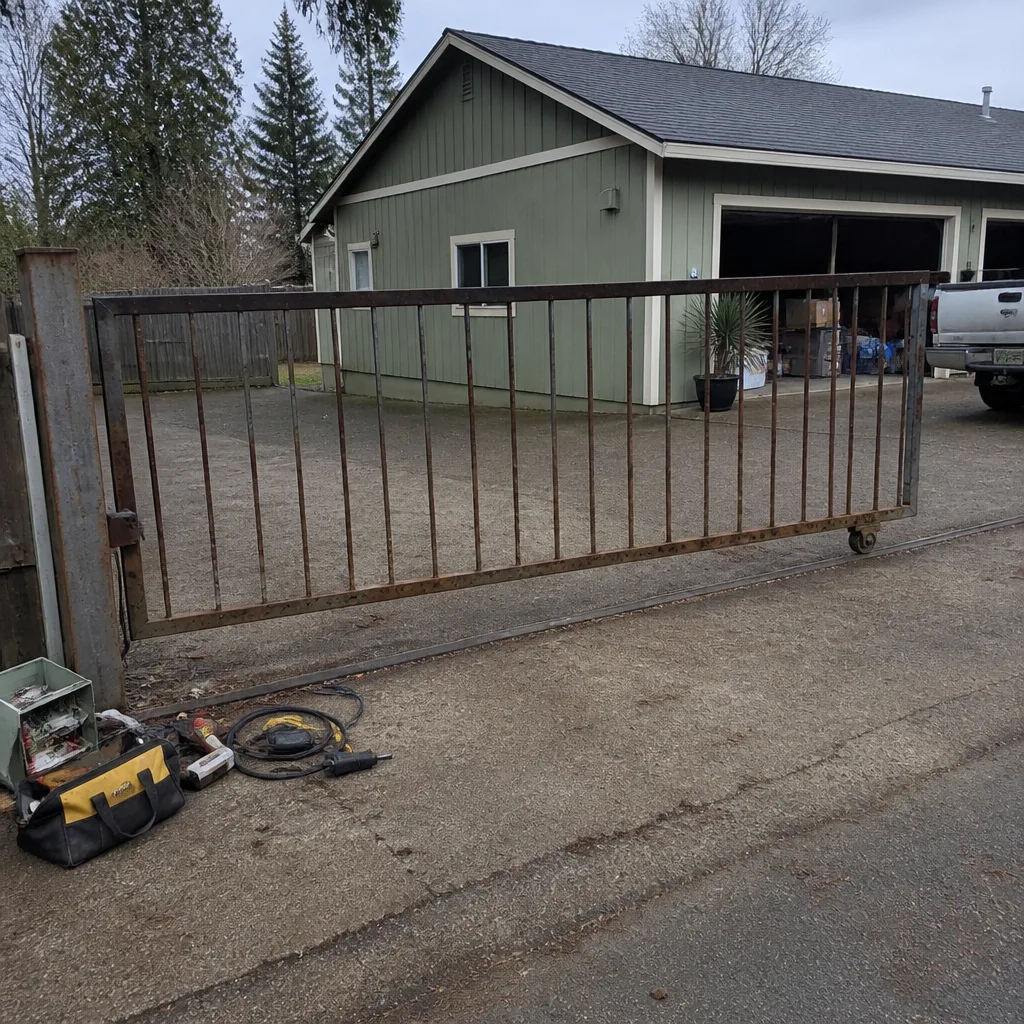 Before
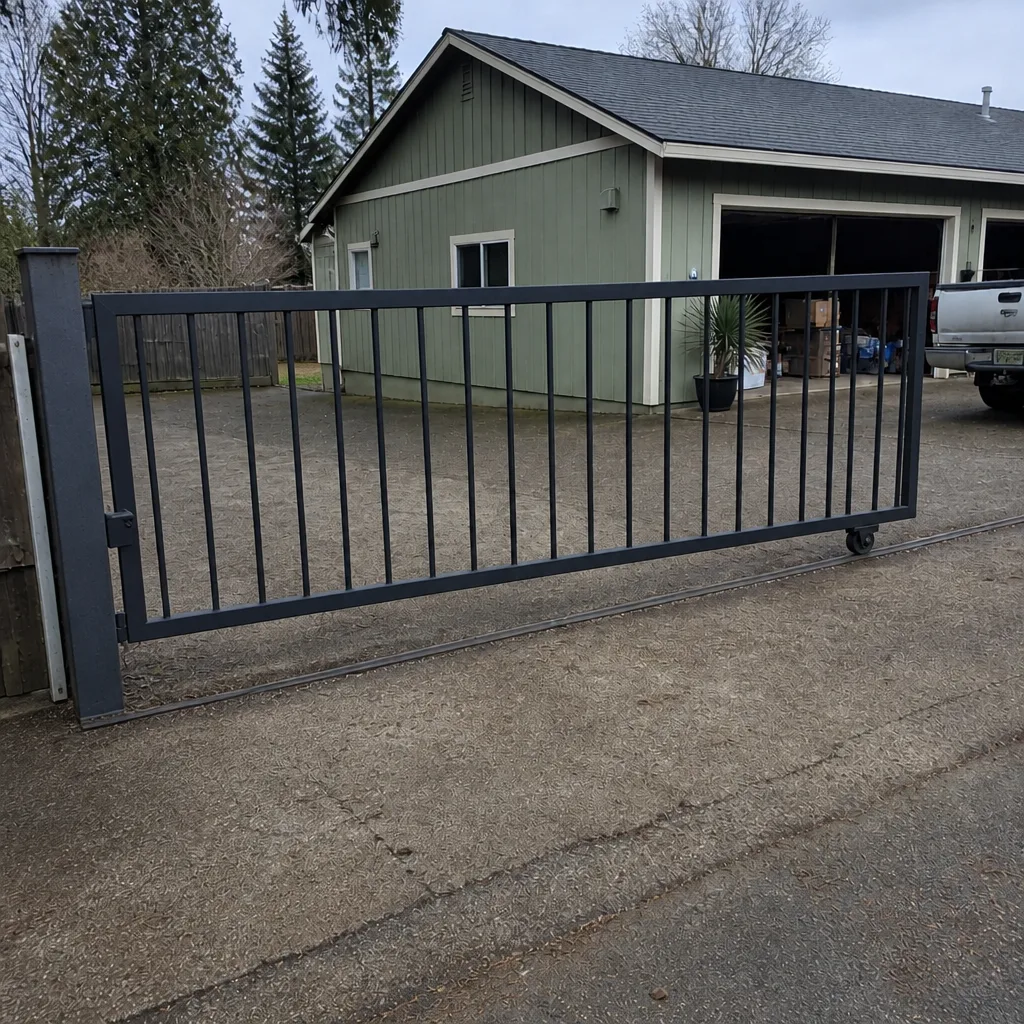 After
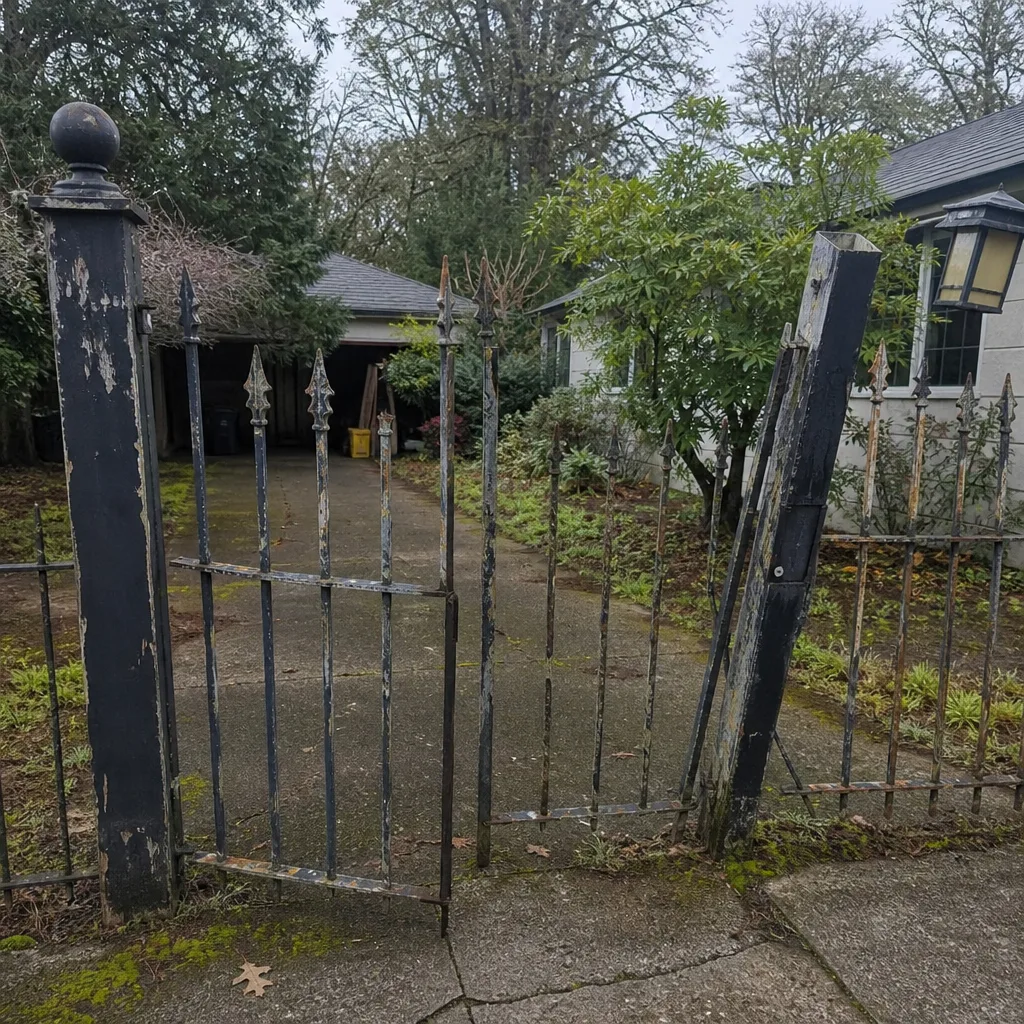 Before
 After
 Before
 After
When to Call a Professional
Call a technician when the gate fails to reverse on obstruction, when the operator is hot, burning, or smells of electrical fault, when a fault code returns after a single reset, or when the gate has gone off its hinge or track. Call when the cause of a slow or incomplete cycle isn’t clear from a hand-move test, when you’re hearing grinding or clicking from inside the operator housing, when sensor alignment fails to restore after cleaning, or when the access control side (keypads, intercoms, loop detectors) is intermittent. Gate Repair Hillsdale offers free estimates in Hillsdale with a written price agreed before any work begins. Our technicians have up to 13 years of experience and work on the brand you already have. Call (833) 508-9956 to schedule a visit.
Frequently Asked Questions
The most common warning signs are a gate that reverses without an obstruction, a gate that moves slower than it used to, a gate that stops short of full travel, grinding or clicking from the operator, and error codes that repeat after a reset. Visual signs like sagging hinges, worn tracks, loose posts, and frayed wiring usually point to structural or mechanical wear, while operational signs usually point to the operator, sensors, or control board. Call (833) 508-9956 for a free estimate if you’re seeing any of these.
Treat a gate that reverses randomly as a safety issue until you’ve tested it. In most cases, a random reversal is a misaligned or dirty photocell, but the same symptom appears when the safety edge fails. Break the beam with your hand while the gate is closing and confirm it reverses. If it doesn’t, shut the gate off and leave it closed until a technician sees it. Call us at (833) 508-9956 and we’ll schedule a visit.
No. A slow gate is either binding hardware (which you’ll feel when you hand-move it with the operator released) or a weakening motor, capacitor, or battery. The hand-move test separates them in under a minute. If the gate moves freely by hand but runs slowly under power, it’s the operator. If it drags by hand, it’s hinges, rollers, track, or post alignment. Either way, call (833) 508-9956 for a free estimate before it gets worse.
A sliding gate that climbs out of its bottom guide usually has a track or foundation problem, not an operator problem. The track has shifted, the rollers have worn unevenly, or the footing has moved. On swing gates, the equivalent is a gate that won’t close flush to the post, which usually means a hinge, a twisted frame, or a settled post. Both are structural and should be assessed before the operator is run again. Call (833) 508-9956 and we’ll look at it.
Yes. We work on nine major gate automation brands: LiftMaster, FAAC, BFT, Linear, Viking, Ghost Controls, DoorKing, Elite, and Mighty Mule. If your gate already has one of these systems installed, we’ll diagnose and repair what’s there rather than push a replacement brand. That includes reading error codes, adjusting limits, replacing worn drive components, and restoring sensor alignment. Call (833) 508-9956 for a free estimate.
Shut it down if it no longer reverses on obstruction, if the safety edge doesn’t trigger a reversal, or if the operator housing is hot, burning, or showing melted wiring. Power it off at the breaker, put the gate in manual release, and keep people clear until a technician arrives. These aren’t problems to run carefully; they’re problems to stop running. Call (833) 508-9956 and we’ll get a technician scheduled.
The Bottom Line
Most gate failures announce themselves weeks before the gate actually stops working, but they do it in a language most homeowners haven’t been taught. Learn to separate visual signs from operational ones. Read the error code pattern instead of the code. Use the hand-move test to tell structure problems from operator problems. Understand that the same symptom means something different on a slide gate than on a swing gate. And treat a failed safety reverse or a hot operator as an immediate shutdown, not a warning. In Hillsdale, the wet-to-dry seasonal swing adds its own wear cycle, and a monthly walk-around catches most of it before it becomes a repair.
Contact
If you’ve read this guide and recognize your gate in one of the sections, call us. Gate Repair Hillsdale offers free estimates, works on the brand you already have, and prices the job in writing before any work starts. Our technicians have up to 13 years of experience across LiftMaster, FAAC, BFT, Linear, Viking, Ghost Controls, DoorKing, Elite, and Mighty Mule systems, and we handle residential and commercial gates from the motor to the keypad. Call (833) 508-9956 for a free estimate and let’s get your gate back in service.
Written by the team at Gate Repair Hillsdale.