Last updated November 25, 2026
 Wrought iron
 Wood & steel frame
 Farm & ranch
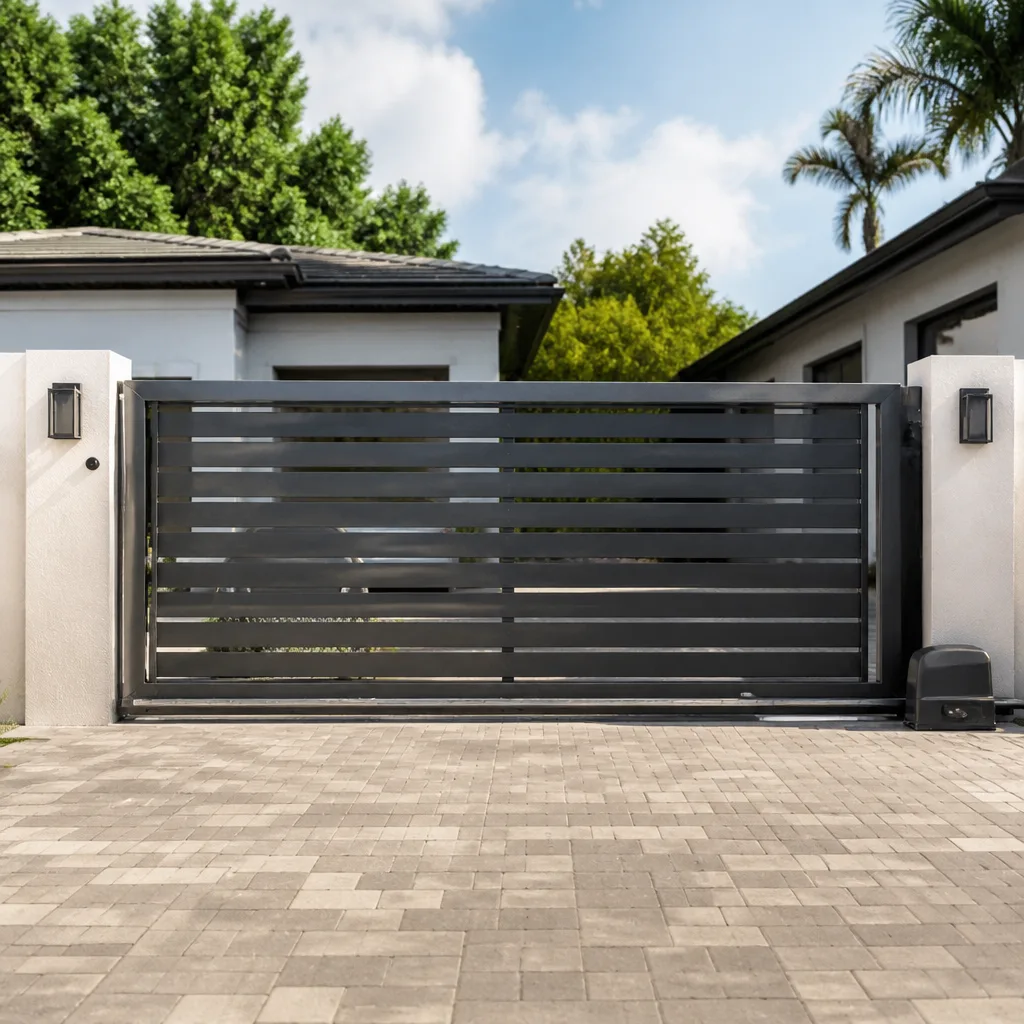 Sliding driveway gates
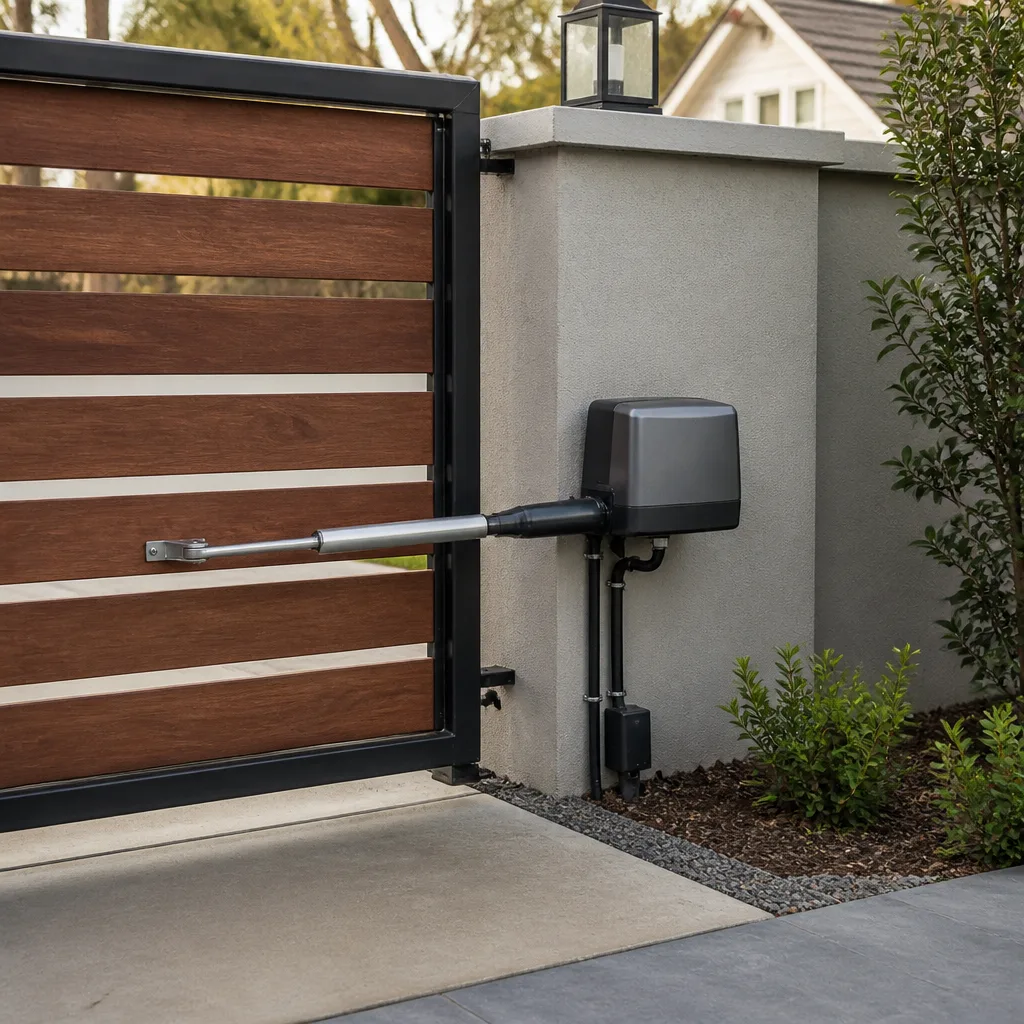 LiftMaster operators
Free on-site gate assessment - hinges, posts, and your LiftMaster or Nice gate operator checked before anything is quoted
The assessment is free and the quote is the invoice.
Get your free estimateSeasonal Gate Repair Care for Hillsdale: Year-Round Homeowner’s Guide
The gate problems we see most often in Hillsdale in March weren’t caused by winter. They were set up in October, when most homeowners decide the gate is fine until spring. That assumption is the real failure point. Hillsdale doesn’t punish gates with extreme cold or blistering heat. It punishes them with roughly nine months of steady moisture followed by a dry summer that pulls wood tight, shifts hardware, and changes how a latch closes. Knowing when to look matters more than working hard. This guide maps gate care to that actual local rhythm, month by month, so you’re catching problems at the right moment instead of the expensive one.
Quick Answer
Seasonal gate care in Hillsdale comes down to two critical windows: a thorough moisture-proofing pass in October before the wet season sets in, and a hardware-and-alignment inspection in late spring after it ends. Everything between those two points is small, quick checks. Wood gates need the October work most, electric gates need battery and enclosure checks before the darkest winter weeks, and post bases in Hillsdale’s clay-heavy soil need watching for standing water all wet season long.
Styles & brands we work with
- Wrought iron
- Wood & steel frame
- Farm & ranch
- Sliding driveway gates
- LiftMaster operators
Table of Contents
- Why Hillsdale’s Gate Problems Follow a Moisture Clock, Not Four Seasons
- What to Do in October Before the Wet Season Arrives
- Seals, Drains, and Electrical Enclosures: The Parts That Fail First
- What Summer Dry-Out Does to Wood Gates, Hinges, and Latches
- Standing Water and Post Bases in Clay-Heavy Soil
- Spring Inspection: Where to Look After the Wet Season
- Battery Backup and Solar Panels in a Low-Sun Winter
- A Month-by-Month Care Schedule for Hillsdale Gates
Why Hillsdale’s Gate Problems Follow a Moisture Clock, Not Four Seasons
Generic gate care advice is organized around four seasons because it’s written for places that have four seasons. Hillsdale runs on a different pattern. What shapes a gate here is moisture: months of it, followed by a summer that dries everything out fast. The gate itself doesn’t know it’s January. It knows whether it’s wet or dry, and it responds to the change between those states, not to the calendar.
This matters because the failures are predictable once you stop thinking in seasons and start thinking in wet and dry cycles.
- Sustained moisture softens wood, swells joints, creeps into sealed enclosures, and saturates soil around post bases.
- The dry-out shrinks wood back down, but rarely evenly. It also pulls fasteners, shifts hinges, and can leave a gate hanging a little differently than it did in spring.
- The transition between wet and dry is where the most visible symptoms appear: a latch that suddenly needs a nudge, a gate that sags, a keypad that acts temperamental.
In our experience, homeowners who see those symptoms in March are looking at consequences. The cause was usually months earlier, in the October they skipped. Reading the local pattern correctly turns gate care from reactive repair into a short list of well-timed checks. That’s the whole premise of this guide, and it’s why the calendar below is built around wet and dry rather than spring, summer, fall, winter.
Hillsdale sits in a pattern where the wet months dominate the year and the dry span is comparatively short but decisive. A gate that’s ignored through the wet season and then asked to perform flawlessly in the dry heat of late summer is being asked to do the hard part with no preparation. The good news is that preparation takes a few hours of focused attention in the right week.
What to Do in October Before the Wet Season Arrives
October is the single most valuable month for gate care in Hillsdale, and it’s the one most homeowners treat as the least urgent. The gate is working, the weather is still dry, and nothing is visibly wrong. That’s exactly why it’s the right time. Everything you seal, tighten, drain, and test in October is work you don’t do in the rain in January, and it’s work that prevents the March repair call.
Here’s the order that makes sense for a typical residential driveway gate:
- Walk the full swing or slide path. Open and close the gate by hand with the operator disengaged and listen for scraping, clicking, or binding. Anything you hear in dry October will be worse in wet January.
- Inspect the wood or metal for open joints and cracks. Small checks at the top and bottom rails are where water gets in first. Note them, then address them before the first sustained rain.
- Check every hinge, bracket, and fastener. Tighten what’s loose. Replace fasteners that have started to corrode rather than waiting for them to fail under load.
- Look at the seals on the operator housing and any control box. Door gaskets, cable entry points, and enclosure covers are where moisture enters electrical compartments.
- Clear the drainage around both post bases. This is the task most people skip and the one that matters most in Hillsdale’s soil, covered in detail further down.
- Test the operator and the safety devices while the weather is still dry, so any fault shows up now instead of during a storm.
If your gate is powered, this is also the moment to think about backup power before the short days arrive. More on that in the solar and battery section. The October pass isn’t long. For a single residential gate it’s a couple of hours of careful looking, and it front-loads most of the year’s real work into the one window where the weather cooperates.
Seals, Drains, and Electrical Enclosures: The Parts That Fail First
When an electric gate misbehaves after a wet winter, the failure is usually not in the motor. It’s in the low-voltage side: a keypad that’s taken on water, an enclosure that’s been sitting with a centimeter of condensation in it since December, or a photo-eye that’s fogged and misreading. Those components are the first to fail under sustained moisture, and they’re the ones October prep protects.
The specific places to check before the wet season:
- Control box and operator housing gaskets. Run a finger along the seal. If it’s cracked, flattened, or pulling away at a corner, it’s no longer sealing. Replace it before the rain.
- Cable entry points. Where wiring enters an enclosure, the gland or boot should be tight and pointed down, not up where water can run in along the cable.
- Keypad and intercom faceplates. These are mounted at hand height and take direct rain. Look for failed gaskets and any water staining inside the housing.
- Drainage channels and weep holes. If the enclosure or the gate post has a designed drain path, make sure it’s clear. Blocked drains turn a sealed box into a bucket.
- Desiccant packs, where fitted. If your enclosure uses one, replace it in October. In a Hillsdale wet season a spent desiccant is doing nothing by December.
We work on the brand you already have, so when a keypad or control board does fail, the answer is usually repair or a like-for-like replacement rather than a whole new system. Whether your operator is a LiftMaster or a Mighty Mule, the enclosure and low-voltage accessories are the parts moisture reaches first. If you find active water inside a control box or smell anything electrical, don’t open it up and poke around. Shut the power off at the breaker and get a technician to look at it. Gate operator wiring carries real current and the safety devices are interlocked; this is not a component to troubleshoot yourself.
Catching these in October costs a gasket and an afternoon. Catching them in February usually means a dead keypad, a shorted photo-eye, and a gate you can’t trust to close.
What Summer Dry-Out Does to Wood Gates, Hinges, and Latches
Wood moves. It swells in the wet months and shrinks in the dry ones, and in Hillsdale the swing between those states is large enough to visibly change how a gate closes. That’s why a wood driveway gate that latched cleanly in April can need a shoulder in August. The gate didn’t get heavier. The wood shrank, the joints pulled, and the whole leaf shifted a fraction on its hinges. Multiply that fraction across a wide gate and the latch stops lining up.
The dry-out shows up in a predictable order:
- Hinge screws loosen slightly as the wood around them shrinks. The gate drops a millimeter or two.
- The latch gap widens or tightens depending on which side moved more. The gate drags, catches, or won’t catch at all.
- Diagonal bracing and joints take the strain. If the frame is allowed to twist, the gate can develop a permanent lean.
- Finish fails at the corners first, letting the next wet season in through a new gap.
Here’s the practical distinction homeowners ask about: when is adjustment enough, and when is it permanent warp? Adjustment handles movement that’s still within the hardware’s range. If tightening and re-hanging the gate brings the latch back into line and the gate swings freely, you’re done for the season. If the gate is visibly twisted along its diagonal, if the frame has gone out of square, or if the same corner needs re-shimming every few weeks, that’s not a seasonal symptom. That’s movement that’s settled in, and it usually needs a hardware change, a brace added, or the leaf reworked. A technician can tell the difference in a short visit, which saves you from endlessly adjusting a gate that’s going to keep drifting.
Protecting the gate now is also protecting the operator. A wood gate that’s out of alignment drags on the opener, and that extra resistance is hard on the motor over a full summer. Getting the gate swinging freely is the cheapest service you can do for the automation behind it. If the mechanical side is where you need help, our gate repair covers hinges, latches, alignment, and the hardware that moves.
Standing Water and Post Bases in Clay-Heavy Soil
Post integrity is the most overlooked part of gate care, and in Hillsdale the soil makes it the most important. Clay-heavy soil behaves very differently from sandy or loamy ground when it gets wet, and that difference is what determines whether your gate posts stay where they were set.
Here’s the contrast that matters:
- Sandy or loamy soil drains fast. Water moves through it and away, so a post base might be wet for hours after rain and then dry out quickly. Posts in this soil tend to stay stable.
- Clay-heavy soil holds water. It swells when saturated and shrinks when it dries, and it can keep a post base wet for days or weeks after the rain has stopped. That sustained saturation is what softens the ground around a post and lets it move under load.
- The dry-out in clay is just as hard on a post. As the clay shrinks it can pull away from the post, leaving a gap that collects water next time.
In Hillsdale this means a gate post can look perfectly fine in August and be sitting in soft, saturated ground by January, or vice versa. What you’re watching for through the wet season is standing water at the base of either post. A puddle that lingers after the rain is the signal that the drainage around the post isn’t working and the post is being soaked for longer than it should be. Clearing the ground around the base, grading away from the post, and making sure water has somewhere to go is genuine preventive work.
If either post has started to lean, rock when you push on it, or show movement at the ground line, that’s a structural problem and it isn’t going to fix itself with the next dry spell. Post repair and resetting is a job for a specialist. Our Gate Repair Hillsdale team handles post work as part of general gate repair, and a leaning post on an automated gate is also a safety issue for the operator.
Spring Inspection: Where to Look After the Wet Season
Spring inspection is not a repeat of October. The two passes answer different questions. October is about keeping water out; spring is about finding out what the wet season did anyway, and correcting it before the dry heat locks the damage in. The focus areas are different, and so is the order you check them in.
After the wet season, in this order:
- Open and close the gate by hand and watch the path. Any binding or scraping that appeared over the wet months will show up immediately.
- Inspect every hinge, roller, and track for corrosion and wear. Wet-season exposure accelerates wear on moving parts far more than dry-season use does.
- Check the low-voltage hardware. Keypads, photo-eyes, intercoms, and loop detectors should all be tested. A fogged or water-damaged photo-eye is a common spring finding.
- Run the full operator cycle and test the safety reverse. The gate should stop and reverse on obstruction every time. If it doesn’t, that’s a fault, not a setting.
- Re-check post bases and the ground around them. Look for new gaps, movement, or pooling. This is where the clay soil shows its work.
- Look for failed finish on wood and rust on metal. Touch up what you find now, in dry conditions, so the next wet season starts with an intact surface.
Spring is also the right time to address anything the dry-out is about to make worse. If a wood gate has started to shift, or a latch needs a nudge, fixing it in dry weather before the full summer is much easier than waiting for the gate to be at its most shrunken and stubborn. The wet season does most of the wearing; the spring inspection is where you catch it.
In our experience the most common spring repair on a Hillsdale gate is a low-voltage accessory that silently took on water and has been intermittent ever since. If your gate motor & opener is cycling fine but the accessories are flaky, that’s usually the reason, and it’s a fixable one.
Battery Backup and Solar Panels in a Low-Sun Winter
An electric gate that relies on battery backup or solar charging needs its power checked before the low-sun weeks, not after. In a Hillsdale winter the sun sits low and the daylight is short, and a battery that’s been quietly degrading all summer has no margin to carry the gate when charging drops off. The check belongs in October, alongside the moisture-proofing pass, because that’s when you still have time to replace a battery before the dark stretch.
What to look at:
- Battery age and history. Backup batteries don’t fail suddenly; they lose capacity slowly and then one day the gate won’t open when the power’s out. If the gate has been running on backup more than expected, the battery is the first suspect.
- Solar panel angle and condition. A panel that’s been shadowed by summer foliage or coated in grime is charging less than it should. Check it before the low-sun season, not during it.
- Charge controller and connections. Corroded terminals on the solar side cause slow, hard-to-diagnose charging problems.
- The operator’s low-battery behavior. Know what your system does when the battery runs down, so a fault doesn’t surprise you. On a LiftMaster or an Elite operator the low-battery warning can be subtle.
Battery backup matters more than convenience. On an automatic gate, a system that dies mid-cycle can leave the gate partway open, and depending on the site that’s a security and safety problem. If your gate installation predates your current power setup, or if you’ve added a battery backup you’re not sure is sized correctly, a technician can check the whole electrical side as one job rather than guessing at it piece by piece.
Don’t open an operator housing or a battery compartment to test or swap cells if you’re not comfortable with the wiring. The supply side and the safety devices are interlocked, and the wrong move there is a shock hazard. Get the power isolated and let a technician handle the electrical side.
A Month-by-Month Care Schedule for Hillsdale Gates
The whole year of gate care, organized around the two real windows and the checks in between. This isn’t a rigid calendar; shift it to fit the weather in a given year.
- October – pre-wet-season pass. Seal, tighten, clear drains, replace gaskets, check battery and solar, test the operator and safety devices. This is the biggest single task of the year.
- November to February – watch and wait. Keep an eye on the post bases for standing water. Note any new noises, dragging, or intermittent keypad behavior, but hold non-urgent repairs until the ground dries. Emergency faults get attended to now.
- Early spring – post-wet-season inspection. The full six-point spring check above. This is where the wet-season damage gets found and fixed.
- Late spring – dry-out adjustment. Re-tighten hinge hardware, check latch alignment, and correct any wood movement before it settles. Distinguish real adjustment from permanent warp here.
- Summer – light monitoring. Watch for binding as wood shrinks, and keep the gate swinging freely to spare the operator. No heavy work needed.
- September – pre-October walk-through. A quick inspection so anything found can be handled in the October pass rather than in the rain.
Two hard passes a year, plus watching the post bases and the accessories, covers the vast majority of what a Hillsdale gate needs. The homeowners who skip the October pass are the ones who get the March repair call. The ones who do it are the ones whose gates just keep working. Since this is a full-service gate specialist handling mechanical repair, operators, and access control under one roof, the electrical and the mechanical sides get checked in the same visit rather than by two different trades.
Common Mistakes to Avoid
- Treating the gate as “fine until spring.” The most damaging mistake in Hillsdale is the October assumption that nothing needs doing because the gate is working. Nearly everything you’ll wish you’d done in March could have been done in October.
- Skipping the post bases. Homeowners look at the gate leaf and the operator and ignore the ground. In clay-heavy soil, standing water around a post is the earliest sign of a structural problem.
- Adjusting a wood gate endlessly instead of diagnosing it. Re-shimming the same corner every few weeks is not seasonal movement, it’s a warp that needs a hardware fix. Keep adjusting it and you’ll be doing it forever.
- Interpreting a dead keypad as a dead system. A keypad or photo-eye that failed after a wet winter is usually the low-voltage side, not the operator. Don’t replace the whole system over an accessory.
- Leaving the battery check until it fails. Battery backup and solar charging need attention before the low-sun weeks. Waiting until the gate won’t open on a dark winter evening is the expensive way to find out.
- Troubleshooting the wiring yourself. Opening an operator housing or control box to look for water damage is a shock hazard. Isolate the power and call a technician.
- Mixing up spring and fall tasks. Spring inspection is a search for what the wet season did, not a repeat of the October prep. Doing the same checklist twice a year misses half the problems.
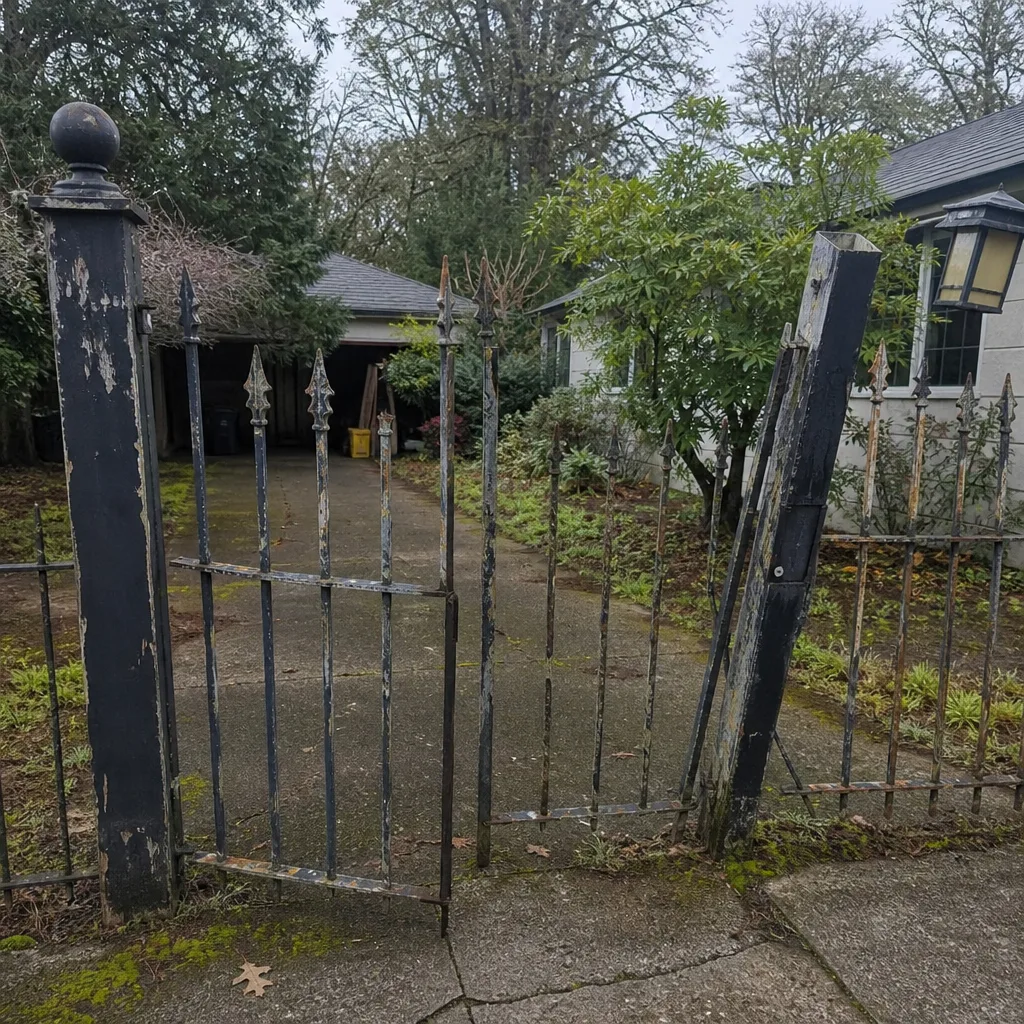
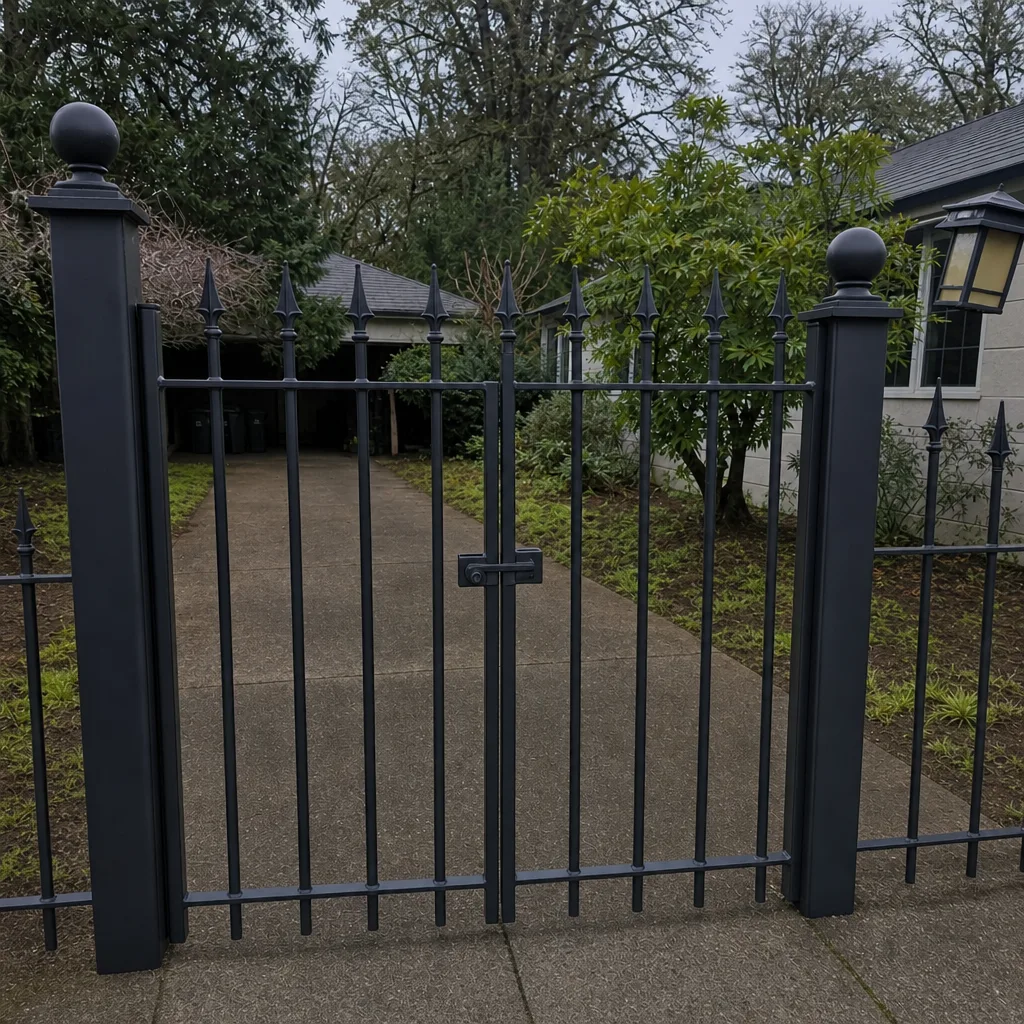
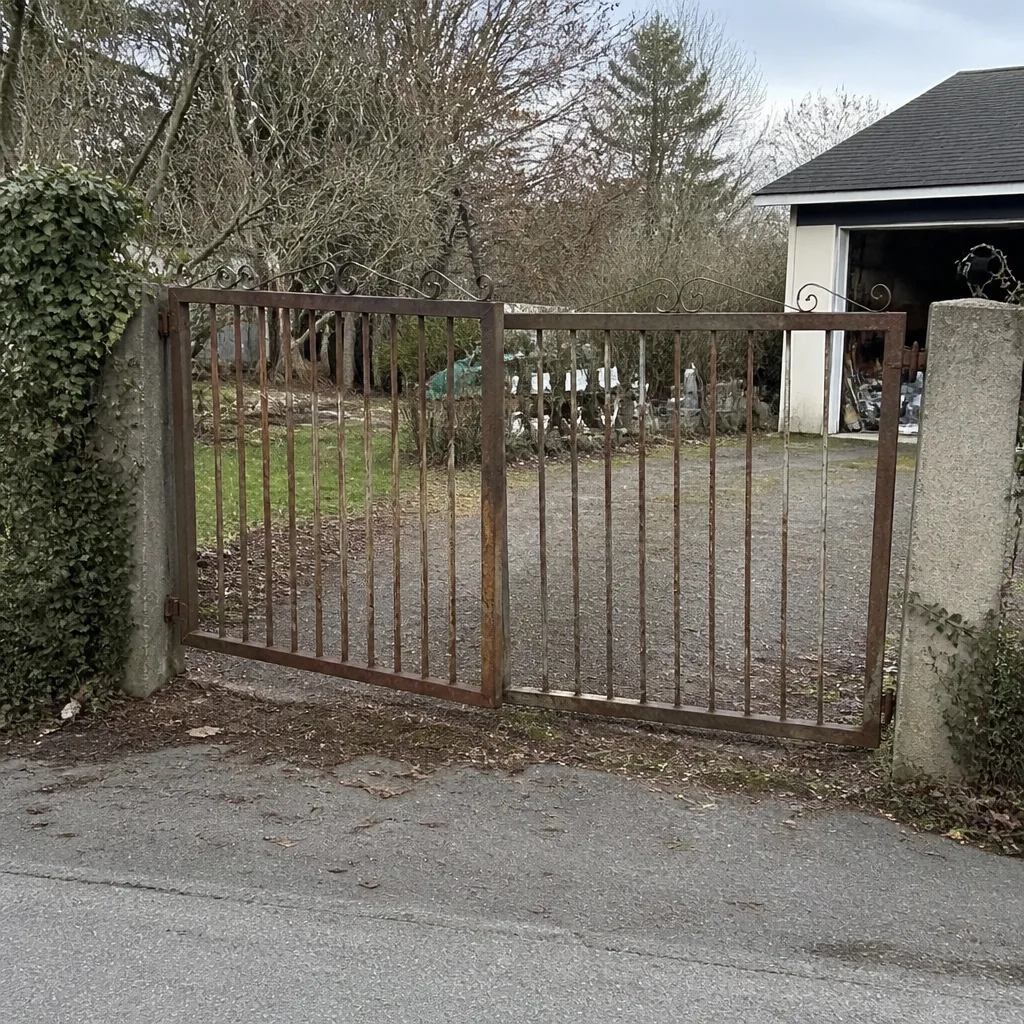
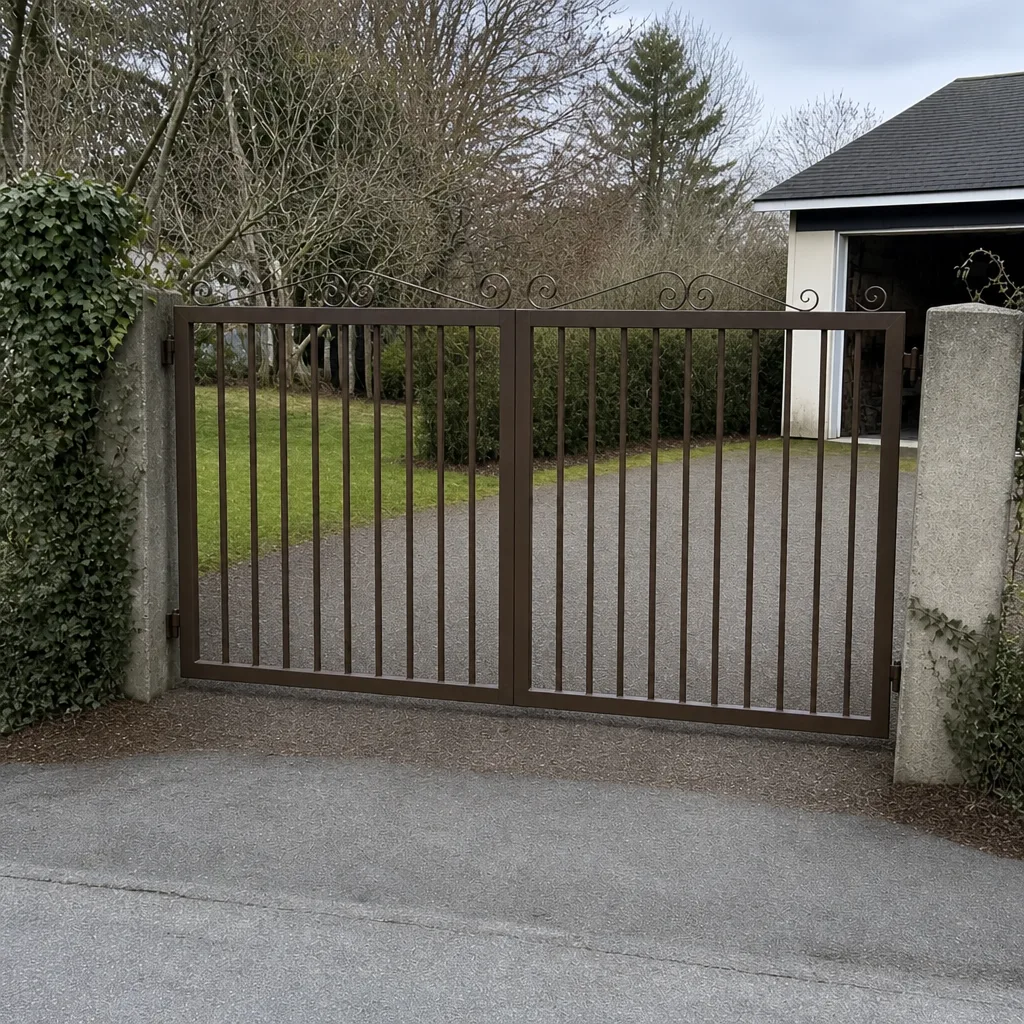
See the difference
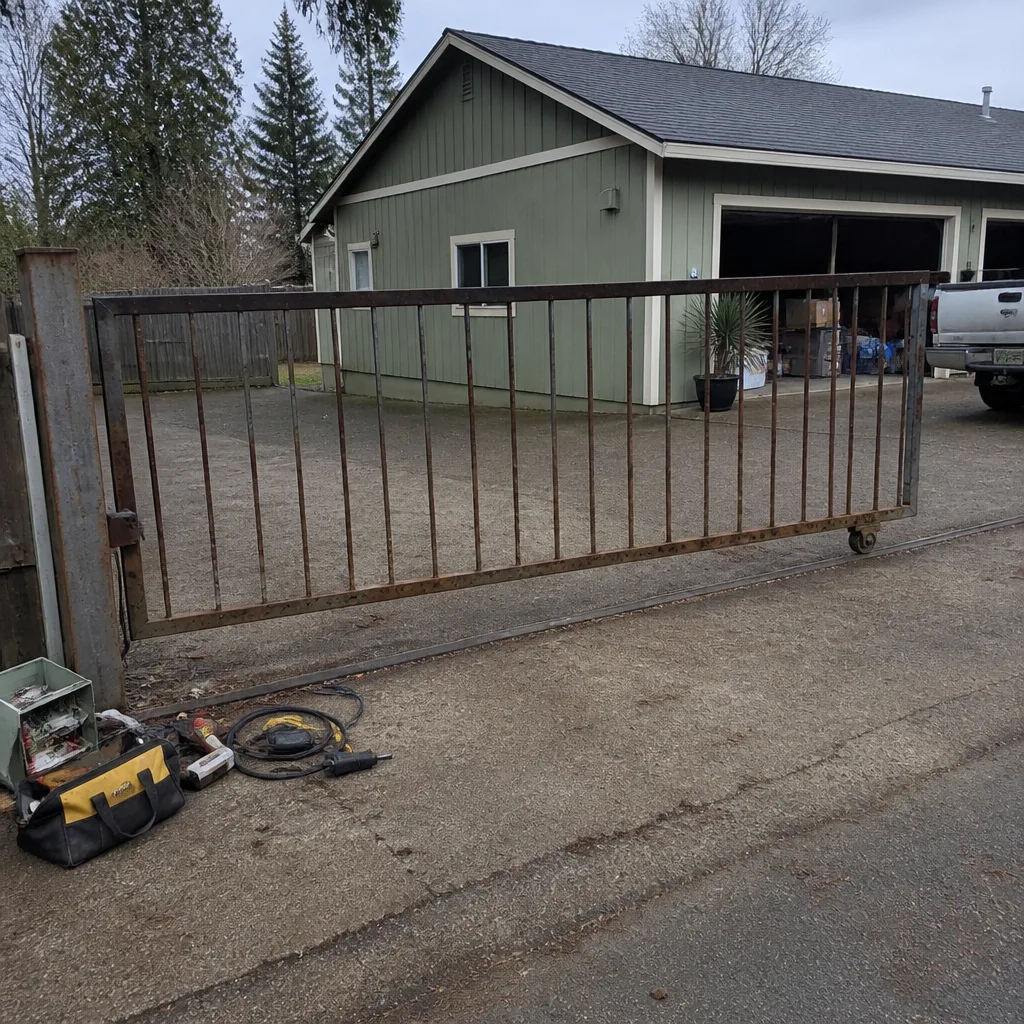 Before
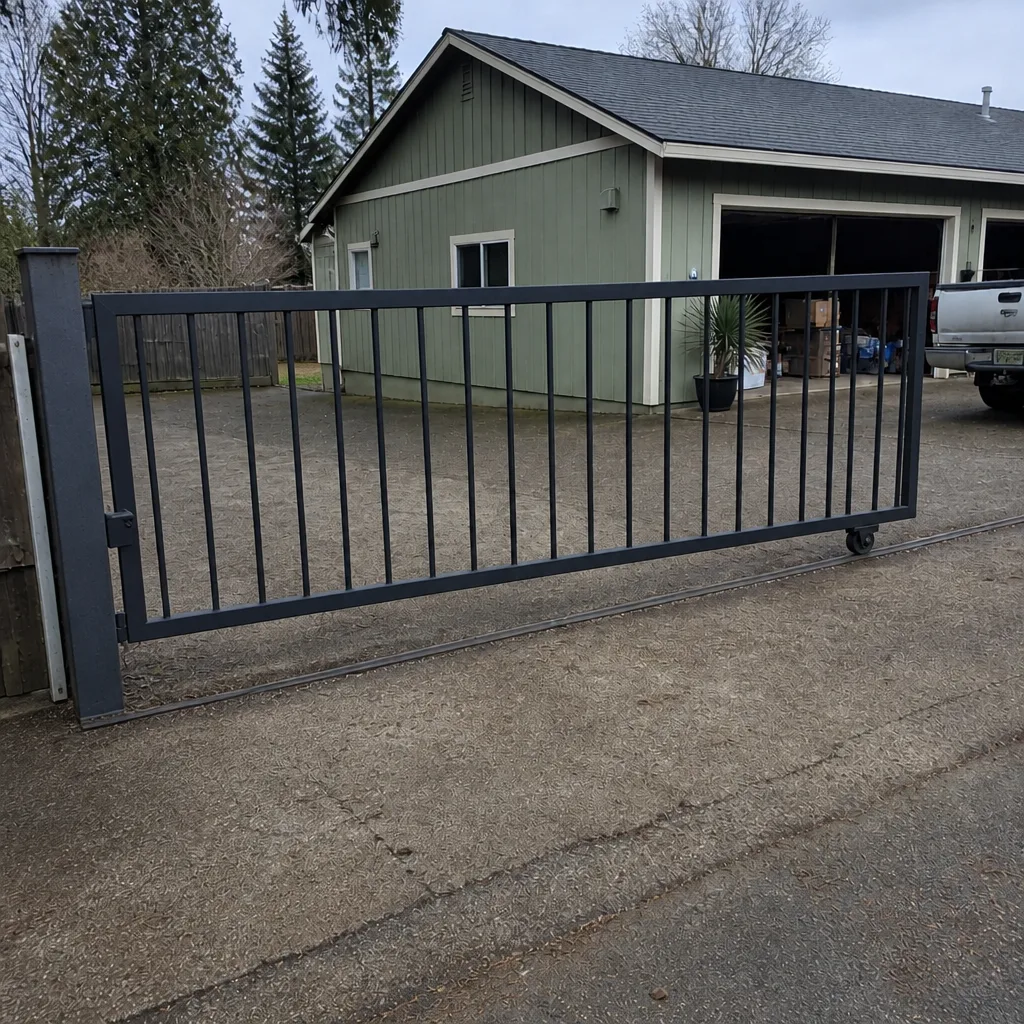 After
 Before
 After
 Before
 After
When to Call a Professional
Most gate care is looking, tightening, and timing, and a homeowner can handle the routine checks with a little guidance. The problems that call for a technician are specific. A gate that’s binding, sagging, or dragging after the dry-out, and that stays that way after a hinge adjustment, needs professional diagnosis to separate seasonal movement from permanent warp. A post that’s leaning, rocking, or sitting in standing water that won’t drain is a structural issue. Any sign of water inside a control box, a keypad that’s dead or intermittent, a photo-eye that won’t clear, or an operator that fails its safety reverse is electrical work and should be handed to someone trained to do it safely. A battery that won’t hold a charge through the low-sun months is worth a professional check too, because the fix may be sizing, charging, or the battery itself. Gate Repair Hillsdale offers free estimates in Hillsdale, and whether your gate needs a repair or a full service visit, you can reach us at (833) 508-9956. Our technicians have up to 13 years of experience, we work on the brand you already have, and the price is quoted and agreed before any work starts.
Frequently Asked Questions
October, before the wet season, is the most important time. A complete pre-wet-season pass on seals, drains, electrical enclosures, fasteners, and battery backup prevents the majority of the repair calls that show up in March. The gate working “fine” in October is exactly why that’s the right time to look.
Summer dry-out shrinks the wood, which shifts the whole gate leaf slightly on its hinges and changes the latch gap. In Hillsdale the swing between wet and dry is big enough that a gate that latched cleanly in spring can need a nudge by late summer. Tightening the hinge hardware and re-hanging the gate usually fixes it, unless the gate has twisted, in which case it needs a hardware change rather than another adjustment.
Standing water around a post means the drainage isn’t working and the clay soil around it is staying saturated, which softens the ground and lets the post move under load. In Hillsdale’s clay-heavy soil this can persist for days or weeks after rain, unlike sandy soil that drains fast. Clear the ground around the base, grade water away from the post, and if the post has started to lean or rock, call a technician.
No, and this is one of the most common spring findings. A keypad or photo-eye that fails after a wet winter is usually the low-voltage accessory that took on water, not the operator or the whole system. Whether your setup runs a FAAC, a LiftMaster, or another brand, the accessory is a discrete part and can be repaired or replaced without touching the rest of the system.
Check it before the low-sun winter weeks, ideally during the October pass. Solar charging drops in a low-sun winter, so a battery that’s been quietly losing capacity all summer has no margin. Battery backup isn’t just convenience on an automatic gate: a system that dies mid-cycle can leave the gate partway open. A technician can check the battery, the panel angle, and the charge controller in one visit.
You can do the looking and tightening yourself, and the October walk-through and spring inspection are both written to be done by a homeowner. What you shouldn’t do yourself is open an operator housing or control box, troubleshoot wiring, or adjust anything with the power on. Wiring and the safety devices are interlocked and a genuine shock hazard. Leave the electrical side to a technician and handle the mechanical checks yourself.
The Bottom Line
Gate care in Hillsdale follows the moisture clock, not the calendar. Two windows do most of the work: the October pre-wet-season pass on seals, drains, enclosures, and battery backup, and the spring inspection that finds what the wet season did. Between them, the job is watching the post bases in clay soil and keeping the gate swinging freely so the dry-out doesn’t settle into permanent warp. Handle those checks and the gate stays reliable through both halves of the year. Skip October and you’ll meet the consequences in March.
If your gate needs work, call Gate Repair Hillsdale at (833) 508-9956 for a free estimate. We’re a gate-only specialist covering repair, installation, operators, and access control, we work on the brand you already have, and the price is quoted and agreed before any work starts.
Written by the team at Gate Repair Hillsdale.