Last updated November 25, 2026
 Wrought iron
 Wood & steel frame
 Farm & ranch
 Sliding driveway gates
 LiftMaster operators
Free on-site gate assessment - hinges, posts, and your LiftMaster or Nice gate operator checked before anything is quoted
The assessment is free and the quote is the invoice.
Get your free estimateDIY vs Professional Gate Repair: The Hillsdale Homeowner’s Decision Guide
Resetting a gate operator after a power outage is a legitimate DIY task. Adjusting the force settings on that same operator without a load-test meter can make it strong enough to injure someone and still pass a visual check. That gap between the two jobs is the entire DIY-versus-professional question, and it doesn’t get answered by asking how handy you are. A homeowner who rebuilds carburetors for fun should still keep their hands off the limit switches on a commercial-grade slide gate operator, not because they lack skill, but because those switches control travel and stopping force in ways that aren’t visible from the driveway. This guide draws the line by component rather than by confidence. You’ll get a component-by-component eligibility list, the Oregon liability picture for self-repaired electric gates, the parts-availability problem that stops some repairs cold, and a cost framework for when DIY actually saves money in Hillsdale.
Quick Answer
In Hillsdale, DIY gate repair is reasonable for batteries, remote pairing, photo-eye alignment, keypad battery swaps, and clearing obstructions. Everything that involves the operator’s force settings, limit switches, control board wiring, or the 120-volt power run needs a trained technician with calibration tools, because a gate that looks like it works can still be out of compliance with UL 325 safety standards and create real liability for the property owner. The line is drawn by component, not by how mechanically confident you feel.
Styles & brands we work with
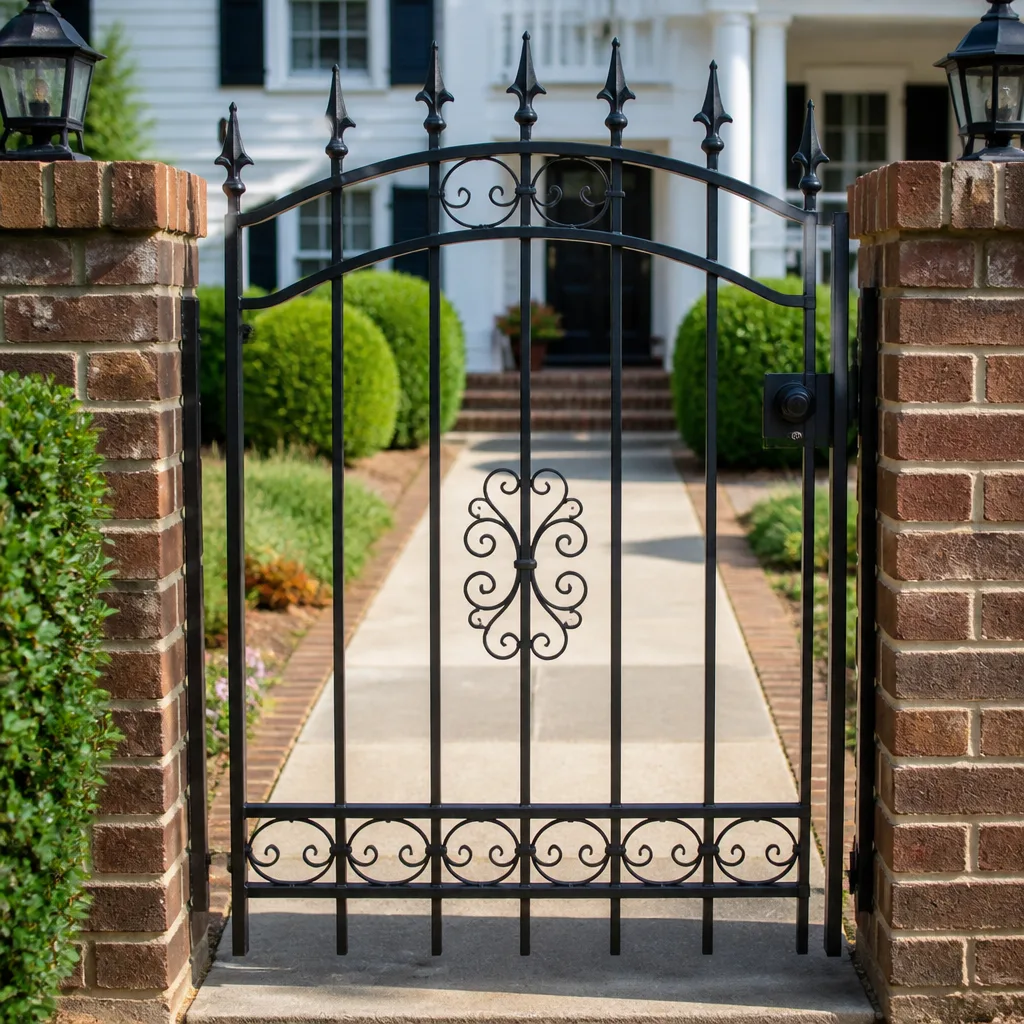
- Wrought iron
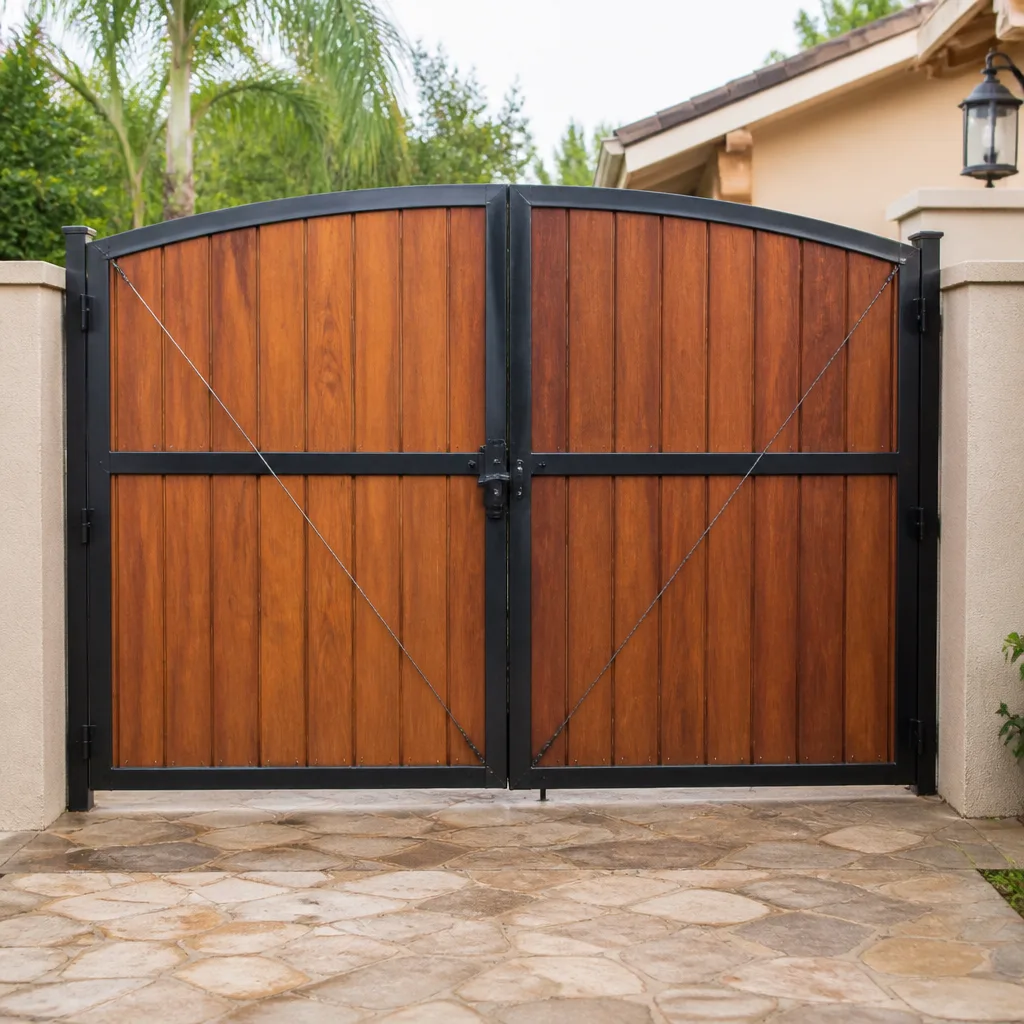
- Wood & steel frame
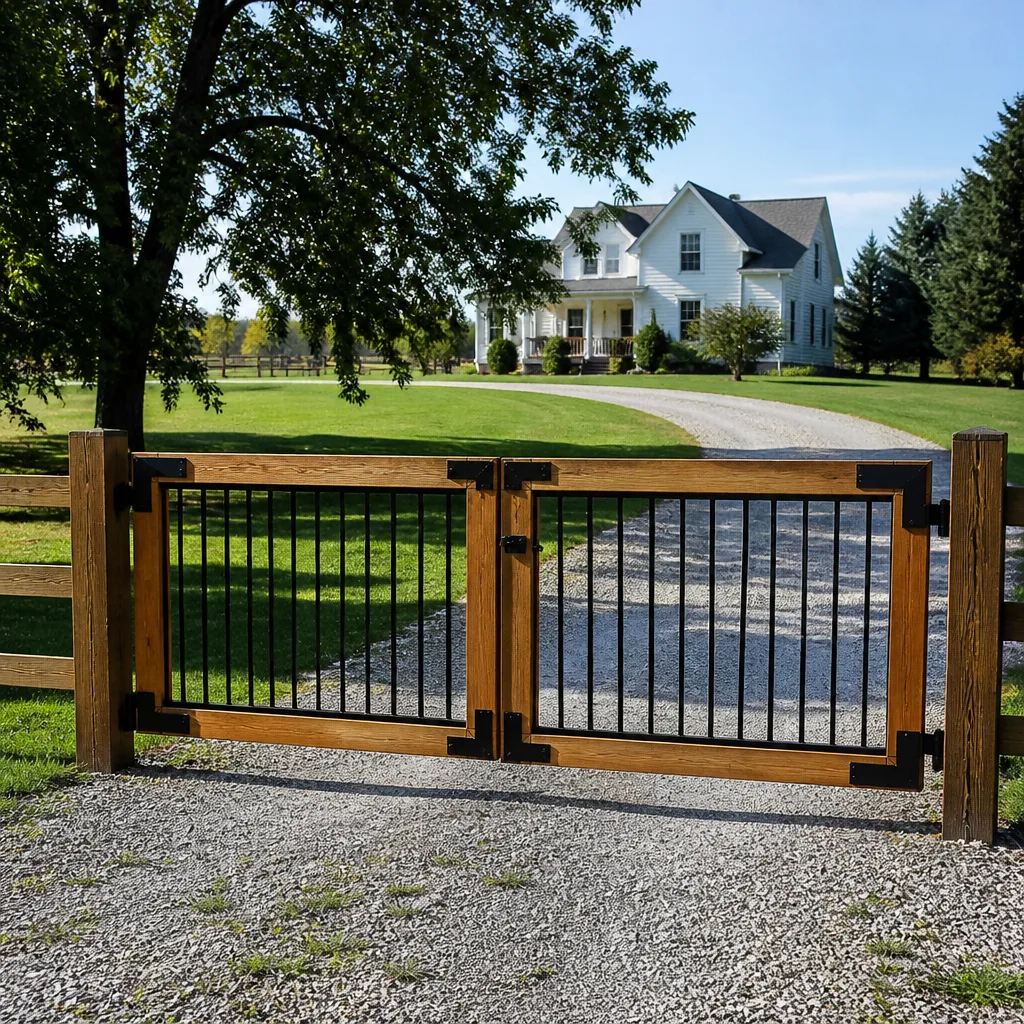
- Farm & ranch
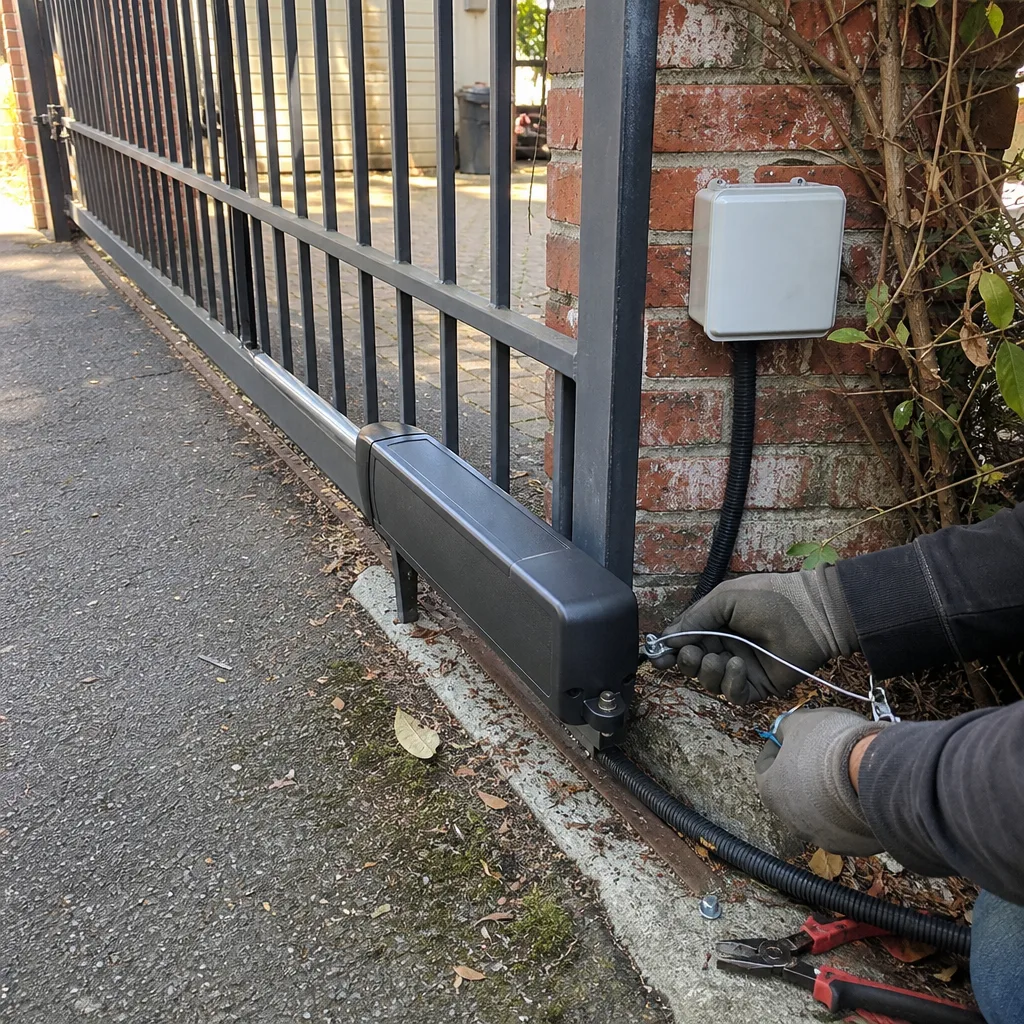
- Sliding driveway gates
- LiftMaster operators
Table of Contents
- Component-by-Component: What’s Genuinely DIY
- Why the Operator Is the Hard Stop
- Oregon Liability and UL 325: What Self-Repair Actually Exposes You To
- The Parts Availability Problem Nobody Warns You About
- When “Almost Worked” Becomes a Harder Repair
- The Real Cost Framework: When DIY Saves Money and When It Costs More
- What Hillsdale Conditions Do to Gates Over a Season
- When to Call a Professional
Component-by-Component: What’s Genuinely DIY
The useful way to sort gate work is by what a component actually controls, not by how easy it looks from the outside. A photo-eye that’s been knocked out of alignment by a bumped wheelbarrow is a five-minute fix. A control board that decides when the gate reverses is not, even though both sit inside the same housing on your driveway in Hillsdale. Here’s the split we use when a homeowner calls and asks whether they should try something themselves.
Genuinely owner-serviceable
- Remote and keypad batteries. Low batteries cause more “my gate stopped working” calls than any other single cause.
- Pairing a new remote. Every major brand – LiftMaster, Linear, Elite, Mighty Mule – has a pairing procedure in the manual. If you’ve got the manual, this is fine.
- Clearing obstructions from the track. Branches, gravel, and debris that stop a slide gate mid-travel can be removed by hand with the power off.
- Photo-eye visual alignment. Re-aiming a photo-eye so its beam hits the reflector again is a legitimate first step when a gate won’t close.
- Reset after a power outage. Cycling power and following the manual’s reset procedure is exactly the kind of task a homeowner should do.
- Manual release operation. Knowing how to disengage the operator with the manual release key is important, and you should test it once a year. But it’s also a check, not a repair.
- Lubrication of exposed hinges and rollers per the manufacturer’s schedule.
Not owner-serviceable
- Force and sensitivity settings. These need a load-test meter to set correctly.
- Limit switches on a slide gate operator. You can’t see what they control while you’re turning them.
- Control board wiring or replacement. The board interprets every signal in the system.
- The 120-volt power run. This is line voltage and a licensed electrician or a trained gate technician’s job.
- Motor or gearbox replacement. Weight, mounting geometry, and coupling alignment all matter.
- Any repair to a commercial-grade operator like a DoorKing slide gate. The stakes go up with cycle counts and duty ratings.
If a component sits on the second list and you’re not sure, the safest thing is to leave the gate in manual release and call someone. Our gate repair technicians deal with this exact fork in the road every week in Hillsdale.
Why the Operator Is the Hard Stop
The operator is the component that separates a homeowner DIY repair from a professional one, and it’s worth understanding why rather than just accepting the rule. A gate operator isn’t a switch, it’s a control system. It reads inputs from photo-eyes, loop detectors, keypads, and safety edges, and it decides how much force to apply while moving. Every one of those decisions depends on parameters that were calibrated for your specific gate’s weight, length, and hinge or track geometry. Change the gate, or change the settings, and the calibration no longer matches the physical gate.
Here’s the part most homeowners don’t see. When you adjust force on a residential swing operator, the gate may open and close smoothly through several test cycles and still be applying more force than UL 325 safety standards allow. The gate doesn’t feel dangerous. It doesn’t sound dangerous. It just stops reversing when it should because the sensitivity setting you nudged is now too low to detect a child. Nothing about a visual check catches that.
The limit switches on a slide gate are the same story. They tell the operator when to stop at each end of travel. If the close limit is set slightly past the actual gate stop, the operator presses the gate against the stop every cycle until the motor stalls and the gearbox takes damage. If it’s set slightly short, the gate never fully closes and the photo-eye circuit starts throwing false fault codes that lead to more adjustments. On a commercial-grade unit like a DoorKing, one wrong limit setting can lead to a gearbox replacement. In our experience, that’s a $600 to $1,200 mistake undone by a five-minute calibration.
We work on the brand you already have, whether it’s a Ghost Controls unit on a residential driveway or a heavy-duty slide operator at a commercial entry. Getting the force and limit settings right with a load meter is the part that makes the difference between a repair and a repeat failure.
Oregon Liability and UL 325: What Self-Repair Actually Exposes You To
UL 325 is the standard that governs automatic gate operators in the United States, and it’s the standard a court or an insurer will look to if an electric gate injures someone. It requires specific safety features: a primary means of entrapment protection plus a secondary means, photo-eyes, sensing edges, or equivalent. It also requires that the operator’s force settings be calibrated so the gate reverses on contact within the limits the standard sets. When you adjust force settings yourself without a load meter, you can’t demonstrate that the gate still meets the standard.
Oregon is a comparative-fault state, and part of what that means for a homeowner who self-repairs a gate is that a documented DIY repair made to the safety-critical portions of the operator can become evidence against you. If a child is injured by a gate whose force settings were changed by the owner, the homeowner’s exposure is much larger than if the same gate had been serviced by a trained technician who calibrated the force, tested the reversal, and documented the work. This isn’t a scare tactic, it’s the reason UL 325 exists and the reason professional calibration is not the same as a careful homeowner with a screwdriver.
Two other pieces of the liability picture matter in Hillsdale:
- Commercial property gates carry higher stakes because cycle counts and duty ratings are higher, and the operator is expected to be maintained to standard. A commercial gate that fails can be a workers’ compensation problem as well as a liability one.
- Homeowner association rules in some Hillsdale neighborhoods specify who may service shared-entry gate equipment, so a homeowner-facing gate repair may technically be the HOA’s responsibility. Check before you touch anything.
None of this says you should never adjust your gate. It says that the safety-critical parts of the operator are the wrong place to learn by trial and error. When in doubt, our gate motor & opener service includes full safety calibration as part of the repair. For a broader look at residential and commercial gate work in Hillsdale, our main Gate Repair Hillsdale page is a good starting point.
The Parts Availability Problem Nobody Warns You About
Sometimes the DIY question is settled before skill enters the picture. A significant number of gate operator components aren’t sold to non-trade buyers. Control boards, gearboxes on certain models, specific limit switch assemblies, and proprietary motor couplings on brands like DoorKing and LiftMaster are typically available only through authorized distribution channels. A homeowner can buy a remote or a battery on any retail shelf, but a replacement control board for a commercial-grade operator often requires a trade account to order at all.
What that means in practice:
- You can’t buy the part. The component you’ve identified as the problem simply isn’t on the retail market for your model.
- You buy a “compatible” part. Third-party boards and gearboxes are sold online. Some work. Many don’t, or they work for a few months and then fail in ways that cause secondary damage.
- You install it wrong. A board that’s technically the right part still needs the operator’s configuration transferred, which requires knowing which parameters matter for your specific gate.
- You void the warranty. Even on consumer-grade operators like Mighty Mule or Ghost Controls, installing a non-OEM board usually voids whatever warranty remains on the unit.
Before you order anything online for a gate operator in Hillsdale, check whether the part shows up in a manufacturer’s trade catalog or only on a resale site. If it’s the latter, the repair is likely a professional one whether you like that answer or not. The parts side of the gate installation business looks the same way, which is why we specify components from the brands we know will still have parts availability years out.
When “Almost Worked” Becomes a Harder Repair
The most expensive gate repair we get called for in Hillsdale is the one a homeowner already attempted. Not because the homeowner did something reckless, but because an “almost worked” repair usually leaves the system running in a state that’s slightly wrong. Slightly wrong is harder to diagnose than completely broken, and the eventual repair ends up costing more than a professional call would have from the start. Here’s what that looks like by component.
- Photo-eye re-aimed by eyeball. The gate closes, but the photo-eye beam intermittently drops out on bright mornings. The operator throws a fault code every few days. The homeowner replaces the photo-eye, the problem persists, and the real culprit is a mounting bracket that’s slightly bent. A two-minute laser alignment on the original visit would have found it.
- Force setting nudged up. The gate closes now, but the force is over the UL 325 limit and the reversal test no longer works. Nobody notices until a technician visits for a different reason, and now the safety calibration is a full additional job.
- Limit switch adjusted without understanding. The gate travel looks close to right but the close limit presses against the physical stop every cycle. Six weeks later the gearbox is grinding. Replacing a gearbox costs more than the original limit adjustment ever did.
- Third-party control board installed. The gate opens and closes, but the loop detector and safety edge signals aren’t being interpreted the same way. The gate randomly reverses. Diagnosis requires removing the third-party board, restoring the original, and starting over.
- Battery replaced with a truck battery or a mismatched unit. The gate works for a while and then fails in cold weather, because the replacement battery’s cold-cranking profile doesn’t match what the operator expects. This one shows up consistently in the cooler months around Hillsdale.
None of these are hypothetical. They’re the categories our technicians see most often when a DIY repair has gone sideways in Hillsdale. The theme is the same: a component gets “close enough,” and close enough costs more to fix than broken did.
The Real Cost Framework: When DIY Saves Money and When It Costs More
The cost comparison between DIY and professional gate repair isn’t really about labor rates, because the homeowner’s labor is free. It’s about whether the DIY repair actually solves the problem or just delays it. A DIY repair that works saves the professional visit entirely: a $3 remote battery, a $15 photo-eye bracket, a $25 keypad battery. A DIY repair that “almost works” typically costs more than a professional visit would have, because the eventual professional call has to diagnose two problems: the original fault and whatever the attempted repair introduced.
Here’s the framework we use with homeowners in Hillsdale:
| Repair type | DIY typical outcome | Professional typical outcome |
|---|---|---|
| Remote or keypad battery | Saves real money ($3-$15 in parts) | Not worth a call |
| Remote pairing | Saves real time and money | Not worth a call |
| Photo-eye alignment | Often fixes it ($15-$40 in parts if a bracket is bent) | Roughly the same cost, faster resolution |
| Power cycle after outage | Saves real money | Not worth a call |
| Force settings adjustment | Risk of UL 325 non-compliance, safety exposure | Full calibration and safety check |
| Limit switch adjustment | Risk of gearbox damage, repeat calls | Correct setting on the first visit |
| Control board replacement | Often impossible to source the right part | Factory part with proper configuration |
| Motor or gearbox | Not realistic for a homeowner | Full replacement with alignment |
| 120-volt power run | Not a DIY task | Handled as part of a professional repair |
The final price on any professional visit is quoted and agreed before work starts, which removes the surprise-invoice question from the equation. If the DIY repair is on the first four rows of that table, go ahead. If it’s on the last five, the arithmetic almost never works out in favor of DIY once you account for the cost of undoing an “almost worked” repair.
Our technicians have up to 13 years of experience across the nine major brands we service, so the diagnosis phase on a professional visit is usually fast. That keeps the cost of a professional call lower than a homeowner might expect, especially compared to the cost of a gearbox or control board replacement after a failed DIY attempt.
What Hillsdale Conditions Do to Gates Over a Season
Gate hardware in Hillsdale takes a seasonal pounding that shapes which repairs are actually worth doing yourself. The wet, cool months drive moisture into hinge pins, roller tracks, and the seals around control boards and loop detectors. The dry summer months shrink wood gates slightly, shift post alignment a few millimeters, and change how a gate sits on its hinges. Those small seasonal shifts are exactly what knock photo-eyes out of alignment and what push a limit switch past the sweet spot it was set to six months ago.
The practical takeaway for DIY decisions in Hillsdale:
- Late fall and early spring are when most photo-eye calls come in, because moisture and temperature shifts move the mounting hardware. Photo-eye alignment is a legitimate DIY task in those months, but only if the mounting bracket itself is straight.
- Summer post movement on wood swing gates is a real thing in Hillsdale, and it’s often mistaken for an operator problem when the actual issue is that the gate has shifted. The fix is mechanical, not electrical, and it’s the wrong time to try a force adjustment to compensate.
- Loop detectors in driveways are relatively stable in Hillsdale’s climate, but they fail when the driveway surface shifts or cracks. That’s a professional repair, not a DIY one, because re-cutting and re-sealing the loop requires specific equipment.
- Battery backup performance drops noticeably in the cooler months. A gate that worked all summer on battery backup can fail in the cold, and the cause is usually a battery that’s past its useful life rather than a system fault.
If you’re noticing a pattern of small problems that appear and disappear with the seasons, the underlying issue is usually a mounting or alignment problem rather than an operator fault. That’s worth a professional diagnostic before you start adjusting settings to compensate.
When to Call a Professional
Call a professional when the repair touches the operator’s force settings, limit switches, control board, or the 120-volt power run. Call a professional when the part you need isn’t sold to non-trade buyers, when your gate operates on a commercial-grade system like a DoorKing slide operator, or when a previous DIY attempt “almost worked” and the gate is running but not right. Call a professional when the gate is used by children, guests, or delivery drivers and the safety features matter more than saving a service call. And call a professional when you want the job documented for insurance or liability purposes, because a professional calibration with a load-test meter is the only way to demonstrate UL 325 compliance after a force adjustment.
Gate Repair Hillsdale offers free estimates in Hillsdale – call (833) 508-9956. If you’re in a Hillsdale neighborhood where the gate is shared with an HOA or you’re managing a commercial property, mention that when you call so we can plan the visit accordingly.
See the difference
 Before
 After
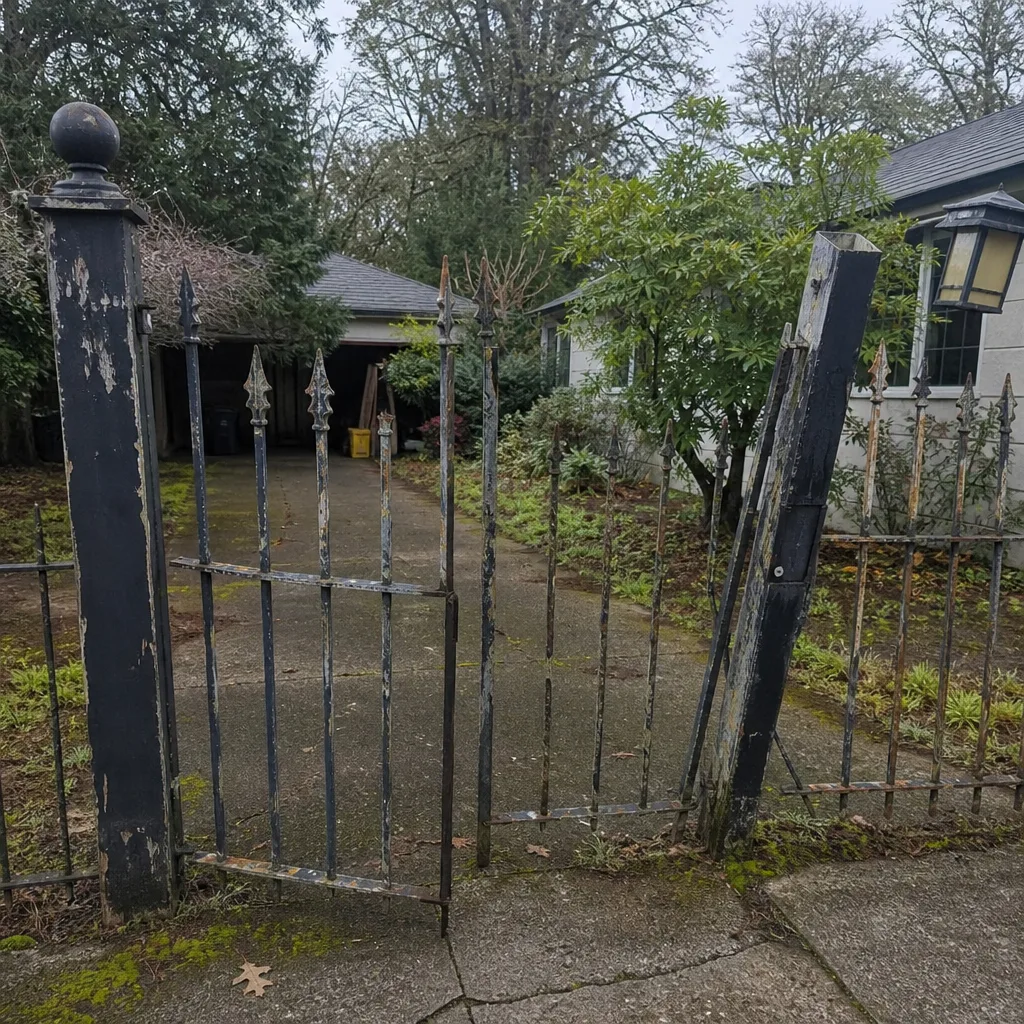 Before
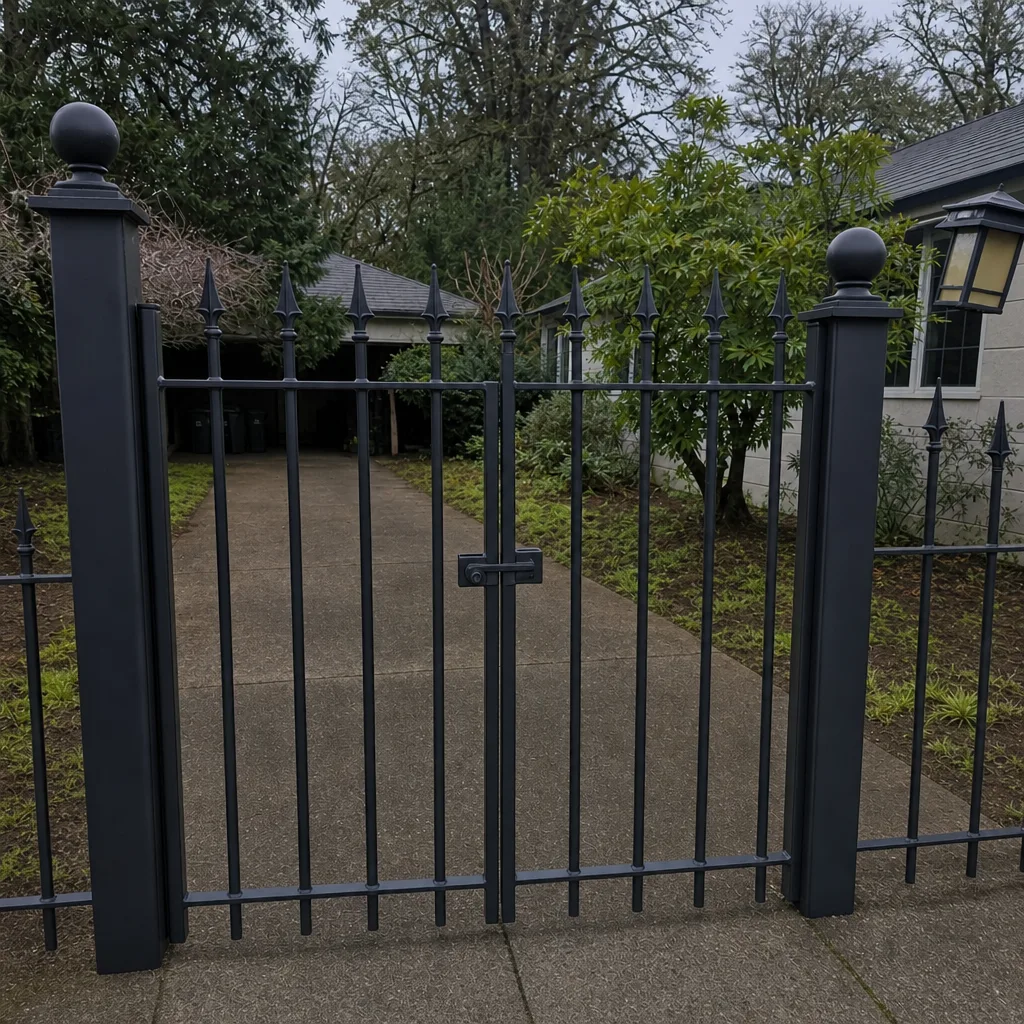 After
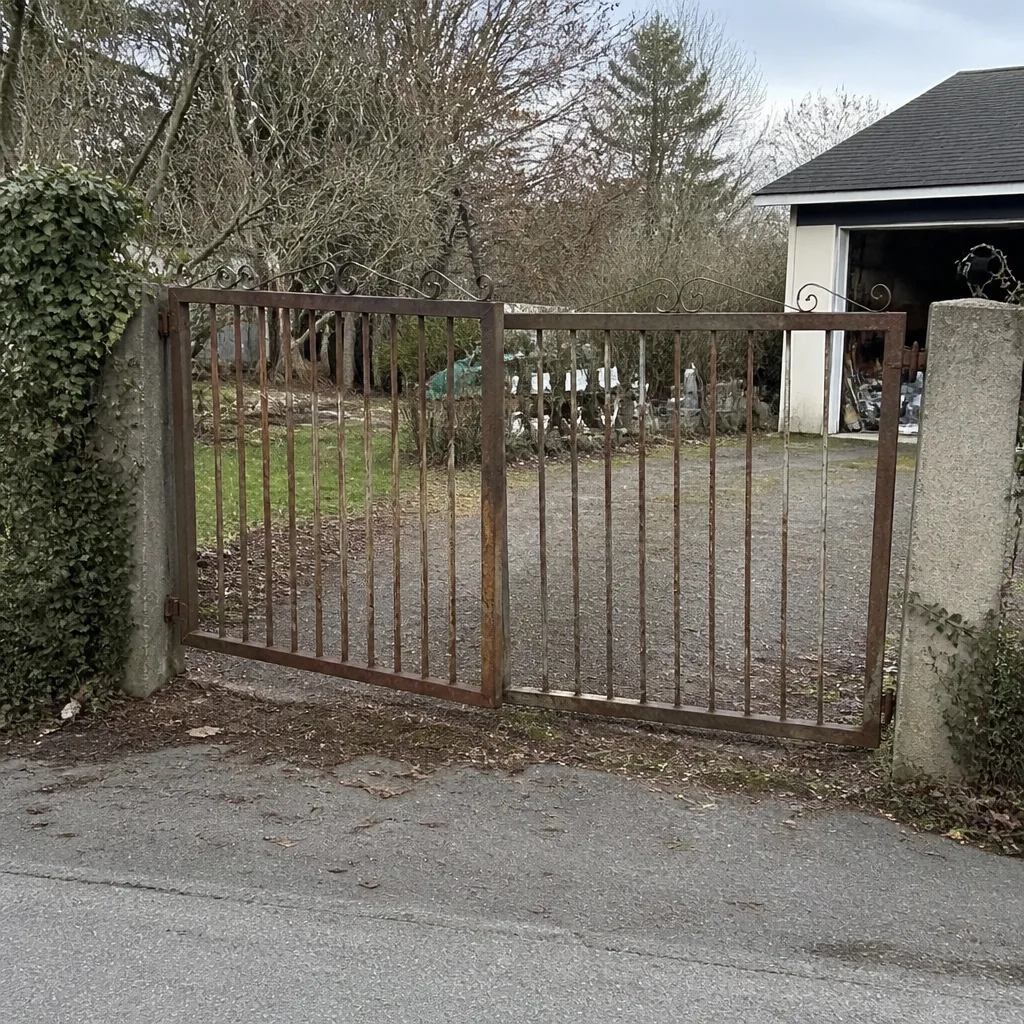 Before
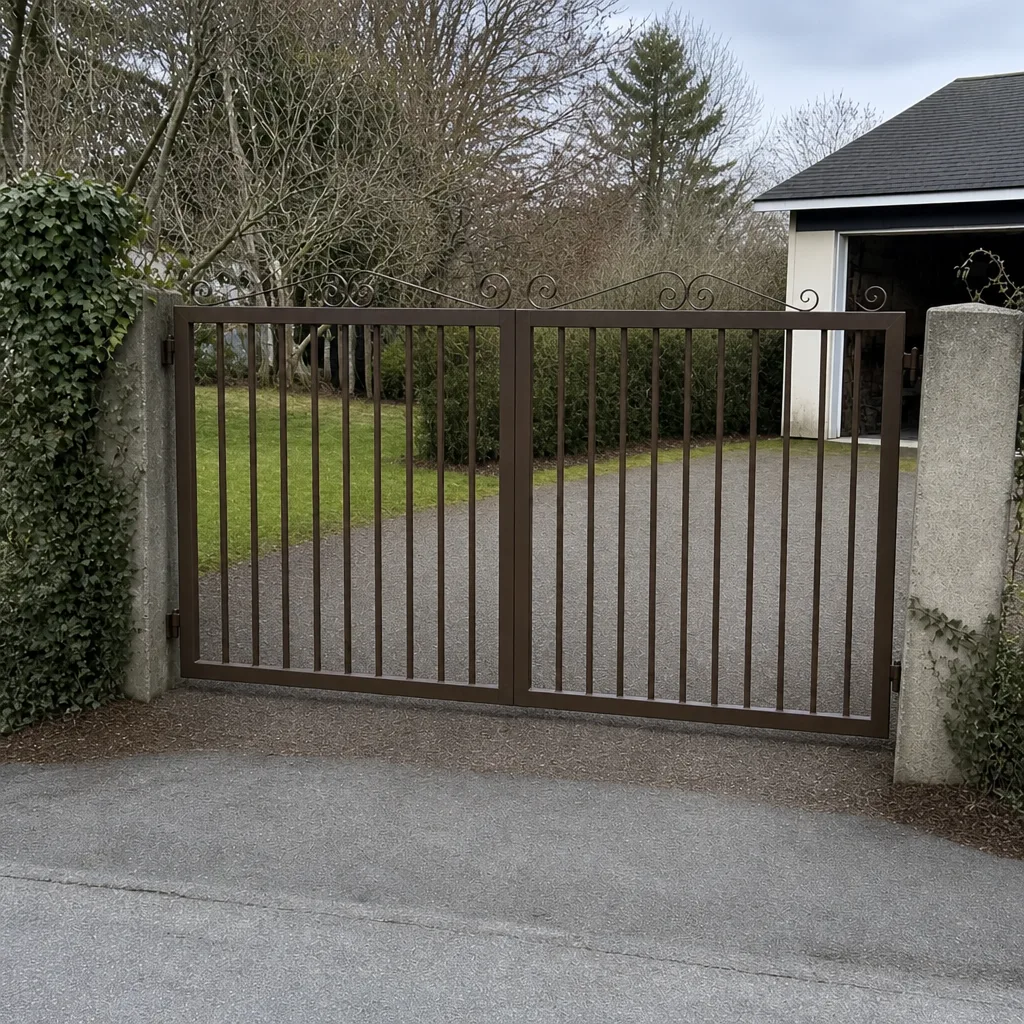 After
Common Mistakes to Avoid
- Adjusting force settings “just a little” to make a gate close. A small force increase can push the operator past UL 325 limits without any visible symptom. The gate will still look fine on a visual check.
- Assuming a third-party control board is a direct swap. Boards sold online as “compatible” often work partially, and the resulting intermittent faults cost more to diagnose than the original board ever would have.
- Replacing a photo-eye before checking the bracket. A misaligned or bent mounting bracket is the more common cause. Replacing the photo-eye first just adds the cost of a part you didn’t need.
- Testing a gate’s reversal by body weight. This is the single most dangerous DIY mistake we see. Use a manufacturer-approved test object per the operator’s manual, never a hand, arm, or body.
- Ordering a “compatible” gearbox or motor online for a commercial-grade operator. Gearboxes and motors on commercial gates are matched to the operator’s duty rating and mounting geometry. A close-fit replacement usually fails early.
- Ignoring a seasonal pattern and treating it as a one-off fault. A gate that misbehaves every spring in Hillsdale is telling you the mounting hardware has shifted. Adjusting the operator won’t fix it.
- Skipping the manual release test. If you haven’t disengaged and re-engaged your operator in a year, do that check before anything else. It’s a two-minute diagnostic that tells you whether the mechanical side is sound.
- Forgetting to check HOA or commercial-property service responsibility. In Hillsdale, some shared-entry gates are the HOA’s to service. A homeowner-facing repair can create a paperwork problem even if the repair itself is correct.
Frequently Asked Questions
No, not safely. Force settings need a load-test meter and the operator’s calibration procedure to set correctly, and a visual check can’t tell you whether the gate still meets UL 325 reversal limits. If your gate is struggling to close, the fix is almost always a mechanical issue like a hinge, a roller, or a track that needs attention rather than a force adjustment. Call (833) 508-9956 for a free estimate in Hillsdale.
Batteries, remote pairing, photo-eye re-alignment if the mounting bracket is straight, clearing obstructions from the track, and the manual release test are all reasonable DIY tasks. Anything touching force settings, limit switches, the control board, the motor, or the 120-volt power run should be handled by a trained technician, and so should any third-party part swap on a commercial-grade operator.
Yes, but only for the safety-critical portions of the operator. UL 325 governs how the operator detects and reverses on contact. If you change force or sensitivity settings without a load-test meter, you can’t demonstrate that the gate still meets the standard, and in Oregon that exposure becomes part of the liability picture if the gate later injures someone. Battery swaps and remote pairing don’t touch UL 325 at all.
Control boards, gearboxes, and specific limit switch assemblies on brands like DoorKing and LiftMaster are typically sold only through trade distribution channels. That’s a manufacturer choice, not a gate company’s policy. If a part isn’t in a manufacturer’s trade catalog and only shows up on a resale site, the repair is realistically a professional one regardless of your skill level.
Run through three questions in order. Does the repair touch the operator’s force settings, limits, control board, motor, or 120-volt power run? If yes, call a professional. Is the part you need available through a manufacturer’s trade channel or only on a resale site? If it’s resale-only, call a professional. Would a “close enough” outcome still leave a working gate that could quietly fail its reversal test? If yes, call a professional. Everything else is fair game.
Yes, our technicians service both residential driveway gates and commercial property gates, including the high-cycle slide operators used at commercial entrances. The DIY-versus-professional line gets firmer on commercial equipment because the duty cycle is higher and a mis-set limit switch can shorten the life of a gearbox much faster than on a residential gate. Call (833) 508-9956 for a free commercial estimate.
Use the manual release to disengage the operator and move the gate to the closed position by hand. Don’t force it against the operator if the release mechanism doesn’t disengage cleanly; that’s usually a sign the gearbox or the linkage needs professional attention. Call (833) 508-9956 and we’ll schedule a technician visit starting with the next available slot.
The Bottom Line
The DIY-versus-professional question is settled by component, not by confidence. Batteries, remotes, photo-eye re-alignment, obstruction clearing, and the power-cycle reset are all fair for a homeowner to handle. Force settings, limit switches, control boards, motors, gearboxes, and the 120-volt power run are not, because the failure mode on those components is silent, and the cost of an “almost worked” repair often exceeds the cost of the original professional visit. If you’re unsure which side of the line a repair falls on, the safe call is to leave the gate in manual release and get a diagnostic. Our team works on the brand you already have, from the motor to the keypad, whether your operator is a Ghost Controls unit on a residential driveway or a DoorKing slide on a commercial entry.
Call Gate Repair Hillsdale at (833) 508-9956 for a free estimate. We’ll walk through what the repair actually involves, what it costs, and whether it’s something you can genuinely handle yourself, and we won’t do work that doesn’t need doing.
Written by the team at Gate Repair Hillsdale.