Last updated November 25, 2026
 Wrought iron
 Wood & steel frame
 Farm & ranch
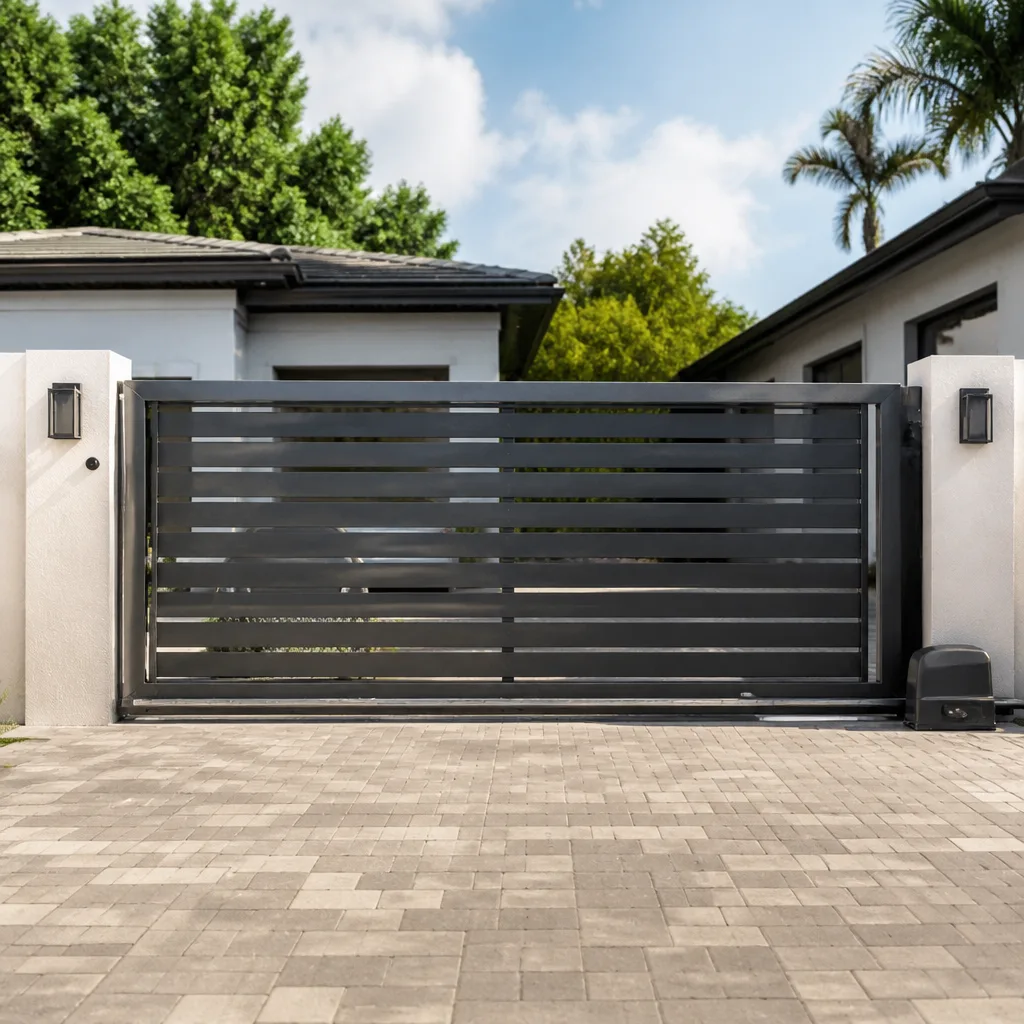 Sliding driveway gates
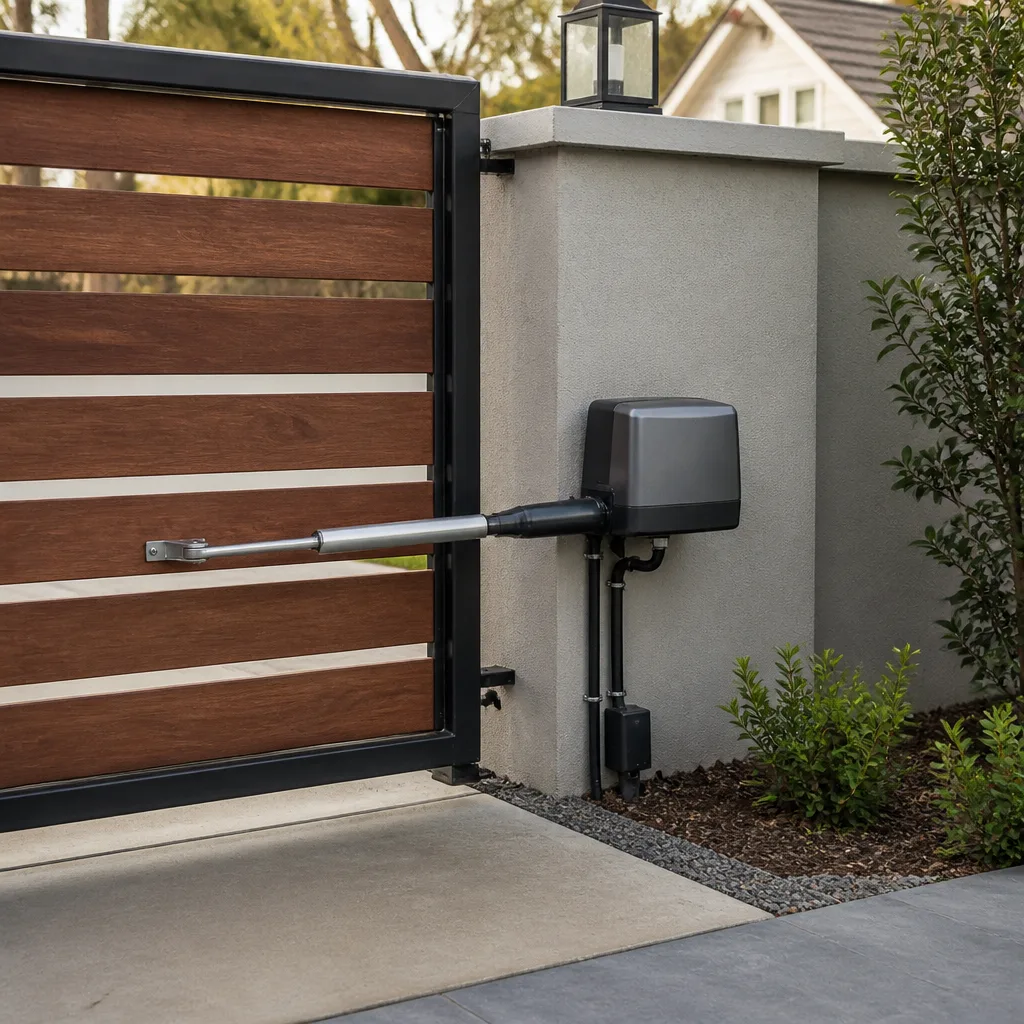 LiftMaster operators
Free on-site gate assessment - hinges, posts, and your LiftMaster or Nice gate operator checked before anything is quoted
The assessment is free and the quote is the invoice.
Get your free estimateGate Repair Cost Breakdown: The Hillsdale Homeowner’s Reference for 2026
The most expensive gate repair isn’t a failed motor. It’s a failed motor that was installed on a structurally compromised post nobody checked, requiring the whole job to be redone months later. In our experience, the cost of a gate repair in Hillsdale has less to do with the part that broke and more to do with the condition of everything holding that part in place. A gate that won’t close can be a five-minute hinge adjustment or the first sign that a post has shifted and the operator is fighting a frame that’s no longer square. This reference maps 2026 prices by failure type, not gate type, so you can read a quote and understand what you’re actually paying for before the work starts.
Quick Answer
Gate repair in Hillsdale typically runs from about $95 to $175 for an adjustment-only visit, $150 to $450 for component replacement like a hinge, roller, or control board, and $400 to $1,200+ for structural repairs or motor and operator replacement. Diagnostic or trip fees in the Portland metro market usually fall between $75 and $150, and many technicians apply that fee toward the repair total if you approve the work. The written estimate sets the final price, and it should be agreed before any technician touches the gate.
Styles & brands we work with
- Wrought iron
- Wood & steel frame
- Farm & ranch
- Sliding driveway gates
- LiftMaster operators
Table of Contents
- Why the Same Symptom Has Wildly Different Price Tags
- The Three Cost Tiers: Adjustment, Replacement, Structural
- Parts vs. Labor: Reading a Quote’s Ratio
- What Motor and Operator Replacement Really Costs
- Supported Brand vs. Orphaned Brand: The Parts Sourcing Gap
- Why Rural-Fringe Hillsdale Addresses Cost More
- Trip Fees and Diagnostic Fees: What They Cover
- How a Typical Repair Job Runs, Step by Step
Why the Same Symptom Has Wildly Different Price Tags
“My gate won’t close” is the single most common call we get, and it’s also the least useful description a homeowner can give. That symptom can come from a dozen root causes, and they don’t cost the same. A gate that reverses at the same spot every time might have a misaligned photo-eye, a bound hinge, a control board stuck in a fault loop, or a post that has settled. The first three are adjustments and small parts. The last one is a structural repair, and it changes the whole job.
The reason quotes vary so much in Hillsdale isn’t that contractors price arbitrarily. It’s that the diagnosis happens on-site, and the quote follows the diagnosis. Two homeowners on the same street can get wildly different numbers for what feels like the same problem because the underlying cause is different.
Here’s the practical takeaway: a good quote itemizes what was found, not just what was replaced. If a quote says “gate repair – $650” with no breakdown, you can’t tell whether you’re paying for a $40 adjustment plus labor or a new motor. Ask for the itemized version. A gate-only specialist should be able to tell you which component failed and why.
We work on the brand you already have, which matters here. A technician who only stocks one brand will sometimes steer a diagnosis toward replacement when a repair on the existing system is the better and cheaper answer. Nine automation brands is a wide net: LiftMaster, FAAC, BFT, Linear, Viking, Ghost Controls, DoorKing, Elite, and Mighty Mule. The point isn’t to impress you with a list. It’s that the diagnosis follows the actual failure, not the technician’s parts shelf.
The Three Cost Tiers: Adjustment, Replacement, Structural
We’ve seen gate repair costs sort cleanly into three tiers once you stop thinking about gate type and start thinking about failure type. Here’s the map.
Tier 1: Adjustment-Only Repairs ($95 to $175)
These are the visits where the gate is fundamentally sound and something has drifted out of alignment. The list includes hinge tightening, roller realignment on a slide gate, photo-eye alignment, limit switch adjustment on the operator, and travel-distance recalibration. Parts cost is often near zero, so you’re mostly paying for the diagnostic and the labor to correct it. On a simple swing gate with a mechanical closer, an adjustment visit can be genuinely quick.
If a quote comes in well above this range for a problem that sounds like alignment, ask what’s being replaced and why.
Tier 2: Component Replacement ($150 to $450)
Something has actually failed and needs a new part. Think a stripped hinge, a cracked roller, a control board, a battery in a solar operator, a failed receiver, a keypad that won’t read codes. Prices in this tier depend heavily on the part. A hinge is cheap; a control board on a mid-range operator is not. Labor is usually modest because the part swap is straightforward once diagnosed.
This is the tier where parts-versus-labor ratios get interesting. On a keypad replacement, the part often costs more than the labor. On a hinge or roller replacement, it’s the reverse.
Tier 3: Structural or Motor Repair ($400 to $1,200+)
This is where the post, the frame, the operator arm, or the motor itself is the problem. Post resets, frame realignment, operator replacement, and arm or bracket fabrication live here. These jobs require more time, more material, and often a second visit if a part has to be ordered. A slide gate with a bent track or a swing gate with a rotted post falls into this tier.
A structurally compromised post is the reason a motor replacement sometimes gets expensive twice. Replace the motor on a bad post and it fails again because the operator is straining against a frame that moves. Check the structure first, always.
Parts vs. Labor: Reading a Quote’s Ratio
A quote you can read is a quote you can evaluate. The single best question to ask about any gate repair quote in Hillsdale is: “How much of this is parts and how much is labor?” The answer tells you what kind of job you’re really paying for.
Adjustment-only visits skew almost entirely toward labor. The technician’s time and diagnostic skill are the product, and the parts are incidental. If a quote for an adjustment lists a big parts line, that’s a signal it’s not actually an adjustment job.
Control board and keypad replacements skew toward parts. A control board can be one of the more expensive single components in the whole system, and labor to swap it is usually brief. You want to see the parts line clearly so you know what you’re buying.
Motor and operator replacement skews toward parts again, but with substantially more labor than a board swap. Operators vary widely in price by brand, model, and capacity, and the labor includes the removal of the old unit, mounting, wiring, limit-setting, and testing. On a swing gate, arm fabrication or bracket adaptation can add labor time when the mounting points don’t line up.
A few questions that separate a well-built quote from a vague one:
- What’s the part number or model being replaced, and is it listed on the quote?
- Is the labor time estimated, or is it a flat job rate?
- If a part has to be ordered, is there a separate trip charge for the return visit?
- Are disposal and haul-away of the old component included?
- Does the quote include re-testing of safety edges, photo-eyes, and reversal sensitivity after the repair?
These aren’t gotcha questions. A gate-only specialist will answer all of them without blinking. A general contractor who does gates occasionally will squirm on at least two.
What Motor and Operator Replacement Really Costs
Motor and operator replacement is the single biggest line item in gate repair, and it’s where homeowners most often get a bad surprise. The number in your head probably doesn’t match the number on the quote, and there’s a reason. A new operator is not a single part; it’s a system of parts that have to be compatible with your gate, your power source, and your access controls.
The cost of replacing an operator depends on:
- Gate weight and width. An operator rated for a light residential swing gate won’t do for a heavy slide gate. Capacity drives price fast.
- Power source. A solar-compatible operator with a battery backup costs more than a straight AC-powered unit. If your gate is far from an outlet, solar or low-voltage may be the practical path.
- Accessories. Keypads, intercoms, loop detectors, and safety edges all need to talk to the new operator. If they’re incompatible, they get replaced too.
- Brand and model availability. A supported brand is easier to source. An orphaned brand might leave you choosing between a long lead time on a replacement part and a full operator swap.
- Mounting conditions. If the posts or brackets need work to accept the new operator, labor goes up.
If you’re staring down a motor replacement, it’s worth asking whether repairing the existing operator is realistic. On a supported brand, the answer is often yes: a receiver, control board, or limit switch replacement is a fraction of a full swap. On a discontinued system, repair may not be economical, and the honest answer is a replacement. We’d rather tell you which one you’re facing than sell you the more expensive option by default.
For the full picture of motor and operator work, see gate motor & opener.
Supported Brand vs. Orphaned Brand: The Parts Sourcing Gap
Here’s a fact that doesn’t get enough airtime in pricing conversations: the brand of your existing operator has a direct effect on repair cost, often more than the type of failure. A failed control board on a LiftMaster or FAAC system is usually a straightforward parts order. The same failure on a discontinued or obscure operator can mean days of sourcing, a substitute part that needs adaptation, or a decision that repair isn’t worth it.
The cost gap breaks down roughly like this:
- Supported brand, common failure: standard part pricing, standard labor, single visit for the repair.
- Supported brand, less common failure: special-order part, potentially a second visit, modest added cost for lead time.
- Orphaned or discontinued brand: sourcing effort, possible substitute parts, higher labor to adapt, and a real chance the honest recommendation is a full operator swap.
We service nine automation brands: LiftMaster, FAAC, BFT, Linear, Viking, Ghost Controls, DoorKing, Elite, and Mighty Mule. That coverage is the reason a Hillsdale homeowner with a Mighty Mule or an Elite system doesn’t get steered toward replacement just because the technician’s first choice is a different brand. The gate you have is the gate we diagnose. If your system is a brand we don’t list, call anyway and we’ll tell you honestly what we can and can’t source.
For a homeowner on the fence about repair versus replacement, the deciding question is usually whether the rest of the system is healthy. A failed operator on a sound gate is a swap. A failed operator on a rotting frame is a bigger project. Get the frame checked before you commit to a new motor.
If you’re considering a completely new system, the scope is different from a repair, and it’s measured and scheduled rather than rushed. See gate installation for how that process works.
Why Rural-Fringe Hillsdale Addresses Cost More
A gate repair in Hillsdale’s denser in-city blocks and a gate repair on a rural-fringe property with a long driveway are different jobs, even when the failure is identical. Two cost drivers explain most of the difference: drive time and parts availability.
Drive time is real labor. A technician traveling a long distance to reach a property loses time that has to be accounted for somewhere. Some companies fold it into a higher trip fee; others build it into the hourly rate. Either way, a property on the fringe of the metro area tends to see a higher minimum visit cost than a property near the center.
Parts availability is the second driver. A technician based near a metro parts supply can pick up a hinge, roller, or board the same day. A rural-fringe job may require a special order and a return visit, and that return visit can carry its own charge unless it’s spelled out in the original quote. Ask, before the work starts, whether the return-visit charge is included or separate.
There’s an upside to the fringe properties worth mentioning. Longer driveways and larger lots often mean simpler gate geometry, fewer pinch points, and less pedestrian traffic near the gate, which can reduce the wear on safety edges and photo-eyes. The repair itself may be cheaper; the logistics cost more. Reading a quote in that light helps you judge whether a number is fair.
Ask any Hillsdale gate company directly whether their quote includes travel. A quote that says “labor only” and then adds a trip charge at the end isn’t dishonest, but it’s incomplete. The price you agree to before the work starts is the price you should pay when the invoice arrives.
Trip Fees and Diagnostic Fees: What They Cover
Trip fees are one of the most confusing parts of a gate repair quote, so let’s define them plainly. A trip fee is the charge for the technician to come to your property and look at the gate. A diagnostic fee covers the actual evaluation: testing the operator, tracing the wiring, checking the safety devices, and identifying the failed component. In the Portland metro market, these fees usually land between $75 and $150, and sometimes a single fee covers both.
What you should ask about any trip or diagnostic fee:
- Is the fee applied toward the repair total if I approve the work? Some companies apply it; some don’t. Ask before the visit is scheduled.
- Does the fee cover the return visit if a part has to be ordered? On a special-order part, the return trip can be a separate charge. Get that in writing.
- Is the fee waived or reduced if the repair is simple? Rarely, but worth asking.
- Does the fee include a written estimate? It should. A diagnostic that doesn’t end in a written itemized price is only half a diagnostic.
- Is travel to a rural-fringe address included? If you’re outside the dense in-city blocks, confirm travel is or isn’t part of the fee.
Diagnostic skill is what you’re really paying for. A gate-only specialist who has worked on LiftMaster and FAAC and DoorKing and the rest can usually find the failure faster than a generalist, and that shows up in the diagnostic fee and the labor time. Faster diagnosis is real money saved, even if the fee line looks the same.
For how a repair visit typically unfolds, see gate repair.
How a Typical Repair Job Runs, Step by Step
Knowing what a repair visit should look like protects you as much as any price figure. This is the sequence we follow on a typical Hillsdale gate repair:
- Phone intake. We ask what the gate is doing, what brand the operator is, and whether the gate is manual or automated. This helps set expectations and confirms we can diagnose the system.
- On-site evaluation. We test the gate through a full open and close cycle, watch for binding, listen to the motor, check the photo-eyes and safety edges, and inspect the posts and hinges for movement.
- Root-cause identification. We separate the symptom from the cause. “Won’t close” comes from something; we find that something.
- Written estimate. We itemize what’s found, what needs to be replaced, what the parts and labor cost, and what’s included. You agree to the price before any work starts.
- Repair. We do the work we agreed to, no more.
- Re-test and walkthrough. We run the gate through multiple cycles, verify the safety features function, and show you what changed.
If any step is missing from a visit, ask why. The written estimate and the re-test are the two most important, and they’re the two that get skipped by companies in a hurry.
One more safety note worth stating plainly. Gate operators are powered equipment, and the safety edges, photo-eyes, and reversal settings exist for a reason. We don’t recommend opening, testing, or adjusting the wiring or safety circuits yourself. That work involves line voltage and moving parts that can crush, and it belongs with a trained technician. If your gate has stopped reversing on contact or the safety edge has gone dead, treat that as a priority repair, not a “someday” item.
Common Mistakes to Avoid
- Accepting a repair quote that doesn’t itemize parts and labor. A single lump-sum number tells you nothing about whether you’re being charged fairly. Ask for the breakdown before you approve.
- Replacing a motor on a post you haven’t checked. This is the costliest mistake a Hillsdale homeowner can make on a gate. If the posts have settled or the frame is out of square, a new operator will strain against it and fail early.
- Lumping “won’t close” problems into the same expectation. A photo-eye misalignment and a failed control board have very different price tags. Don’t assume the quote is wrong just because it’s higher than you hoped; ask what’s being replaced.
- Skipping the diagnostic fee question. Some companies apply the trip fee to the repair total; some don’t. Ask before you schedule, especially on rural-fringe addresses.
- Ignoring the safety devices to save money. A gate that won’t reverse on contact is a serious hazard, particularly on a property with kids, pets, or frequent visitors. Don’t leave a failed safety edge unaddressed.
- Assuming an orphaned brand is automatically a replacement job. Some discontinued systems can be repaired with substitute parts at a fraction of the cost of a full swap. Get a diagnosis before you get a replacement quote.
- Accepting work without a written estimate first. The price should be agreed and in writing before any technician starts. A verbal “we’ll sort it out” is how surprise invoices happen.
See the difference
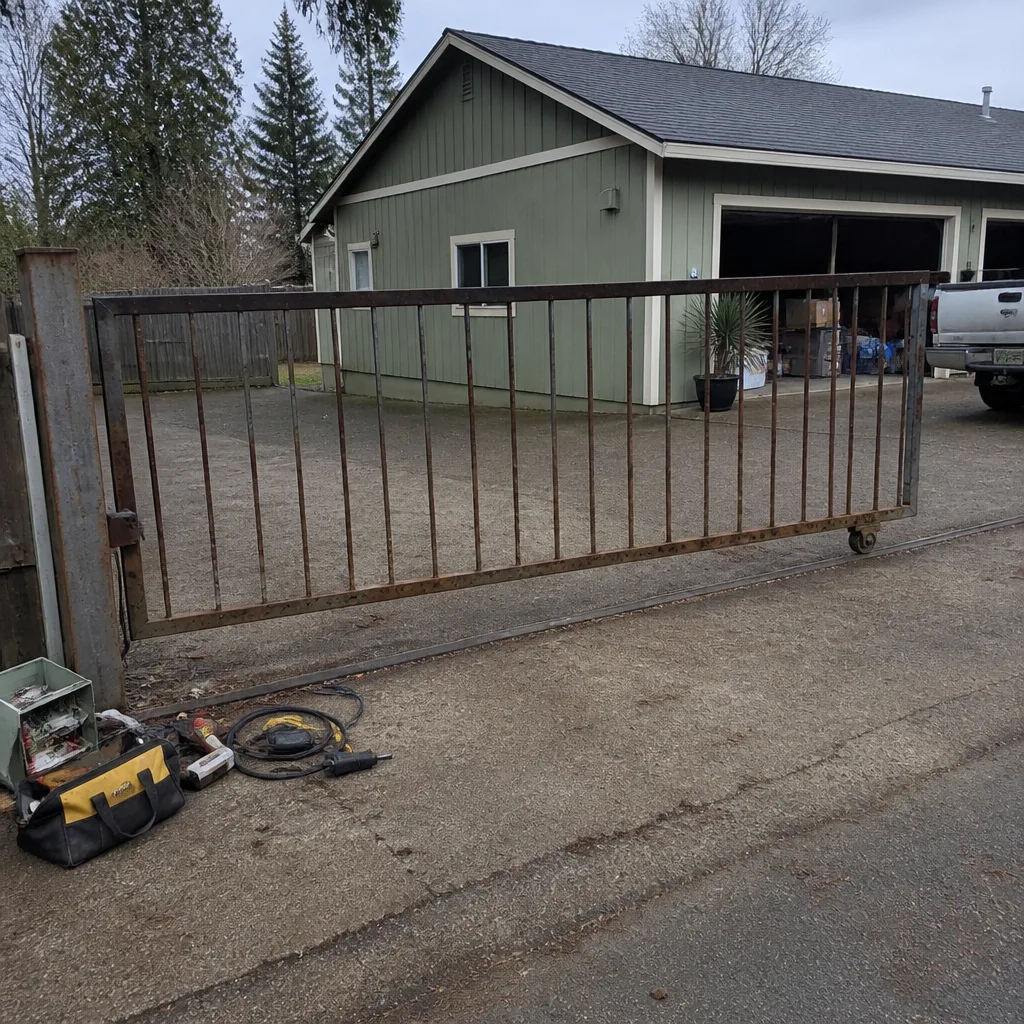 Before
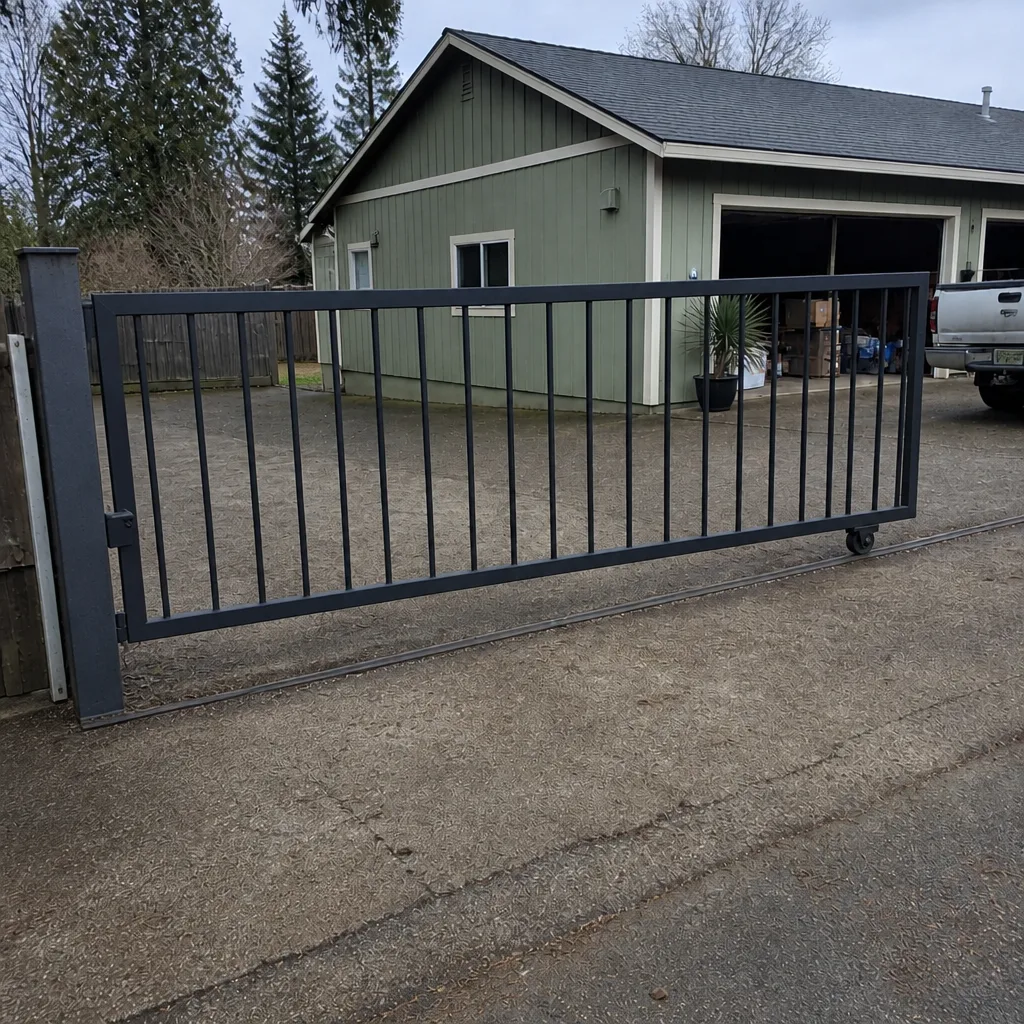 After
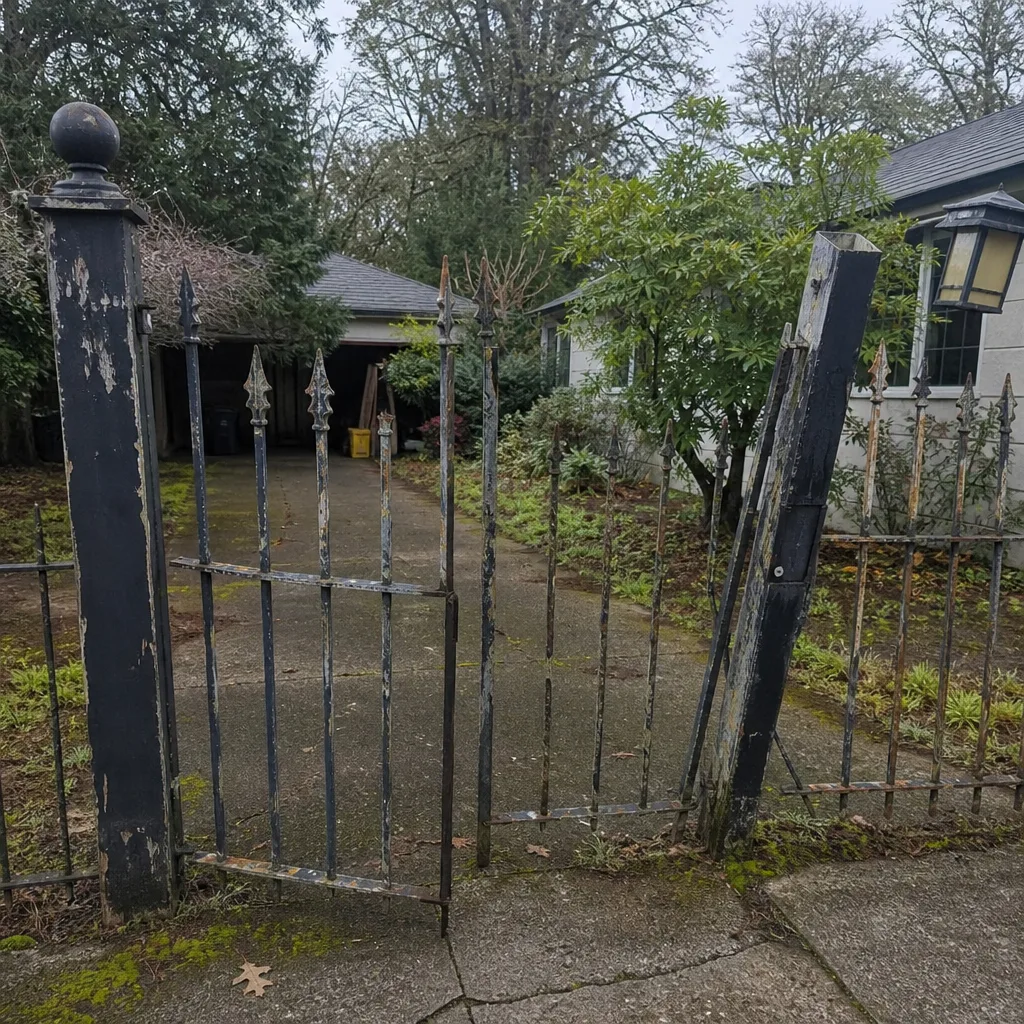 Before
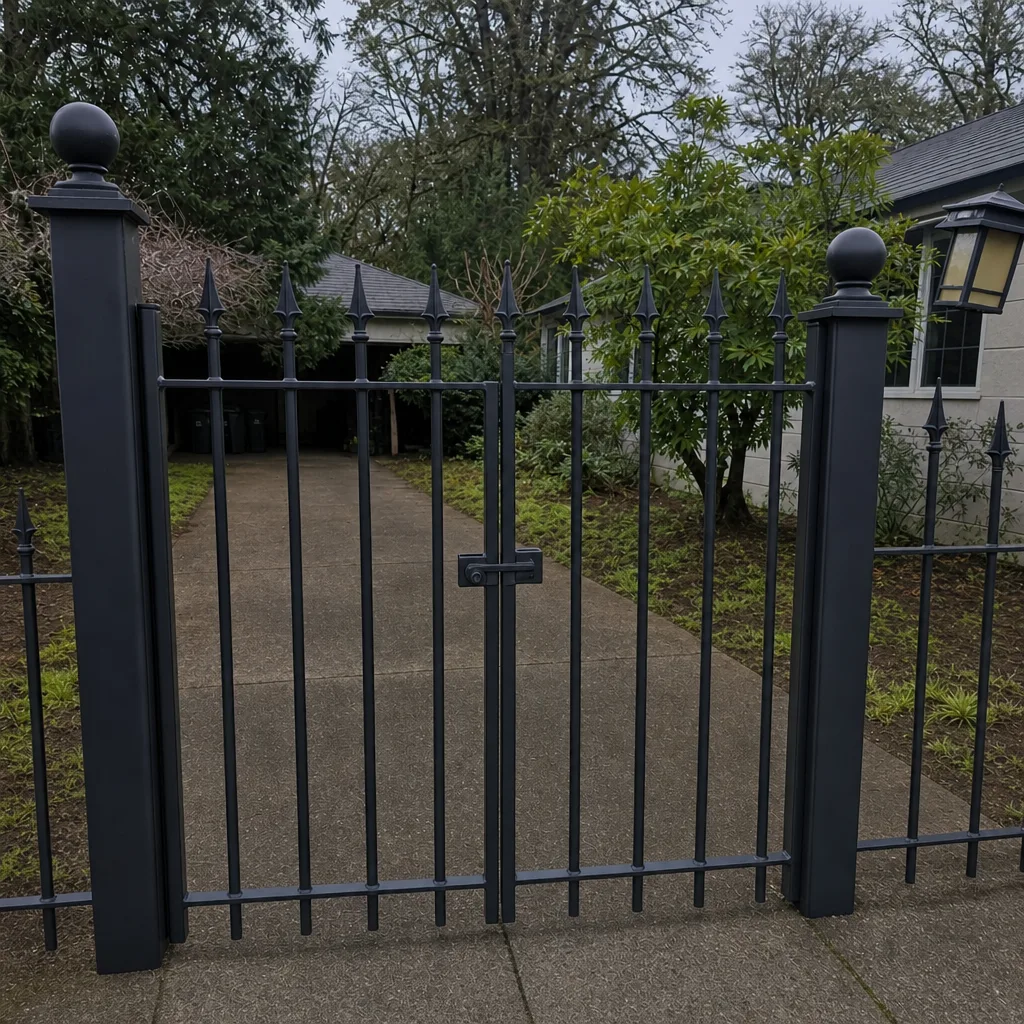 After
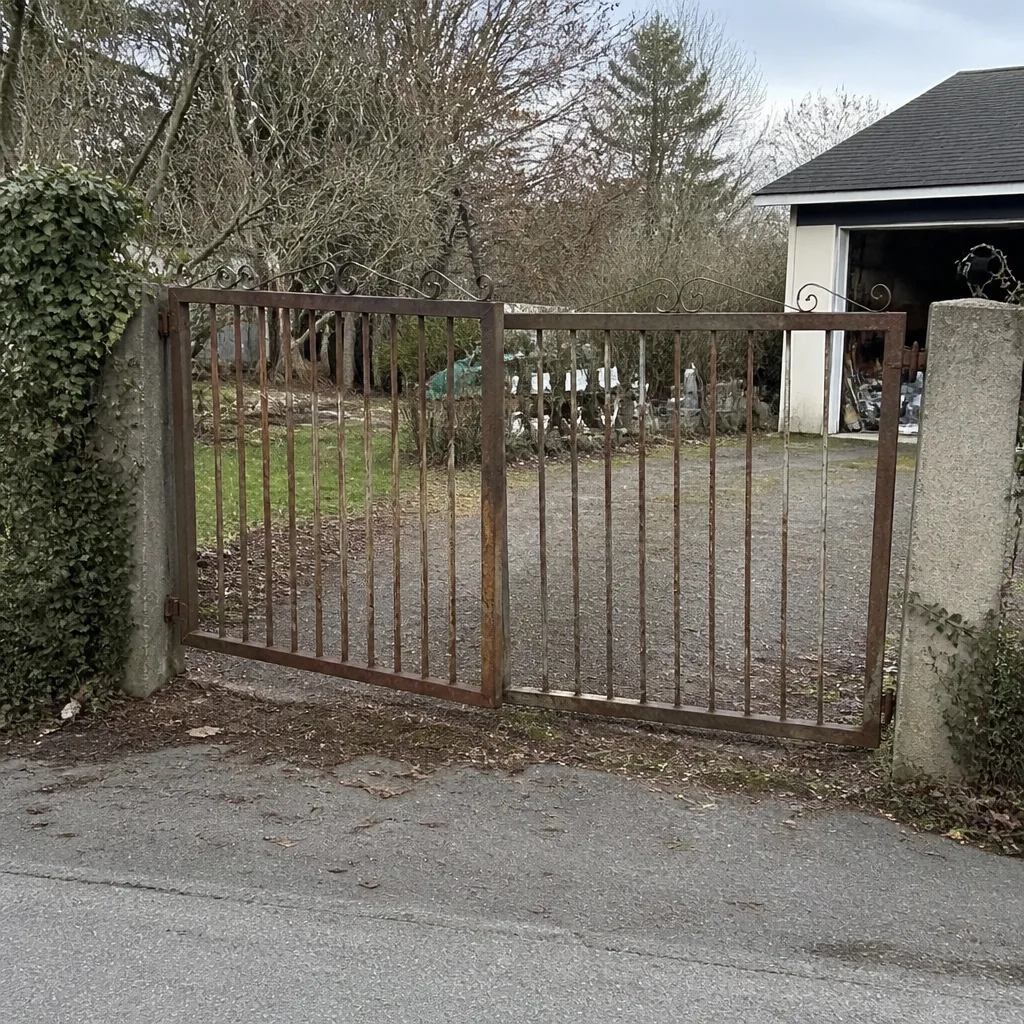 Before
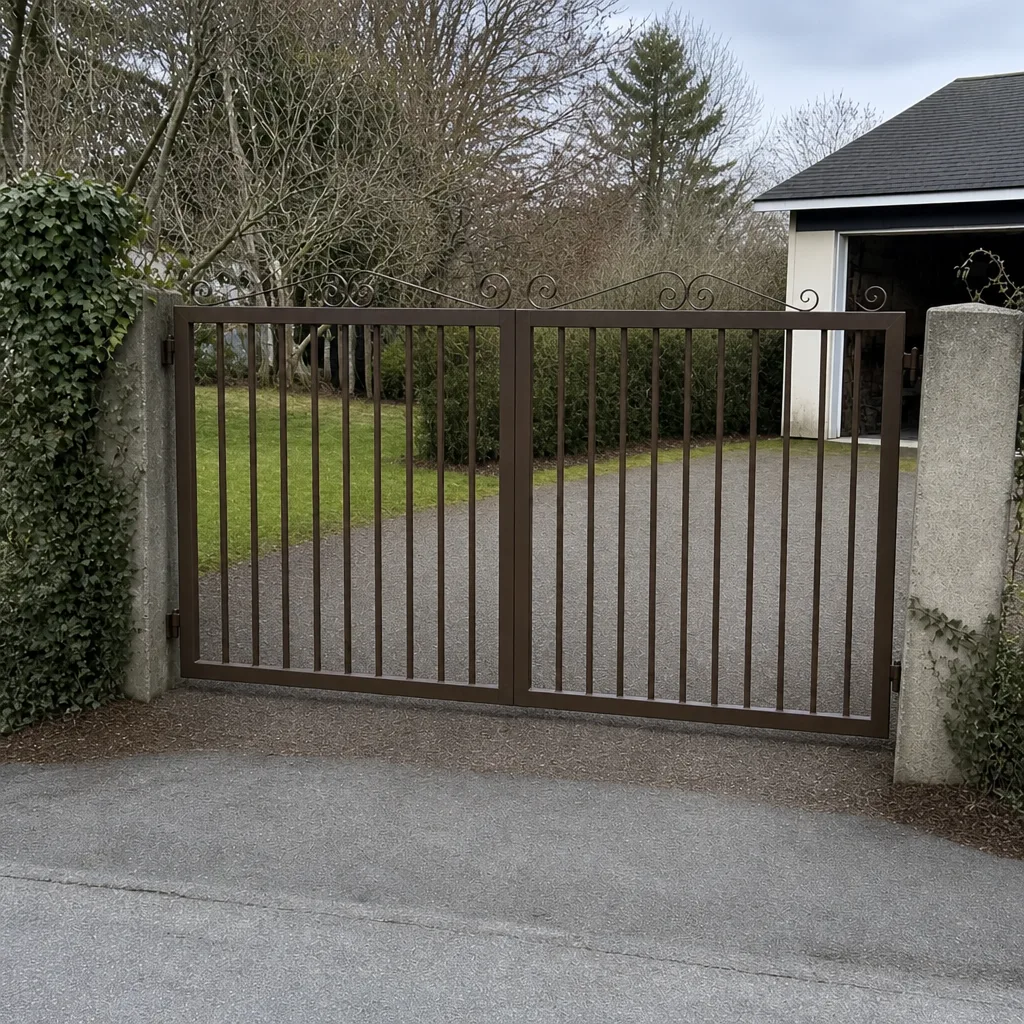 After
When to Call a Professional
Some gate issues are worth a phone call. A gate that won’t reverse on contact with an object, a photo-eye that’s dead, a motor that hums but doesn’t move, a slide gate off its track, a post that’s visibly leaning, or a control board throwing consistent faults are all reasons to bring in a technician. The same goes for a gate that works but has lost its keypad, intercom, or loop detector function; access control is part of the system, not a separate problem to ignore.
If you’re not sure whether a repair is worth it versus a replacement, a diagnostic visit answers that question. Gate Repair Hillsdale offers free estimates in Hillsdale, and we’re a gate-only specialist, which means the technician who shows up works on gates every day. Call Gate Repair Hillsdale at (833) 508-9956 to book a visit and get a written price before anything starts.
Frequently Asked Questions
Most gate repairs in Hillsdale fall between $95 and $1,200 depending on the failure type. An adjustment-only visit is typically $95 to $175, component replacement runs $150 to $450, and structural or motor repair is $400 to $1,200 or more. Call (833) 508-9956 for an exact quote, and estimates are free.
Often yes, for repair and diagnostic visits in the Hillsdale area, and we can usually get a technician out the same day when scheduling allows. Call (833) 508-9956 first thing and we’ll tell you what’s available; the price is still agreed in writing before any work starts.
Yes, most gate repair visits in the Portland metro market carry a trip or diagnostic fee between $75 and $150, and many companies apply that fee toward the repair total if you approve the work. Ask us directly when you call, and we’ll confirm whether the fee credits toward the repair.
We service nine automation brands, including LiftMaster, FAAC, Elite, and Mighty Mule, plus BFT, Linear, Viking, Ghost Controls, and DoorKing. That means we’re likely to diagnose and repair the system you already have rather than push a replacement brand. If your brand isn’t on the list, call and we’ll tell you honestly what we can source.
Yes. Access control is part of the gate system, not a separate contract, so keypads, intercoms, loop detectors, and entry systems are all part of what we service. That means one call covers both the mechanical repair and the entry side, from the motor to the keypad.
Longer drive times and fewer nearby parts sources are the two drivers. A technician’s travel time is real labor, and a special-order part can mean a return visit, which may carry its own charge unless it’s included in the original quote. Ask about travel and return-visit charges when you book.
The Bottom Line
The price of a gate repair in Hillsdale tracks the failure type, not the gate type. Adjustment-only visits land around $95 to $175, component replacements run $150 to $450, and structural or motor jobs run $400 to $1,200 or more. Trip and diagnostic fees in the metro usually fall between $75 and $150, and many apply toward the repair total. Rural-fringe addresses cost more because of drive time and parts sourcing. A supported brand is cheaper to repair than an orphaned one. And the most expensive mistake is replacing a motor on a post nobody checked. Get the diagnosis, get the written estimate, and agree on the number before the work starts. That’s the whole map.
If your gate is failing, stuck, or just not behaving the way it used to, call Gate Repair Hillsdale at (833) 508-9956 for a free estimate. We’re a gate-only specialist, and we work on the brand you already have.
Written by the team at Gate Repair Hillsdale.